
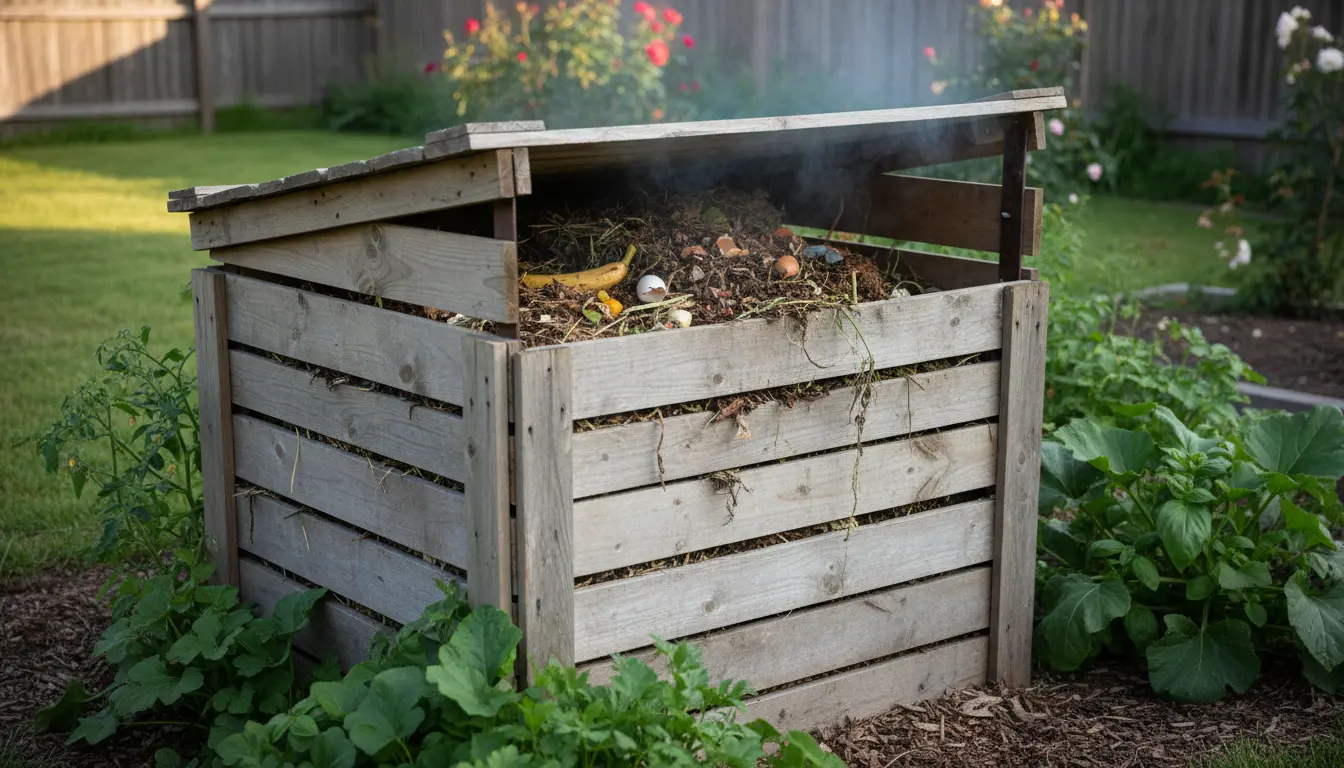
Composting at home turns kitchen scraps and yard waste into valuable soil amendment. This guide gives clear steps and practical tips so you can start home composting with minimal fuss.
What is Home Composting?
Home composting is the natural breakdown of organic materials into a crumbly, soil-like substance called compost. Microbes, fungi, and insects do the work when conditions are right.
Good home compost feeds plants, improves soil structure, and reduces landfill waste. It can be done in a bin, tumbler, pile, or with worms.
Benefits of Composting at Home
Composting at home brings several direct benefits you can use in your garden or potted plants. It reduces grocery waste and lowers household trash volume.
- Improves soil water retention and structure.
- Supplies slow-release nutrients to plants.
- Reduces need for chemical fertilizers.
- Diverts organic waste from landfills, cutting methane emissions.
How to Start Composting at Home
Starting home composting involves choosing a method, collecting materials, and managing the pile. These core steps will put you on the right path.
Choose a Container and Location
Pick a container that fits your space: a simple open pile, a covered bin, or a tumbler. Place it on bare soil if possible to allow organisms to move in and out.
Choose a spot with partial sun and good drainage. Keep it accessible so you actually add scraps regularly.
Collect the Right Materials
Compost needs a balance of nitrogen-rich “greens” and carbon-rich “browns”. Aim for roughly a 1:2 ratio by volume.
- Greens (nitrogen): vegetable scraps, coffee grounds, fresh grass clippings, green leaves.
- Browns (carbon): dry leaves, straw, shredded paper, cardboard, small wood chips.
Avoid meats, dairy, oily foods, and diseased plants to prevent odors and pests.
Assemble and Maintain the Pile
Layer greens and browns, keeping the pile moist but not soggy. Aim for the consistency of a wrung-out sponge.
Turn the pile every 1–2 weeks to add oxygen and speed decomposition. A churn with a pitchfork or a tumbler works well.
Home Composting Methods
Choose a method that fits your space, time, and output needs. Each method has trade-offs in speed and maintenance.
Open Pile or Bin
Good for yards with space. Low cost and flexible, but slower and can attract wildlife if not managed.
Tumbler
Tumblers contain the compost in a rotating drum. They heat up faster and are neater for small yards, but they hold limited volumes.
Vermicomposting (Worm Bins)
Red wiggler worms compost kitchen scraps indoors or outdoors in a contained bin. This makes rich castings quickly with little odor when managed properly.
Troubleshooting Home Composting Problems
Common problems are easy to fix once you know the cause. Here are practical solutions for typical issues.
Bad Odor
Smells usually mean too much moisture or too many greens. Add dry browns and turn the pile to introduce air.
Pests
To reduce pests, avoid meat and dairy and bury food scraps under a layer of browns. Use a closed bin or tumbler if wildlife is a problem.
Slow Breakdown
Slow decomposition often results from low temperatures, poor aeration, or an imbalance of materials. Chop materials finer, increase green content, and turn more often.
When Is Compost Ready?
Compost is ready when it is dark, crumbly, and smells earthy. Most home systems produce finished compost in 2–12 months depending on method and care.
Small Case Study: Apartment Balcony Composting
Maria lives in a two-bedroom apartment and started a small worm bin on her balcony. She collected only vegetable scraps and used shredded paper for browns.
Within three months she had a steady supply of worm castings. Her tomato plants grew stronger and she cut store-bought fertilizer costs by 70% that season.
Her weekly trash volume dropped from two bags to one and a half, showing that even small-space home composting reduces waste and adds value.
Quick Checklist for Home Composting
- Choose a method: bin, tumbler, pile, or worm bin.
- Collect greens and browns and avoid meats and oils.
- Keep the pile moist and turn it regularly.
- Troubleshoot odors, pests, and slow breakdown with simple adjustments.
- Use finished compost to feed garden beds, lawn, or potted plants.
Starting home composting is a practical step toward waste reduction and healthier soil. With basic setup and regular, simple maintenance you can produce rich compost for your garden and reduce household waste.