
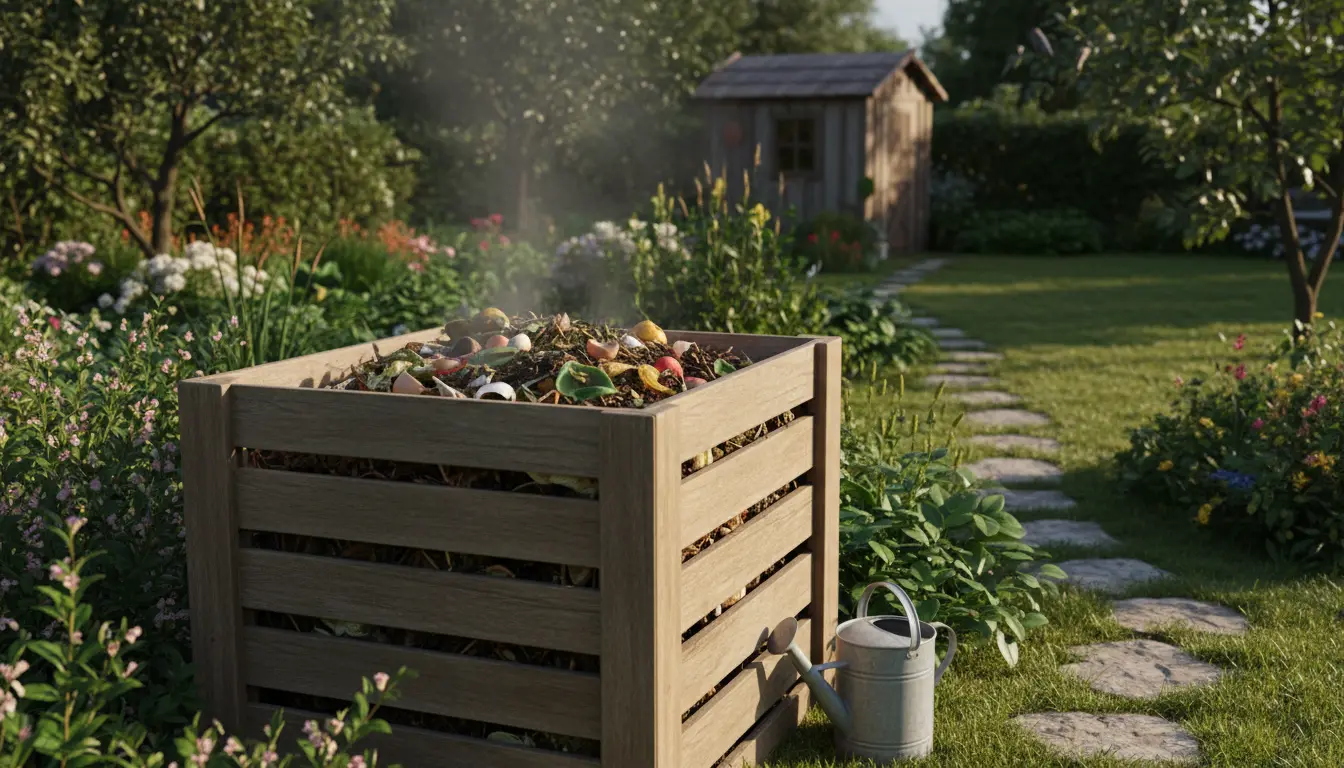
What is Home Composting?
Home composting is the controlled decomposition of organic kitchen and yard waste into nutrient-rich soil. It reduces landfill waste and produces compost you can use in gardens, pots, or lawns.
Why Try Home Composting
Composting lowers household waste, saves money on fertilizer, and improves soil structure. Beginners can start with minimal space and effort using simple methods that match their lifestyle.
Food scraps and yard trimmings make up about 30% of what Americans throw away. Composting at home can cut that portion dramatically.
Choose a Method and Bin for Home Composting
Select a composting method that fits your space and commitment level. Options include simple piles, tumblers, worm bins (vermicomposting), and Bokashi for kitchens.
Consider these bin choices:
- Tumbler: Faster decomposition, easy turning, good for small yards.
- Static bin or DIY bin: Low cost, works for larger volumes.
- Worm bin: Best for apartments and kitchens, produces castings quickly.
- Bokashi: Fermentation method for all food scraps, including meat and dairy.
Materials: What to Compost and What to Avoid
Successful home composting depends on combining the right materials. Use a mix of green (nitrogen) and brown (carbon) items.
- Greens (nitrogen): vegetable scraps, coffee grounds, fresh grass clippings.
- Browns (carbon): dry leaves, shredded paper, cardboard, straw.
Avoid these items in home composting: meat, bones, dairy, oily foods, diseased plants, and pet waste from carnivores unless using Bokashi or a specialized system.
Balance Carbon and Nitrogen
For home composting aim for a rough carbon:nitrogen (C:N) ratio around 25–30:1. That typically means adding more browns than greens by volume.
Practical tips:
- If your pile smells, add more brown materials and turn it to introduce air.
- If the pile is very dry and decomposition is slow, add water and some green materials.
Moisture, Aeration, and Turning
Moisture should feel like a wrung-out sponge. Too dry and microbes slow down; too wet and anaerobic odors develop.
Aeration keeps decomposition aerobic and fast. Turn a backyard pile or rotate a tumbler every 1–2 weeks. For worm bins, avoid frequent turning and keep the bedding moist but not waterlogged.
Troubleshooting Common Problems
- Bad smell: Add browns, increase aeration, reduce wet food scraps.
- Slow decomposition: Chop materials into smaller pieces, keep pile moist and warm, add greens.
- Pests or rodents: Secure bin lid, bury food scraps in the center, avoid meat and oily foods.
How Long Until Compost Is Ready?
Home compost time varies. Hot, well-managed piles can produce compost in 2–3 months. Simpler cold piles or worm bins may take 4–12 months.
Finished compost is dark, crumbly, and earthy-smelling. You should not be able to recognize original materials.
Using Your Finished Compost
Apply finished compost in these ways:
- Top-dress vegetable beds and flower pots.
- Mix 10–30% compost into potting mixes or garden soil to improve fertility and moisture retention.
- Use as a mulch layer around trees and shrubs, keeping it a few inches from stems.
Small Real-World Example: Apartment Worm Bin Case Study
Maria, a city apartment resident, started a 10-liter worm bin under her kitchen counter. She added shredded cardboard, a handful of garden soil, and 500 red wiggler worms.
She fed small amounts of vegetable scraps three times a week, kept bedding moist, and avoided citrus and onion waste. Within five months she harvested rich worm castings that she mixed into her balcony potting soil, reducing store-bought fertilizer costs and food waste by about 20%.
Practical Checklist to Start Home Composting
- Choose a compost method and bin that fits your space.
- Collect greens and browns separately to maintain balance.
- Keep the pile moist and aerated; turn or rotate regularly.
- Troubleshoot odors, pests, and slow breakdown quickly.
- Harvest finished compost and apply it to your plants.
Final Tips for Successful Home Composting
Start small and learn by doing. Keep notes on what you add and how often you turn the pile. Adjust ratios and methods until you find a routine that works with your schedule and living situation.
Composting is a low-cost, high-impact habit that benefits your garden and the environment.