
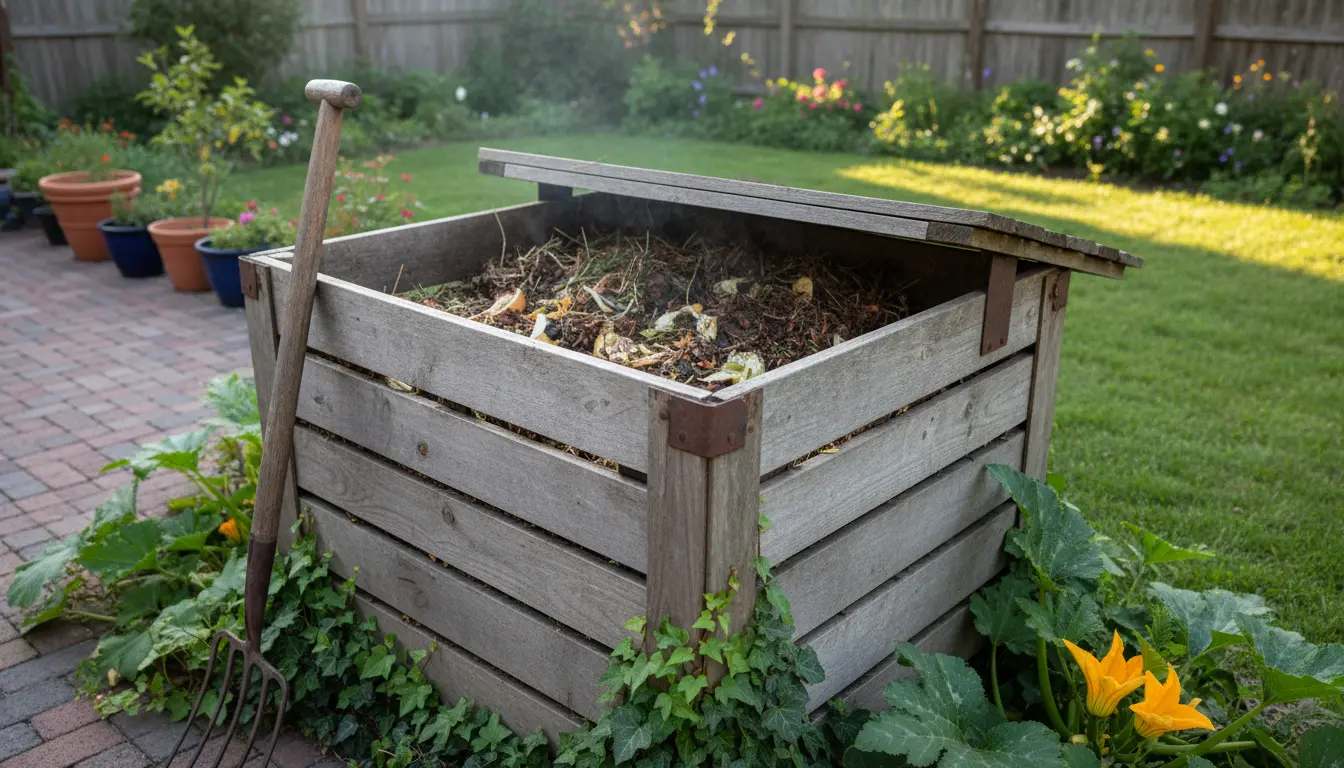
Why home composting matters
Home composting reduces household waste, improves soil, and saves money on fertilizers. It is one of the easiest ways to practice sustainability at a household level.
This guide explains home composting for beginners in clear, practical steps you can use this week. No special tools or advanced knowledge required.
Home Composting Basics
Composting is the controlled decomposition of organic materials by microbes and invertebrates. The process produces humus, a nutrient-rich amendment for gardens and potted plants.
There are two common systems: a simple bin or a compost pile. Both work if you manage moisture, air, and the right mix of materials.
Essential components for home composting
- Brown materials: dry leaves, straw, cardboard, paper. These provide carbon.
- Green materials: kitchen scraps, grass clippings, fresh plant trimmings. These provide nitrogen.
- Air: turning or aerating prevents bad smells and keeps microbes active.
- Moisture: the pile should be damp but not soggy, like a wrung-out sponge.
How to start a compost bin at home
Choose a location that is convenient and drains well. A shaded spot near your kitchen or garden works best.
Use a simple bin or a purchased composter. A 3-bin system speeds composting, but a single bin is fine for most beginners.
Step-by-step setup
- Lay a base: Add coarse material like small branches or straw to help airflow.
- Layer materials: Alternate 2–4 inches of greens and browns. Aim for roughly a 2:1 ratio of browns to greens by volume.
- Moisten: Add water if the pile is dry. It should feel like a damp sponge.
- Cover: A lid or tarp helps retain moisture and heat but allows some airflow.
- Turn: Every 1–2 weeks, mix the pile to supply oxygen and speed decomposition.
Common problems and quick fixes
Beginners often face slow decomposition, bad odors, or pests. These are usually easy to correct.
- Bad smells: Add more brown materials and turn the pile. Smells usually mean too much moisture or anaerobic conditions.
- Pests: Avoid adding meat, dairy, or oily foods. Bury kitchen scraps under a thick layer of browns.
- Slow breakdown: Chop or shred materials and maintain warmth by keeping the pile moist and insulated.
What to compost and what to avoid
Safe kitchen items: fruit and vegetable scraps, coffee grounds, eggshells, used tea bags. Yard waste: grass clippings, leaves, small prunings.
Avoid: meat, dairy, bones, diseased plants, pet feces, and invasive weeds with seeds. These items attract pests or introduce pathogens.
Turning compost into garden gold
Finished compost is dark, crumbly, and smells earthy. It usually takes 2–12 months depending on management and climate.
Use finished compost as top dressing, mix it into potting soil, or add it to garden beds to improve structure and fertility.
How to tell if compost is ready
- Color: Dark brown to black.
- Texture: Crumbly and uniform, with few recognizable scraps.
- Smell: Pleasant, earthy aroma.
- Temperature: Cooled to ambient if it was previously active.
Practical tips for beginners
- Keep materials small: Chop kitchen scraps and shred cardboard to speed decomposition.
- Balance carbon and nitrogen: Too many greens create odors; too many browns slow the process.
- Insulate in winter: Add extra brown material and cover to retain heat and moisture.
- Collect scraps in a countertop pail with a tight lid to make daily composting convenient.
Small case study: A simple backyard success
Case study: A family of four started a 200-liter compost bin in spring. They layered kitchen scraps with shredded leaves and turned weekly. Within six months they produced 80 liters of finished compost.
They used the compost in raised vegetable beds and reported healthier plants and reduced grocery bills. Pests were controlled by avoiding meat and burying scraps.
Final checklist for home composting for beginners
- Choose a bin and place it on bare soil.
- Gather brown and green materials in separate containers.
- Build alternating layers and keep the pile moist.
- Turn the pile regularly and monitor for odors or pests.
- Harvest finished compost and apply to soil or potted plants.
Home composting is a low-cost, high-impact practice that any beginner can adopt. Start small, observe the process, and adjust layers, moisture, and turning frequency to match your local climate and available materials.