
Home Composting for Beginners: Why Start Composting
Composting turns kitchen scraps and yard waste into a rich soil amendment. It reduces landfill trash and improves garden soil structure and fertility.
As a beginner, composting may seem technical, but simple systems work well. This guide gives practical steps you can follow in a backyard, balcony, or apartment.
Home Composting for Beginners: Choose the Right System
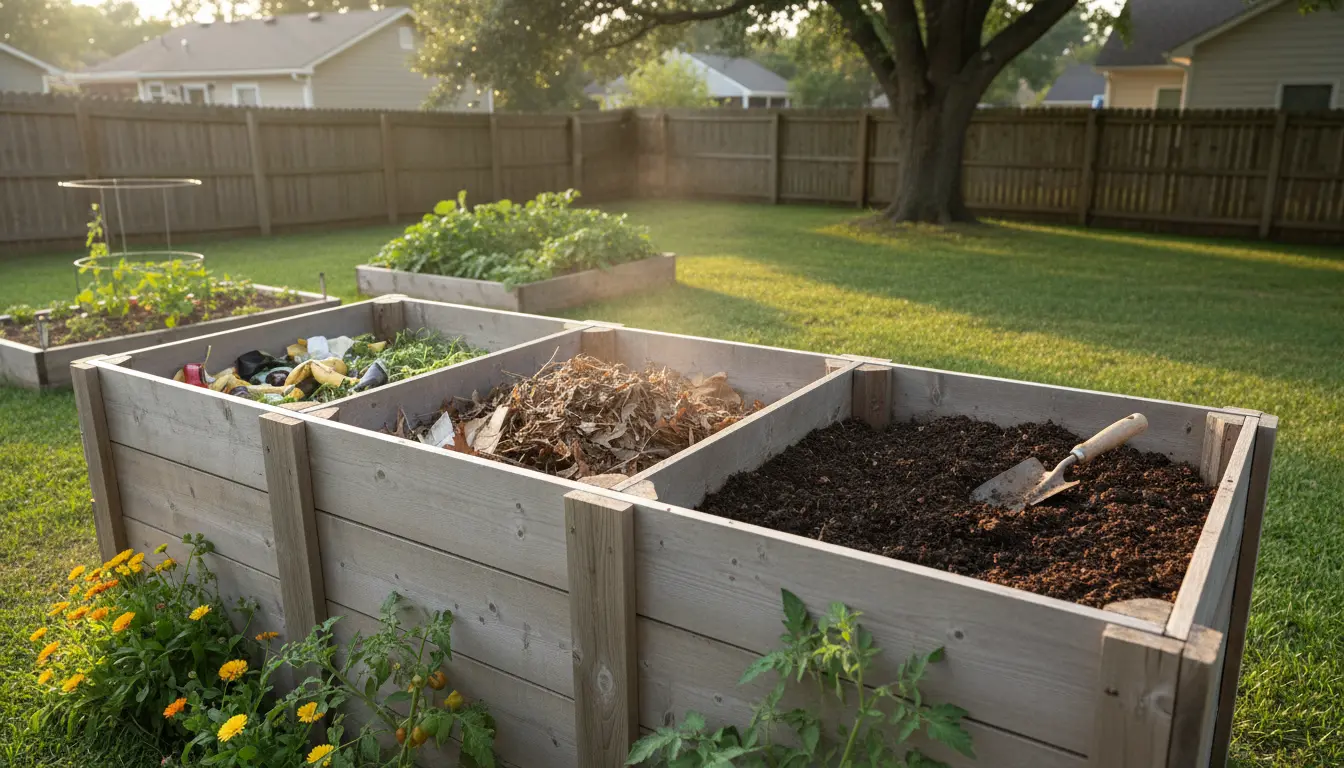
Pick a compost system that fits your space and lifestyle. The three common options are backyard bins, tumbler bins, and indoor worm or bokashi systems.
- Backyard pile or bin: Good for yards and larger volumes.
- Tumbler bin: Faster mixing, cleaner, and easier to turn.
- Worm bin (vermicomposting): Ideal for apartments and limited space.
Example: Which system to pick
If you have a small yard choose a bin or tumbler. If you live in an apartment, start with a worm bin or bokashi bucket. Both handle kitchen waste without odor when managed correctly.
Home Composting for Beginners: Balance Greens and Browns
Compost needs a balance of nitrogen-rich “greens” and carbon-rich “browns.” Greens provide protein for microbes, browns add structure and slow decomposition.
- Greens: fruit and vegetable scraps, coffee grounds, fresh grass clippings.
- Browns: dry leaves, shredded paper, cardboard, straw.
A simple target is roughly 2 parts browns to 1 part greens by volume. Adjust if the pile smells (add browns) or is too dry (add greens or water).
Quick Tips on Materials
- Chop large pieces to speed decomposition.
- Avoid meat, dairy, and oily foods in basic aerobic systems.
- Balance moisture like a wrung-out sponge — not dry, not dripping.
A properly managed compost pile can reach 130°F (54°C) during active decomposition, which helps kill weed seeds and pathogens.
Home Composting for Beginners: How to Maintain Your Compost
Maintenance is simple: turn, monitor moisture, and add balanced inputs. Regular turning introduces oxygen and speeds breakdown.
Turn a backyard pile every 1–2 weeks. For tumblers, rotate every few days. Worm bins require less turning; just fluff bedding occasionally.
Monitoring Checklist
- Smell: Healthy compost smells earthy. Bad odors mean too wet or too many greens.
- Temperature: Warm to hot piles indicate active decomposition.
- Moisture: Add water if dry; add dry browns if soggy.
Home Composting for Beginners: Troubleshooting Common Problems
Problems are usually easy to fix. Identify the cause, then adjust the mix, aeration, or moisture.
- Foul smell: Add dry browns and turn the pile to introduce air.
- Slow breakdown: Chop materials smaller, add water, and ensure enough nitrogen (greens).
- Fruit flies: Bury fresh food under a layer of browns or use a closed bin.
When to Harvest
Finished compost is dark, crumbly, and smells earthy. Small systems may finish in 2–6 months; larger piles can take longer.
Use finished compost as a top dressing, soil amendment, or in potting mixes to boost nutrient retention and structure.
Home Composting for Beginners: Small Real-World Case Study
Case Study: Sarah is a city renter who started a worm bin under her kitchen sink. She used shredded newspaper for bedding and added kitchen scraps three times a week.
Within four months she harvested 10 liters of nutrient-rich worm castings. Sarah reduced her weekly trash by nearly half and used the castings to feed balcony tomatoes with visible results: greener leaves and higher yield.
Home Composting for Beginners: Practical Tools and Materials
You do not need expensive gear. Basic supplies help maintain a tidy and effective system.
- Pitchfork or turning tool for outdoor piles.
- Tumbler for easy turning without pitchforks.
- Worm bin kit for indoor composting.
- Compost thermometer (optional) to monitor heat.
Simple Start Plan
- Choose a system based on space and volume.
- Start your pile with a layer of coarse browns for airflow.
- Add a mix of greens and browns, chop larger items, and moisten.
- Turn regularly and monitor moisture and smell.
- Harvest finished compost and start a new batch.
Home Composting for Beginners: Final Advice
Start small and learn by doing. Composting is forgiving and improves with simple adjustments.
Keep notes on what you add and how the pile responds. Over time you will find a routine that fits your home and delivers great garden results.