
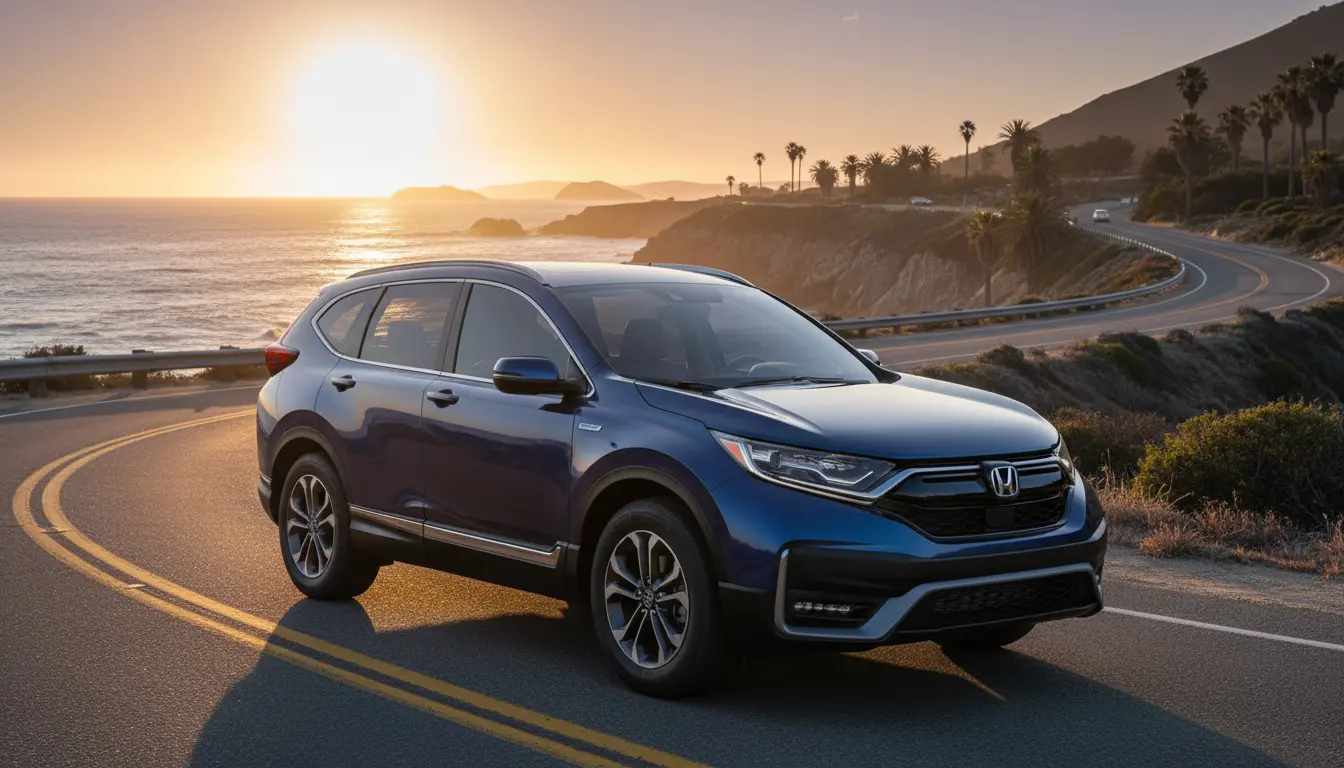
Honda CR V 2026 Overview
The Honda CR V 2026 introduces a refreshed design, an updated hybrid powertrain, and a suite of advanced safety systems. This model aims to balance everyday practicality with improved fuel economy for commuter and family use.
This article explains the main changes, how the hybrid system works, what safety features to expect, and realistic MPG performance. Use this as a practical guide when comparing trims or planning a test drive.
Honda CR V 2026 Hybrid Powertrain
The hybrid system in the Honda CR V 2026 pairs a gasoline engine with one or more electric motors and a compact battery pack. The setup focuses on smooth low speed EV assist and efficient highway cruising.
Key elements include regenerative braking, automatic mode selection, and improved thermal management for the battery. These details help the vehicle maintain efficiency across varied driving conditions.
- Electric assist at low speeds to reduce idling fuel use.
- Seamless transitions between electric and hybrid modes.
- Smaller battery footprint for interior space retention.
Honda CR V 2026 Advanced Safety Features
Honda has updated driver assistance with new sensors and software to improve detection and intervention. The CR V 2026 builds on Honda Sensing technology with more capable radar and camera systems.
Standard and available features include adaptive cruise control, lane keeping assist, intersection collision mitigation, and enhanced pedestrian detection. These systems work together to reduce driver workload and increase situational awareness.
- Adaptive Cruise Control with low speed follow.
- Lane Centering Assist for stable highway driving.
- Blind Spot Monitoring with rear cross traffic alert.
- Automatic Emergency Braking with improved cyclist detection.
Honda CR V 2026 MPG Performance
Honda markets the CR V 2026 as best in class for combined MPG within its compact SUV segment. Real-world economy depends on driving style, load, and road type, but the hybrid system is tuned for everyday efficiency.
Expected combined figures are higher than the nonhybrid models, especially in mixed city/highway cycles where electric assist reduces fuel demand during stops and low speed travel.
- City driving favors the hybrid for maximum benefits.
- Highway MPG improves due to optimized engine operation and aerodynamics.
- Driving habits like gentle acceleration produce the best results.
How to Maximize MPG in the Honda CR V 2026
Small changes in driving and maintenance yield measurable MPG gains. Follow a few simple steps to see the best real-world performance.
- Use Eco mode on daily drives to limit throttle response and shift points.
- Maintain recommended tire pressures and regular service intervals.
- Plan routes to avoid heavy congestion where possible.
Honda first sold a hybrid vehicle in North America with the Insight in 1999. Honda has continued hybrid development across multiple models since then.
Interior, Cargo, and Practical Features
The CR V 2026 preserves the model line’s focus on usable space. Rear seat comfort and a flat cargo floor remain priorities, and the battery placement was optimized to avoid compromising cargo volume.
Tech updates include a larger central display, wireless smartphone integration, and improved voice controls for hands free operation. These features reduce distraction and aid everyday usability.
- Flat cargo floor with flexible seat fold patterns.
- Available hands free power liftgate for grocery and load ease.
- Multiple USB ports and optional wireless charging pad.
Cost of Ownership and Fuel Savings
Higher upfront cost for hybrid technology can be offset by lower fuel spend over time. When comparing total cost of ownership, consider fuel price, expected annual mileage, and potential incentives.
Simple math helps decide if the hybrid makes sense. Multiply the MPG improvement by annual miles and current fuel price to estimate yearly savings.
- Estimate payback period based on your driving profile.
- Factor in potential maintenance savings from reduced engine load.
- Check local incentives or tax credits that apply to hybrids.
Real World Example Case Study
Local delivery operator GreenDrop tested a CR V 2026 hybrid in mixed urban and suburban routes for three months. The vehicle covered 6,500 miles during the trial.
GreenDrop recorded an average combined MPG of 36 during the test, compared with 29 MPG on their previous nonhybrid compact SUV. This translated to roughly 18% fuel cost savings during the period.
The driver feedback highlighted smoother low speed operation and consistent adaptive cruise control during repeated city runs. GreenDrop noted that the hybrid required slightly different charging and idle expectations than their older fleet vehicles.
What to Check on a Test Drive
When you test drive the Honda CR V 2026, evaluate how the hybrid system transitions during acceleration and deceleration. Pay attention to NVH levels and the effectiveness of driver assistance features.
Check visibility, seat comfort for longer trips, and how cargo fits for your typical load. Ask the dealer about battery warranty and expected maintenance intervals to plan ownership costs.
Summary
The Honda CR V 2026 focuses on practical hybrid gains, advanced safety that supports daily driving, and improved MPG for the compact SUV class. It is a sensible option for drivers seeking a balance of efficiency and utility.
Compare trims, consider your driving pattern, and use the simple fuel cost calculation to determine if the hybrid delivers value for your needs.