
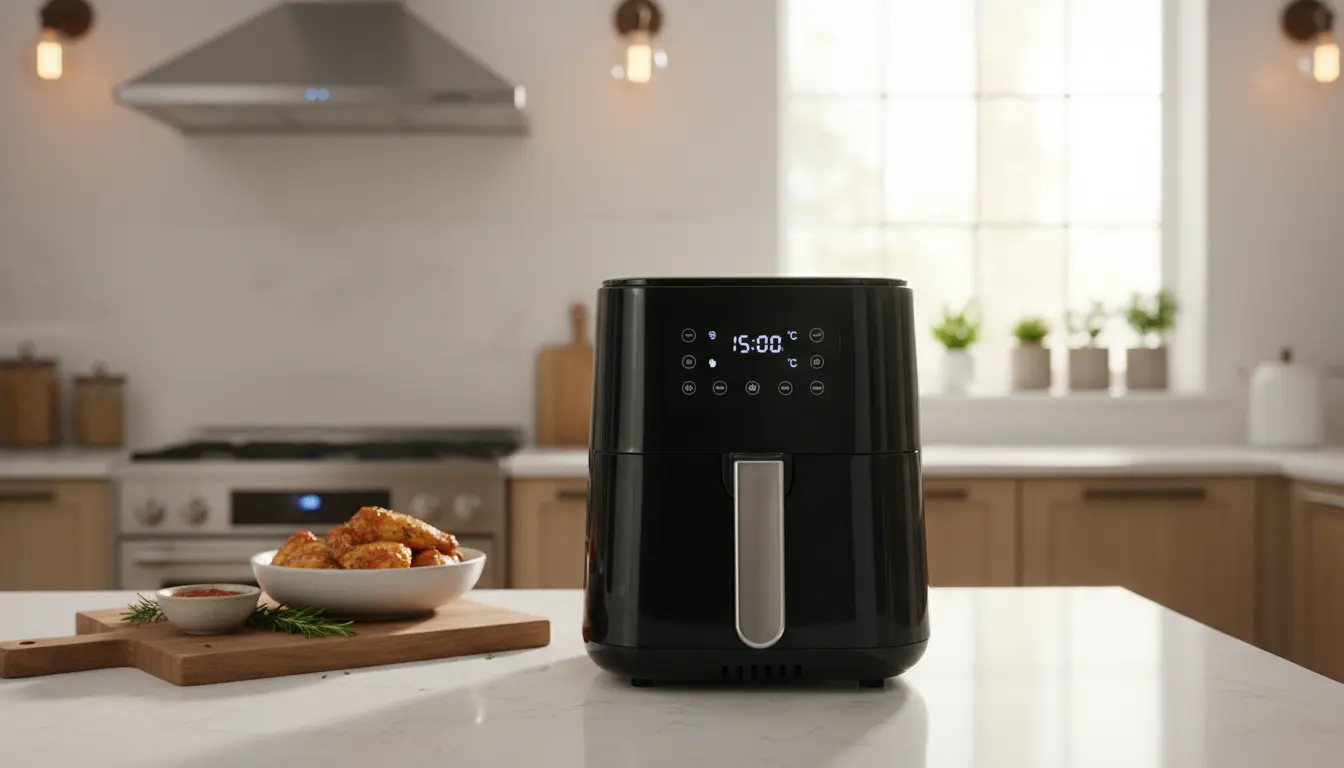
Households in the UK are being warned that a new charge linked to certain small electrical appliances could start in March 2026. The proposal, which has been discussed by industry and regulators, targets the rising number of high-power plug-in devices in homes, and air fryer owners are likely to be among those affected.
Why UK Households Using Air Fryers May Be Charged £126 Starting in March 2026
The suggested charge is intended to cover network upgrades and administrative costs that come with increasing demand on the electricity system. As more households add high-wattage appliances, distribution companies may look to recover part of those costs through targeted charges.
Officials have described the payment as a way to distribute costs fairly across households that use power-intensive plug-in appliances. The amount circulating in reports is £126, but the final format — whether annual, one-off, or per-device — is still under discussion.
How the £126 Charge Could Be Applied
There are several plausible ways such a charge might be applied. Regulators and suppliers usually choose an approach that is administratively simple and defensible to consumers.
Possible calculation methods
- Per-household charge: a flat fee for every home with one or more qualifying devices.
- Per-device charge: a fee applied to each registered device type, such as air fryers, high-power kettles or portable heaters.
- Usage-based recovery: the cost wrapped into peak-time tariffs or standing charges to recover network costs linked to load patterns.
At the moment the details are not final. Consumers should treat early figures as draft estimates rather than guaranteed bills.
Who Is Likely to Be Affected
Households with recent high-power small appliances stand to be most affected. Air fryers are common on that list because many models draw 1400–1800 watts during use.
Other devices that could trigger similar treatment include portable space heaters, powerful kettles, some slow cookers and certain high-wattage chargers for tools or e-bikes.
How to Check if You Will Be Charged
Keep an eye on communications from your energy supplier and the UK regulator. Suppliers are required to notify customers of changes affecting billing or standing charges well before they take effect.
Steps to verify exposure:
- Check emails and letters from your energy supplier for notices about new charges.
- Visit the regulator or supplier website for FAQs and official guidance.
- Review your household inventory for high-wattage appliances and note model wattages on labels or manuals.
Ways to Reduce or Avoid the £126 Charge
If a charge is implemented, there are practical steps households can take to cut costs or avoid being classified in a chargeable category.
- Switch tariffs: A cheaper or off-peak-friendly plan may offset a new charge.
- Use appliances sparingly: Reduce runtime for high-wattage devices and batch-cook where possible.
- Energy-efficient alternatives: Consider appliances with lower wattage or built-in timers.
- Smart plugs and meters: Track consumption and shift usage to off-peak times where possible.
Energy-saving tips for air fryer users
- Preheat only when necessary; shorter preheat cycles save energy.
- Cook in batches to reduce total power-on time across multiple meals.
- Use the right-sized model for your household—smaller units often use less power.
- Keep the fryer clean; a well-maintained unit works more efficiently.
Many air fryer models use roughly 1,400–1,800 watts, while a conventional electric oven can use 2,000–3,000 watts. Actual consumption depends on the model and cooking time.
Practical Steps to Prepare Before March 2026
Prepare now so you are not caught by surprise. Simple administrative and behavioural steps can make a real difference to costs.
- Audit appliances: Make a list of all high-wattage devices and note use frequency.
- Compare tariffs: Use comparison tools to see whether another supplier or tariff better suits your usage pattern.
- Install a smart meter: It provides granular usage data to help shift consumption to cheaper periods.
- Check for exemptions: Some support schemes may exempt low-income households or those on certain benefits.
Real-World Example
Case study: Anna, a household of two in Manchester, bought a 1600W air fryer last year. She uses it four times a week for 30 minutes per session.
Her approximate additional energy use from the air fryer is 1600W × 2 hours = 3.2 kWh per week. If a £126 charge were applied to households with similar devices, Anna could reduce exposure by:
- Reducing sessions to three per week and batching meals, cutting weekly use by about 25%.
- Switching to an off-peak tariff to lower per-kWh costs.
These changes would not necessarily eliminate a flat administrative charge, but they reduce overall energy spend and may lower the impact of any usage-based recovery in bills.
What to Watch for Next
Follow official announcements from your supplier and the energy regulator. Consultation outcomes, exact charge formats, and eligibility rules will be published before any charge starts in March 2026.
Stay informed and take simple steps now to manage appliance use and shop for the best tariff. That practical preparation can protect your household budget if a £126 charge is confirmed.