
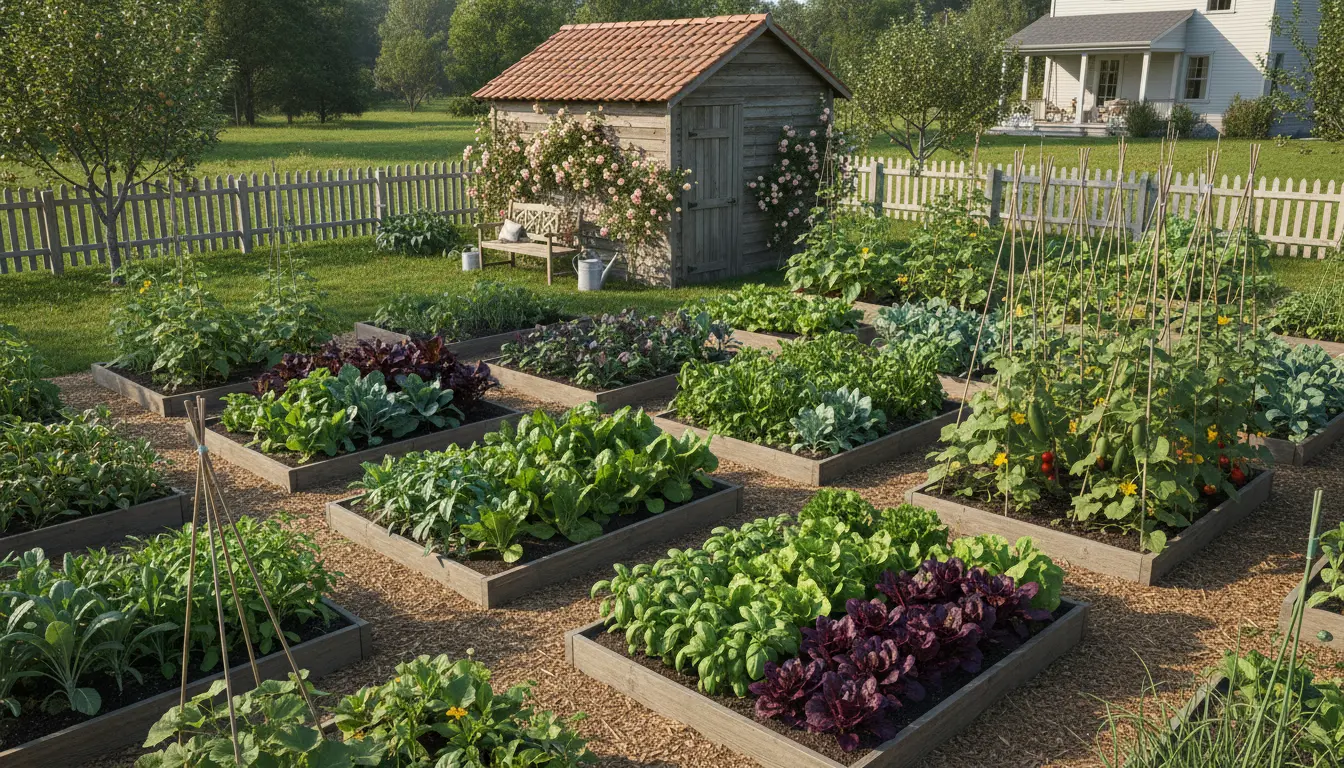
Why Start a Backyard Vegetable Garden
Starting a backyard vegetable garden saves money, improves food quality, and gives hands-on control over what you eat.
It also provides gentle exercise and can reduce food miles. This guide covers practical steps to plan, plant, and maintain a productive backyard vegetable garden.
Planning Your Backyard Vegetable Garden
Good planning reduces wasted effort. Decide how much space you can dedicate and what vegetables you and your family will actually eat.
Start small—one to four raised beds or a single plot makes it easier to learn and maintain.
Choose the Right Vegetables
Select vegetables suited to your climate and season. Fast-growing, reliable beginners include lettuce, radishes, tomatoes, bush beans, and zucchini.
Consider a mix of quick harvests and longer-season crops to keep harvests steady.
Site Selection for a Backyard Vegetable Garden
Vegetables need light and good drainage. Pick a spot that gets at least 6 to 8 hours of direct sunlight daily.
Avoid low spots that collect water and places shaded by large trees or structures.
Access and Convenience
Place your garden near a water source and the kitchen for easy harvesting. Wide paths and raised beds improve access and reduce compacted soil.
Soil Preparation and Composting
Good soil is the foundation of a productive garden. Most backyard soils benefit from added organic matter and simple testing.
Begin with a basic soil test for pH and nutrient levels, available from local extension services or home kits.
Improve Soil With Compost
Add 2–4 inches of compost and work it into the top 6–8 inches of soil. Compost improves structure, water retention, and fertility.
For raised beds, mix equal parts topsoil, compost, and a coarse material like perlite or well-aged bark for good drainage.
Planting and Crop Layout
Plan spacing to match the mature size of each plant. Crowding reduces air flow and increases disease risk.
Use companion planting to maximize space: pair tall plants with low groundcover or trellis vining crops to grow vertically.
Seed vs. Transplants
Start fast crops like radishes and lettuce from seed directly in the ground. Use transplants for tomatoes, peppers, and eggplants to extend the season.
Follow packet directions for depth and spacing to improve germination and healthy growth.
Watering, Mulch, and Routine Care
Consistent watering matters more than occasional heavy soakings. Aim for deep, even watering once or twice a week depending on weather.
Apply 2–3 inches of organic mulch around plants to conserve moisture, suppress weeds, and moderate soil temperature.
Fertilizing
Use a balanced, slow-release fertilizer at planting and supplement with liquid feeds for heavy-feeding crops like tomatoes.
Avoid excess nitrogen which favors leaves over fruit. Follow product directions to prevent burns and runoff.
Pest and Disease Management in a Backyard Vegetable Garden
Integrated Pest Management (IPM) combines prevention, monitoring, and targeted action. Start with cultural controls before chemical options.
Handpick large pests, use row covers for young plants, and encourage beneficial insects with flowering borders.
Common Problems and Solutions
- Aphids: Spray with water or introduce ladybugs.
- Slugs: Use beer traps or copper barriers around beds.
- Blight or powdery mildew: Improve airflow, remove infected leaves, rotate crops yearly.
Compact raised beds warm faster in spring and can extend the growing season by up to 2 weeks compared with in-ground plots.
Harvesting and Crop Rotation
Harvest vegetables at peak ripeness for best flavor and continued production. Pick regularly—many plants increase yield when harvested often.
Practice simple crop rotation: avoid planting the same family in the same bed two years in a row to reduce pests and disease buildup.
Small Real-World Example: A Weekend Starter Bed
Case study: Sara, a suburban beginner, started a single 4×4 raised bed in spring. She filled it with a mix of store topsoil and compost, then planted tomatoes, lettuce, and bush beans.
She watered deeply twice weekly, mulched with straw, and used a tomato cage for support. By August she had steady salads and summer tomatoes, spending about 15 minutes most days on care.
Tips for Success With a Backyard Vegetable Garden
- Start small and expand after one season.
- Keep a garden journal: note planting dates, varieties, and pest issues.
- Use quality compost and limit tilling to preserve soil structure.
- Plan for succession plantings to keep harvests continuous.
Quick Checklist Before You Start
- Choose a sunny site with easy water access.
- Decide bed size and prepare soil with compost.
- Select 3–6 easy crops for your first season.
- Set up watering and mulching plans.
- Monitor pests weekly and act early.
With a clear plan and basic routines, a backyard vegetable garden can be productive and low-stress. Begin with small steps, learn from each season, and adjust your methods as you gain experience.