
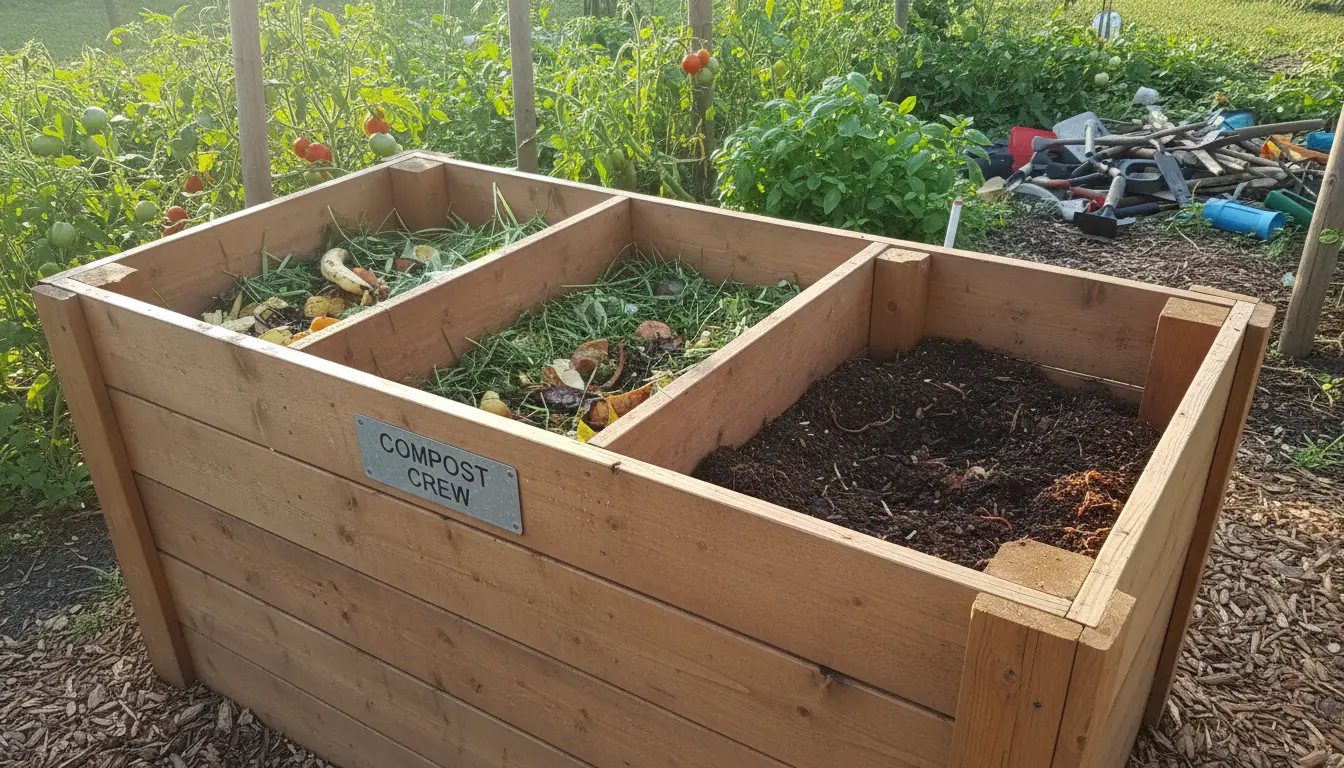
Composting at home turns kitchen scraps and yard waste into rich soil for plants. This guide explains simple steps to set up and keep a compost bin that works.
Home Composting Basics
Home composting uses microbes and small organisms to break down organic materials. The result is humus-like compost that improves soil structure and feeds plants.
Why home composting matters
Reducing organic waste keeps material out of landfills and lowers methane emissions. Composting also reduces the need for chemical fertilizers and helps retain water in soil.
Benefits of home composting
- Less household waste and lower trash costs
- Free, nutrient-rich soil amendment for gardens
- Improved soil health and plant growth
- Reduced need for store-bought fertilizers
How to Start Home Composting
Starting a compost system requires three basic choices: the bin, ingredients, and maintenance routine. Choose options that match your space and time.
Choosing a bin for home composting
Pick a container that fits your yard or balcony. Common choices include tumblers, stationary bins, and simple open piles. Each has pros and cons:
- Tumbler: Easier to turn and faster results, good for small yards.
- Stationary bin: Low effort, holds more material, needs occasional turning.
- Open pile: Cheapest, works for large yards, requires space and effort to turn.
What to compost at home
Balance ‘greens’ (nitrogen-rich) and ‘browns’ (carbon-rich). A good rule is roughly 2 parts browns to 1 part greens by volume.
- Greens: vegetable scraps, fruit waste, coffee grounds, fresh grass clippings
- Browns: dry leaves, cardboard, shredded paper, straw, wood chips
- Do not compost: meat, dairy, oily foods, diseased plants, pet waste
Setting up and starting your bin
- Place the bin in a partially shaded spot with good drainage.
- Start with a layer of coarse browns to improve airflow.
- Add alternating layers of greens and browns, keeping the mix moist like a wrung-out sponge.
- Turn or mix the pile every 1–2 weeks to add oxygen and speed decomposition.
Maintaining Home Composting
Regular checks keep the process healthy. Look for temperature, moisture, and odor as indicators of progress.
Daily and weekly tasks
- Add new kitchen scraps in small amounts to avoid odors.
- Chop larger items to speed breakdown.
- Turn the pile weekly if possible; tumblers may be turned more frequently.
When compost is ready
Compost is mature when it is dark, crumbly, and smells earthy. This can take 2 months to a year depending on materials, temperature, and how often you turn it.
Troubleshooting and Tips for Home Composting
Common problems are easy to fix once you know the signs.
- Bad smell: Add more browns and turn the pile to introduce oxygen.
- Too dry: Add water and greens to restore moisture.
- Pests: Avoid putting meat, dairy, or large food scraps exposed at the surface. Use a closed bin or bury scraps in the center.
- Slow decomposition: Chop materials smaller and increase turning frequency.
Adding a thin layer of finished compost or garden soil to a new pile introduces beneficial microbes and speeds up decomposition.
Small Real-World Example
Case study: A family of four in a suburban home started a 200-liter tumbler. They kept a kitchen pail for scraps and added shredded cardboard from deliveries as browns.
Within four months of regular turning and balancing greens and browns, they produced usable compost. They used it to top-dress vegetable beds and reported stronger seedlings and improved soil drainage.
Quick Checklist to Start Home Composting
- Choose the right bin for your space (tumbler, stationary, or pile).
- Collect greens and browns in separate containers.
- Maintain moisture and regular turning.
- Monitor for odors and pests and adjust mix as needed.
- Use finished compost to enrich soil and reduce fertilizer use.
Home composting is practical and scalable. Start small, learn what works in your climate, and expand over time. With basic care, your bin will turn waste into valuable soil for plants.