
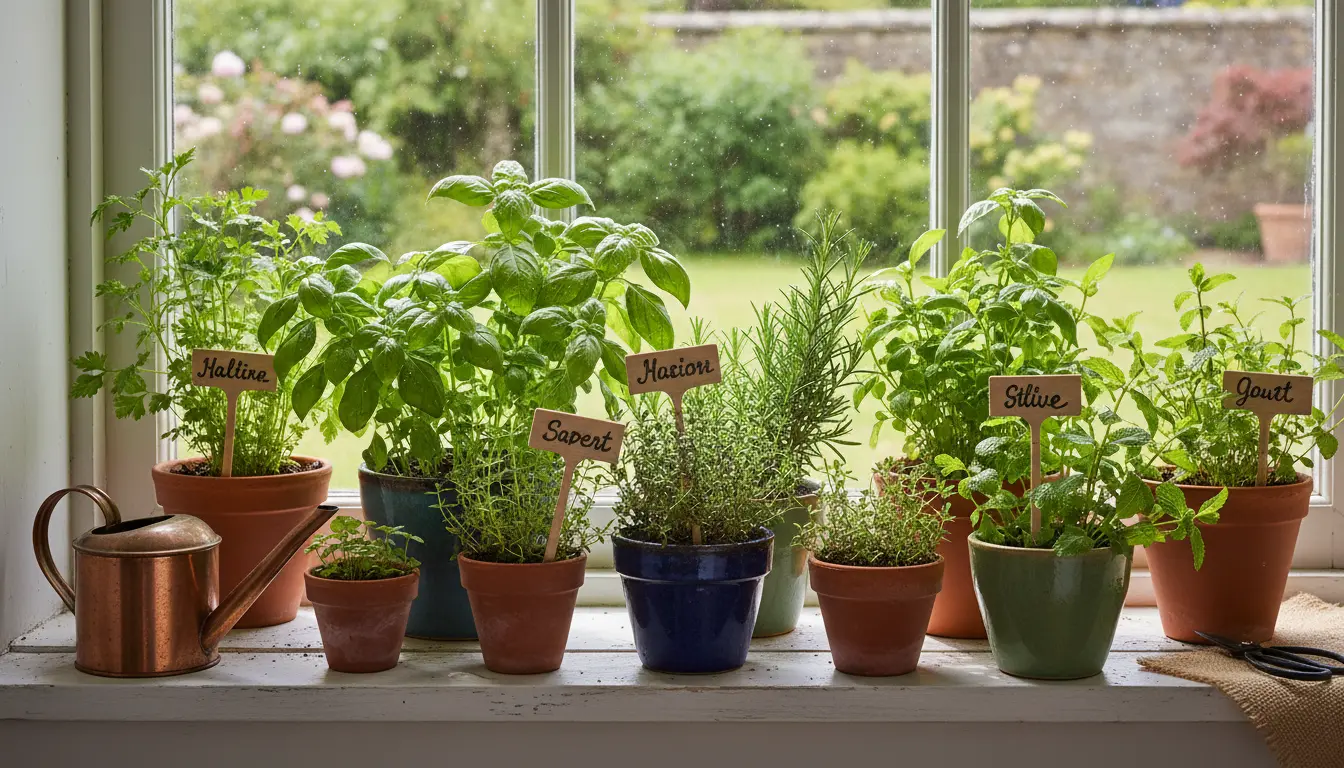
Growing herbs indoors is a low-cost, practical way to have fresh flavors at hand. This guide gives clear steps for starting an indoor herb garden and keeping it productive year-round.
Why an indoor herb garden works
Indoor herb gardens fit small spaces and provide fresh ingredients for cooking and drinks. They also reduce waste and can improve air quality in the kitchen.
With the right light and basic care, many herbs thrive indoors and give multiple harvests from a single plant.
Choosing herbs for your indoor herb garden
Pick herbs that match your light conditions and cooking habits. Start with easier species if you are new to growing indoors.
Best herbs for an indoor herb garden
- Basil — likes bright light and warm temps.
- Parsley — tolerates medium light and is slow-growing.
- Mint — forgiving and good for containers, but watch spreading.
- Chives — small footprint and hardy.
- Thyme and oregano — prefer drier soil and bright light.
Light and location for an indoor herb garden
Light is the most important factor for an indoor herb garden. Most culinary herbs need 6–8 hours of bright light each day.
Lighting needs for an indoor herb garden
Place herbs on a south or west-facing windowsill where possible. If natural light is limited, add a full-spectrum LED grow light for 10–12 hours per day.
Rotate pots weekly so all sides of the plants receive light and grow evenly.
Soil, containers, and drainage
Use a well-draining potting mix designed for containers. Avoid garden soil, which compacts and holds too much moisture indoors.
Choose containers with drainage holes to prevent root rot. A 4–6 inch pot is fine for single herbs; use larger pots for multiple plants.
Watering and feeding an indoor herb garden
Overwatering is a common cause of failure. Water when the top 1 inch of soil feels dry. Pour until water drains from the bottom, then empty the saucer.
Feed herbs with a balanced liquid fertilizer every 4–6 weeks during the growing season. For leafy herbs, use a slightly higher nitrogen feed for bushier growth.
Planting, pruning, and harvesting
Plant seedlings at the same depth they were in their nursery pots. Space container plantings to allow airflow between stems.
Prune regularly to encourage branching. Pinch back the tips of basil and parsley once it reaches 4–6 inches tall.
- Harvest no more than one-third of the plant at a time.
- Use scissors to cut stems above a leaf node to promote regrowth.
- Remove flowers on herbs like basil to keep flavor concentrated in leaves.
Troubleshooting common problems in an indoor herb garden
Pests like aphids and whiteflies can appear indoors. Wipe leaves, use a gentle insecticidal soap, or isolate the affected plant.
Yellowing leaves usually mean overwatering or poor light. Adjust the watering schedule and check light levels first.
Quick troubleshooting checklist
- Leggy growth — increase light or move closer to window/grow light.
- Wilting — check soil moisture and root health.
- Stunted growth — review feeding schedule and pot size.
Some herbs, like mint, are easier to control when grown in single pots because they spread aggressively in shared containers.
Simple planting schedule for an indoor herb garden
Use a simple routine to keep your herb garden productive. Consistent care beats complexity.
- Weekly: Check soil moisture and rotate pots.
- Every 2 weeks: Remove dead leaves and harvest small amounts.
- Monthly: Feed with diluted liquid fertilizer during active growth.
- Seasonally: Repot if roots are pot-bound or refresh potting mix every 1–2 years.
Case study: One-windowsill success
Maria, a busy home cook with a small apartment, started an indoor herb garden on a south-facing windowsill. She began with basil, chives, and parsley in three 4-inch pots.
By following a simple schedule — watering when the top inch dried and fertilizing monthly — she harvested fresh herbs for six months without replacing plants. When basil began to flower, she pinched the tops to encourage more leaf growth.
This small, low-effort setup reduced her grocery trips and added flavor to weekly meals.
Tools and supplies checklist
- Pots with drainage holes
- Quality potting mix (light and well-draining)
- Full-spectrum LED grow light (if needed)
- Liquid fertilizer and pruning shears
- Small saucers and a moisture meter (optional)
Final tips for a healthy indoor herb garden
Start small and expand once you have success. Learn each herb’s needs — some prefer drier soil, others need steady moisture.
Regular harvesting and light pruning keep plants productive and prevent legginess. With basic care and a reliable light source, an indoor herb garden can thrive year-round and deliver fresh flavors right from your windowsill.