
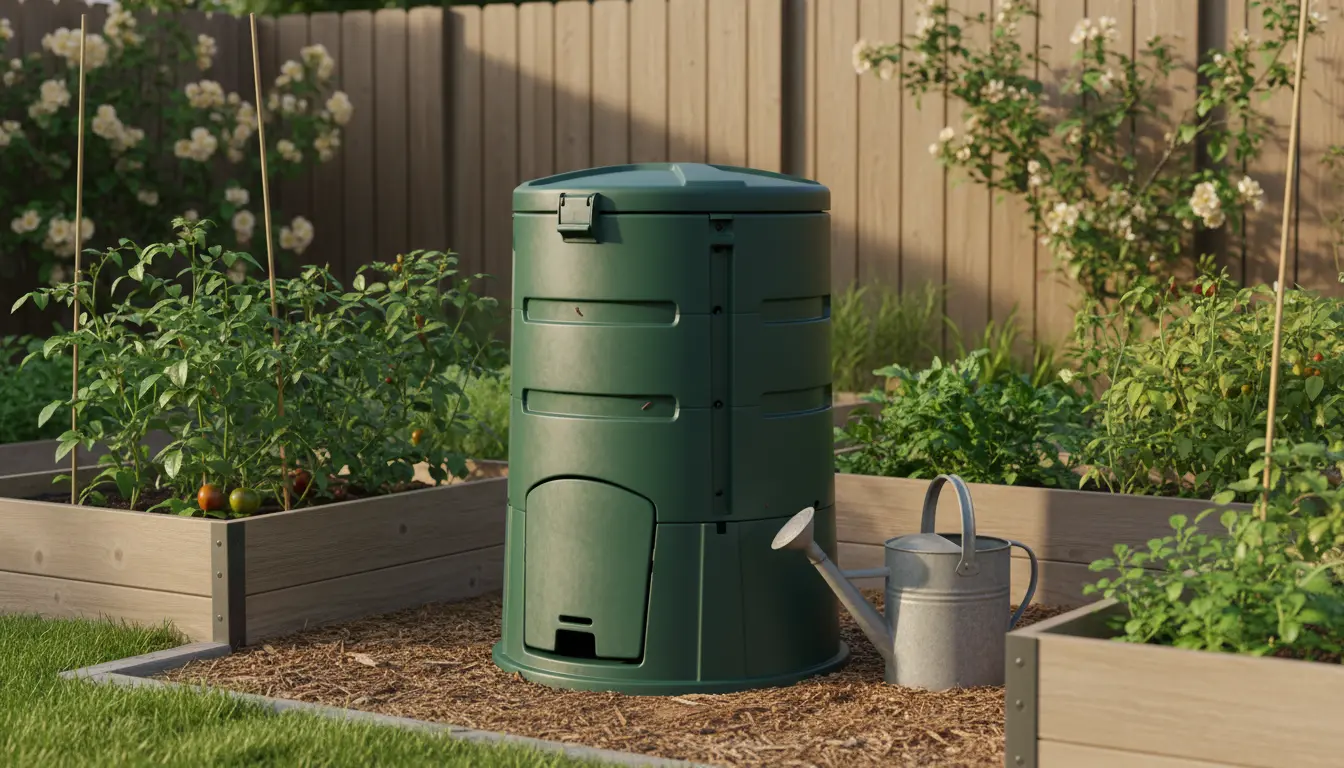
Home composting turns kitchen scraps and yard waste into nutrient rich material for your garden. This guide gives clear, practical steps you can follow to start composting at home.
Home composting basics
Compost is the result of controlled decomposition of organic matter. Microbes and small animals break down materials into dark, crumbly humus you can use to improve soil.
Good composting balances carbon rich “browns” and nitrogen rich “greens,” moisture, and aeration. Aim for a mix and monitor it weekly.
Why choose home composting
Home composting reduces household waste, lowers landfill methane, and returns nutrients to your soil. It can also save money on fertilizer and improve garden health.
What you can and cannot compost
Knowing what to add prevents odors and pests. Use a mix of materials for a healthy process.
- Greens (nitrogen): vegetable and fruit scraps, coffee grounds, grass clippings.
- Browns (carbon): dry leaves, shredded paper, straw, cardboard pieces.
- Do not compost: meat, dairy, oily foods, diseased plants, pet waste from carnivores.
Choosing a compost system for home composting
Pick a system that fits your space and effort level. Options range from simple piles to tumblers and bins.
- Open pile: Low cost, suitable for yards with space. Requires more turning.
- Closed bin: Neat and faster than a pile. Better for small yards and to deter pests.
- Tumbler: Easiest to turn and faster to heat. Good for small to medium households.
Placement and size
Place your system on soil if possible to allow organisms to enter. For beginners, a 3×3 foot pile or a 50 to 100 gallon bin is a practical starting size.
How to build and start your compost
Start with a layer of coarse browns for drainage, then alternate layers of greens and browns. Aim for roughly 3 parts browns to 1 part greens by volume.
Keep the pile moist like a wrung out sponge. If it is too dry, decomposition slows; if too wet, it smells.
Turning and maintenance
Turning aerates the pile and speeds decomposition. For a hot compost, turn once a week. For a low maintenance pile, turn once every 2 to 4 weeks.
Monitor temperature if you want faster results. A properly balanced hot pile reaches 120 to 160°F (50 to 71°C).
Troubleshooting common problems in home composting
Problems are usually simple to fix. Identify the symptom and adjust the pile accordingly.
- Smelly pile: Add more browns and turn to introduce air.
- Slow decomposition: Chop materials smaller, add more greens, and keep moist.
- Pests: Avoid adding meat or oily foods and use a closed bin or bury food scraps in the center.
Using finished compost
Finished compost is dark, crumbly, and smells earthy. Use it to top dress lawns, mix into planting beds, or make a planting potting mix.
A common application is to mix one part compost to two parts native soil when planting new beds or trees.
Timing and testing
Compost typically finishes in 2 to 6 months for active hot systems and 6 to 12 months for slower piles. Screen or sift it if you want a fine texture.
Simple checklist to start home composting
- Choose a bin or pile location on soil.
- Collect kitchen scraps in a covered container.
- Layer browns and greens, chop materials small.
- Keep pile moist and turn periodically.
- Harvest finished compost and use in the garden.
Small real world case study
Case: A two person household in a suburban backyard started a 60 gallon bin. They layered shredded leaves, kitchen scraps, and grass clippings. By turning with a pitchfork every 10 days and maintaining moisture, they had usable compost in about 4 months.
Result: They diverted roughly 200 pounds of organic waste in the first year and reduced garden fertilizer spending by about 25 percent.
Final tips for successful home composting
Start small and adjust as you learn. Keep a balance of browns and greens and monitor moisture and odor.
Be patient. Composting is a natural process and improves with practice. Consistency and small fixes keep the system healthy.
If you want faster results, consider a tumbler or a simple thermometer to manage heat. For low effort, use a layered bin and occasional turning.
Home composting is an accessible way to reduce waste and support healthier soil. With a few basic habits, you can make high quality compost at home.