
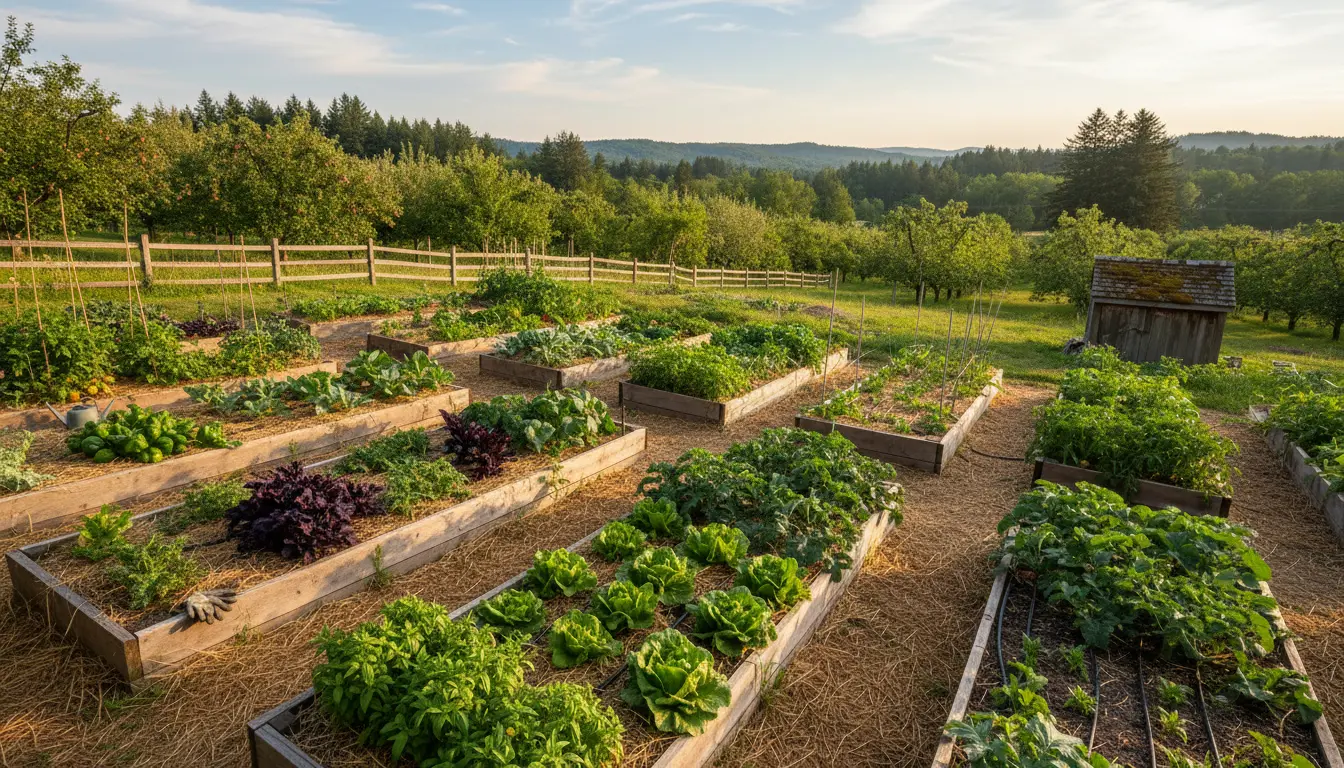
Starting a vegetable garden is a practical way to grow fresh food, save money, and learn a hands-on skill. This guide breaks the process into clear steps you can follow, whether you have a yard, a balcony, or a few containers.
How to Start a Vegetable Garden: Plan Your Space
Assess your available space before you plant. Note sun exposure, dimensions, and access to water to choose the right layout.
Map a simple plan on paper or with a phone photo. Include bed sizes, paths, and where taller plants will shade others.
Sunlight and Location When Starting a Vegetable Garden
Most vegetables need 6 to 8 hours of direct sun. Observe your site at different times of day to find the sunniest spot.
If you have limited sun, choose leafy greens and root crops that tolerate partial shade.
Soil and Drainage When Starting a Vegetable Garden
Good soil is the foundation of a productive garden. Check if water drains well after a heavy rain; standing water means poor drainage and root risk.
For heavy clay or compacted soil, consider raised beds filled with a quality mix to improve root growth and warmth in spring.
How to Start a Vegetable Garden: Choose Plants and Timing
Choose plants suited to your climate zone and season. Beginners should pick forgiving, fast-growing crops for quick success.
Choosing Plants When Starting a Vegetable Garden
Start with easy vegetables that tolerate beginner mistakes. Examples include:
- Tomatoes (in containers or beds)
- Lettuce and mixed salad greens
- Zucchini and summer squash
- Radishes and carrots
- Beans and peas
Seed packets and nursery tags show days to maturity and spacing. Follow those as a baseline.
Season and Planting Times to Start a Vegetable Garden
Use your local frost dates to time plantings. Cool-season crops go in early spring or fall; warm-season crops wait until after the last frost.
Stagger plantings for continuous harvest: sow small amounts every 2–3 weeks for lettuce and radishes.
How to Start a Vegetable Garden: Soil, Compost, and Fertility
Healthy soil stores water, supplies nutrients, and supports beneficial organisms. Test soil pH and texture if possible.
Add compost to improve structure and fertility. Aim for a 2–3 inch layer mixed into the top 6–8 inches of soil for existing beds.
Compost and Mulch When Starting a Vegetable Garden
Compost feeds plants slowly and improves moisture retention. Mulch reduces weeds and keeps soil temperatures steady.
Use organic mulches like straw, leaf mold, or shredded bark. Keep mulch a few inches away from plant stems to prevent rot.
How to Start a Vegetable Garden: Planting and Watering Techniques
Plant at the depth recommended on seed packets or plant tags. Follow spacing to avoid overcrowding, which increases disease risk.
Water deeply and infrequently rather than light frequent sprinkling. Deep watering encourages strong root systems.
Watering Schedule When Starting a Vegetable Garden
New seedlings need more regular moisture until established. Afterward, water in the morning 1–2 times per week depending on weather.
Use a soaker hose or drip irrigation to deliver water to roots and reduce leaf wetness that can lead to disease.
How to Start a Vegetable Garden: Maintenance and Pest Care
Routine maintenance includes weeding, staking tall plants, and harvesting on time. These small tasks prevent bigger problems later.
Monitor for pests and diseases early. Identifying issues quickly often allows gentle, nonchemical solutions to work well.
Pest Management When Starting a Vegetable Garden
Integrated approaches work best: hand-pick large pests, use floating row covers for protection, and encourage beneficial insects with flowering plants.
For persistent problems, choose targeted organic controls like Bacillus thuringiensis for caterpillars or neem oil for some leaf pests.
Growing tomatoes alongside basil may improve flavor and can help deter some pests. Companion planting is a low-cost tool many gardeners use.
Small Case Study: Urban Balcony Garden
Maria, a city renter, started a vegetable garden on a south-facing balcony using four 12-inch containers. She chose cherry tomatoes, basil, leaf lettuce, and radishes.
By using a potting mix with added compost, watering with a drip emitter, and rotating plantings, she harvested salads and herbs through the summer and reduced grocery trips.
The key lessons: choose compact varieties, use quality container soil, and water consistently.
Conclusion: First Steps to Start Your Vegetable Garden
Start small, plan for sunlight and water, and choose easy vegetables for your climate. Short learning cycles help you build confidence quickly.
Keep notes on what you planted and when, so each season you improve yields and reduce mistakes. With simple planning and steady care, you can enjoy fresh vegetables from your own garden.