
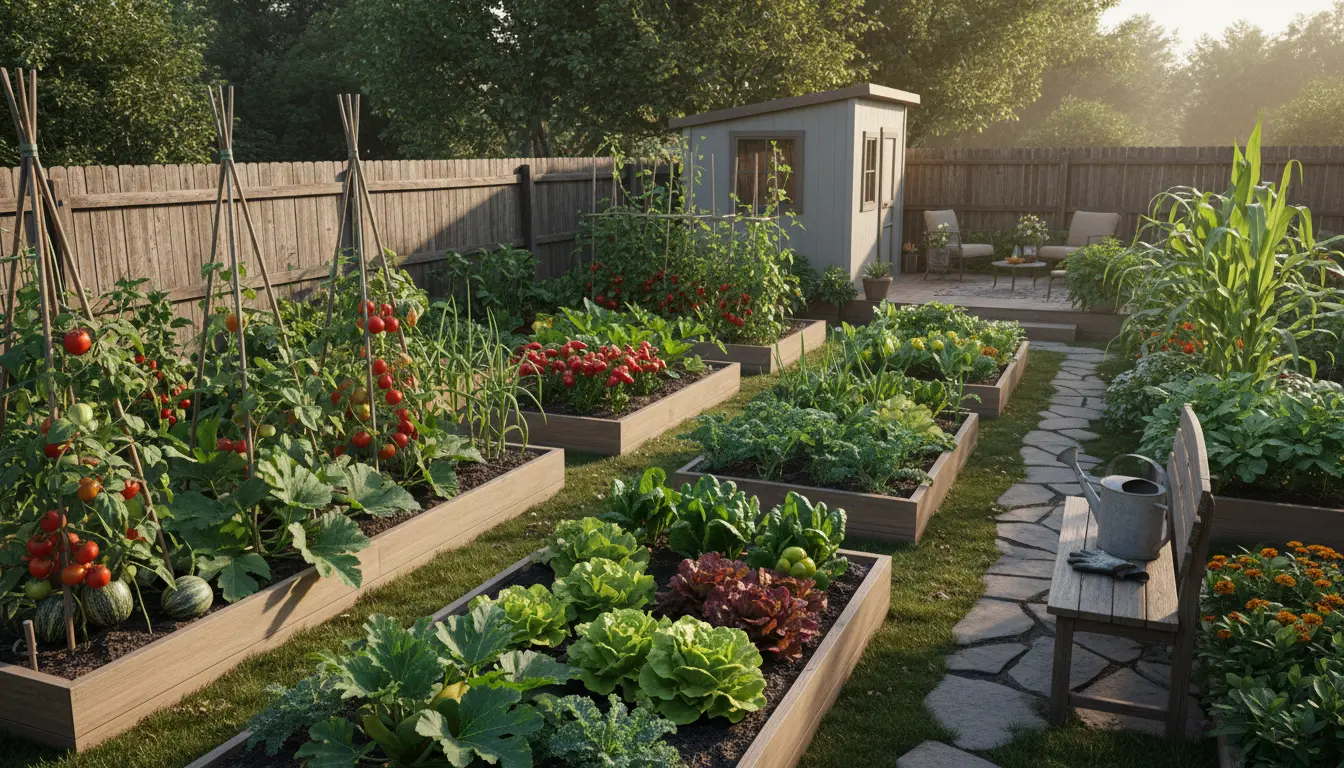
Start a Small Vegetable Garden: First Steps
Starting a small vegetable garden is achievable with basic planning and a little effort. You do not need a big yard or special tools to grow fresh vegetables at home.
Decide on location, containers or beds, and a short list of easy crops. This keeps the project manageable and increases your chance of success.
Choose the Right Location for a Small Vegetable Garden
Pick a spot that gets 6 to 8 hours of sunlight per day for most vegetables. Observe sunlight for a few days to confirm consistent exposure.
Consider access to water and convenience. A garden near your kitchen or a patio container setup will encourage regular care.
Sunlight and Shade Considerations
Leafy greens tolerate partial shade, while tomatoes and peppers need full sun. If you have limited sun, plan a mix of shade-tolerant and sun-loving plants.
Use reflective surfaces like light-colored walls to increase light in tight spaces. Move containers seasonally if needed.
Prepare Soil and Containers for a Small Vegetable Garden
Good soil is the foundation of a productive small vegetable garden. If using in-ground beds, test soil for pH and organic matter.
Raised beds and containers let you control soil quality more easily. Use a mix of quality topsoil and compost to improve structure and fertility.
Soil Mix and Compost Tips
For containers, a recommended mix is 40% topsoil, 40% compost, and 20% coarse sand or perlite for drainage. Avoid using straight garden soil in pots.
Add 2 to 3 inches of compost to raised beds each growing season. Compost feeds plants and improves moisture retention.
Select Easy Vegetables for a Small Vegetable Garden
Begin with vegetables that have a high success rate and quick returns. This builds confidence and provides regular harvests.
Good starter crops include lettuce, radishes, cherry tomatoes, bush beans, and herbs like basil and parsley.
- Lettuce and salad greens: quick harvest and tolerate partial shade
- Radishes: ready in 3 to 4 weeks and great for small spaces
- Cherry tomatoes: compact varieties fit containers and produce well
- Bush beans: space-efficient and productive
- Herbs: low maintenance and useful in the kitchen
Watering and Maintenance for a Small Vegetable Garden
Consistent watering is more important than frequent watering. Aim to keep soil evenly moist but not waterlogged.
Install a simple drip irrigation or use soaker hoses for beds. For containers, water daily in hot weather and check moisture with your finger.
Mulching and Pest Management
Mulch with straw or shredded leaves to keep soil cool and reduce weeds. Mulch also cuts down on evaporation, saving water.
Use physical barriers like row covers for pest control and check plants weekly for signs of disease. Hand-pick pests or use organic controls when needed.
Planting Schedule and Companion Planting
Plan your planting by seasons and local frost dates. Start cool-season crops early and warm-season crops after the last frost.
Companion planting can increase yields and reduce pests. For example, basil planted near tomatoes may improve flavor and deter insects.
Harvesting and Storing Your Vegetables
Harvest regularly to encourage continued production. Pick leafy greens when young for best flavor and pick tomatoes when fully colored.
Store produce in cool, dry places. Most herbs can be dried or frozen, and tender greens keep well for a few days in the fridge.
Small Vegetable Garden Case Study: Maria’s Balcony Garden
Maria had a small balcony and wanted fresh herbs and a few vegetables. She started with three 12-inch pots and one 2×2 foot raised box.
She planted basil, cherry tomatoes, lettuce, and a dwarf pepper. Using a morning watering routine and weekly compost tea, she harvested herbs within six weeks and tomatoes all summer.
Maria kept notes on watering and spacing, which helped her expand to more containers the next season with minimal problems.
Quick Checklist to Start a Small Vegetable Garden
- Choose a sunny location and plan layout
- Decide on containers or raised beds
- Use quality soil mix and add compost
- Select easy crops for your climate and space
- Set up consistent watering and mulching
- Monitor pests and harvest regularly
Final Tips for a Successful Small Vegetable Garden
Start small and expand after your first season. Small failures are learning opportunities and rarely costly.
Keep a garden journal with planting dates, results, and any changes you make. Over time, this record will improve yields and reduce repeat mistakes.
With basic planning, good soil, and regular care, anyone can successfully start a small vegetable garden. Begin with a few easy plants and build from there.