
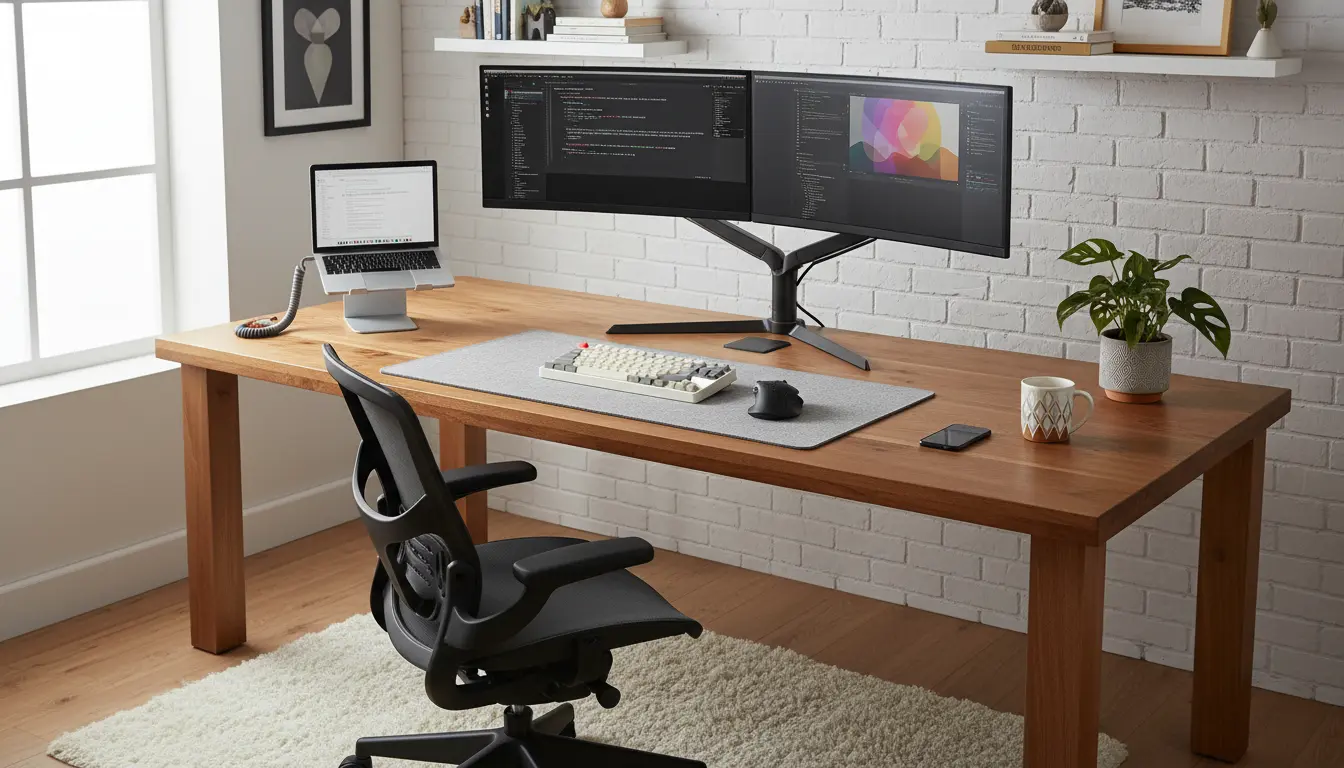
Working from home or a remote location requires different habits and tools than office life. This guide explains practical ways to improve remote work productivity with repeatable routines, focused tools, and simple measurement techniques.
Why Remote Work Productivity Matters
Remote work productivity affects deadlines, client relationships, and team morale. Consistent output builds trust and reduces stress for managers and independent workers alike.
Improving productivity is not about longer hours. It is about smarter planning, fewer distractions, and tools that support focus and collaboration.
Core Habits to Improve Remote Work Productivity
Good habits form the foundation for steady output. Start with a few changes and make them routine.
Set a Clear Daily Routine
Design a start-of-day routine with set times for work, breaks, and wrap-up. A predictable schedule reduces decision fatigue and keeps momentum through the day.
Include a brief morning planning step: list three priority tasks to complete that day.
Use Time Blocking and Focus Sessions
Time blocking assigns specific hours to tasks or types of work. Use blocks of 45–90 minutes for deep work and short blocks for meetings or admin tasks.
Pair time blocks with techniques like the Pomodoro Method: 25 minutes focused, 5 minutes break. Repeat and take a longer break after four sessions.
Reduce Distractions
Create a dedicated workspace and set boundaries with household members or roommates. Turning off nonessential notifications reduces interruptions that break concentration.
Use a simple distraction list: when an off-topic thought appears, write it down and return to focus. This keeps side tasks from derailing progress.
Build Healthy Breaks and Movement
Short physical breaks improve long-term focus. Stand, stretch, or walk for 5–10 minutes between blocks.
Regular movement helps prevent burnout and keeps energy levels steady across the day.
Essential Tools to Improve Remote Work Productivity
The right toolset supports planning, communication, and measurement. Choose tools that match your workflow and team habits.
- Task Management: Trello, Asana, or Notion for lists, boards, and priorities.
- Time Tracking: Toggl, Clockify, or built-in timers to measure focused work and identify time sinks.
- Communication: Slack, Microsoft Teams, or simple email policies to reduce meeting overload.
- Focus Apps: Forest, Freedom, or built-in Do Not Disturb modes to block distracting sites.
- Automation: Zapier or IFTTT to remove repetitive tasks and connect apps.
- Cloud Storage: Google Drive, Dropbox, or OneDrive for accessible files and version control.
Choosing Tools Wisely
Pick one tool per need and avoid overlap. Too many apps create context switches and increase setup time.
Start with free tiers and add paid plans only when the tool saves clear time or improves coordination.
Measure and Adjust to Improve Remote Work Productivity
Measurement makes progress visible. Track output, not just hours, and adjust routines and tools based on data.
Simple metrics to track include completed priority tasks per week, average deep-work hours per day, and number of unplanned interruptions.
Weekly Review
Set a 15–30 minute weekly review to assess what worked, what didn’t, and plan improvements. Use a short checklist for consistency.
- What were the three biggest wins this week?
- What interrupted focus most often?
- Which tool or habit should I change next week?
Studies show that scheduled breaks and a consistent daily routine can improve focus and creative problem solving by up to 20 percent for knowledge workers.
Small Real-World Case Study
Sara is a freelance UX designer who felt her days were scattered across meetings and email. She aimed to improve remote work productivity in one month.
Actions she took: set a morning planning ritual, switched to a single task board in Trello, used Toggl to track focused design time, and blocked social sites with a focus app during design sessions.
Result: After four weeks, Sara increased weekly billable design hours by 25% and reduced late-night catch-up work. Her clients noticed faster turnarounds and clearer status updates.
Actionable Checklist to Improve Remote Work Productivity Today
- Define three daily priorities and time-block them on your calendar.
- Pick one task manager and one time-tracking tool; use them consistently.
- Schedule short movement breaks and one weekly review to adjust habits.
Improving remote work productivity takes small, consistent changes. Focus on routines and a minimal set of tools, measure outcomes, and iterate weekly.