
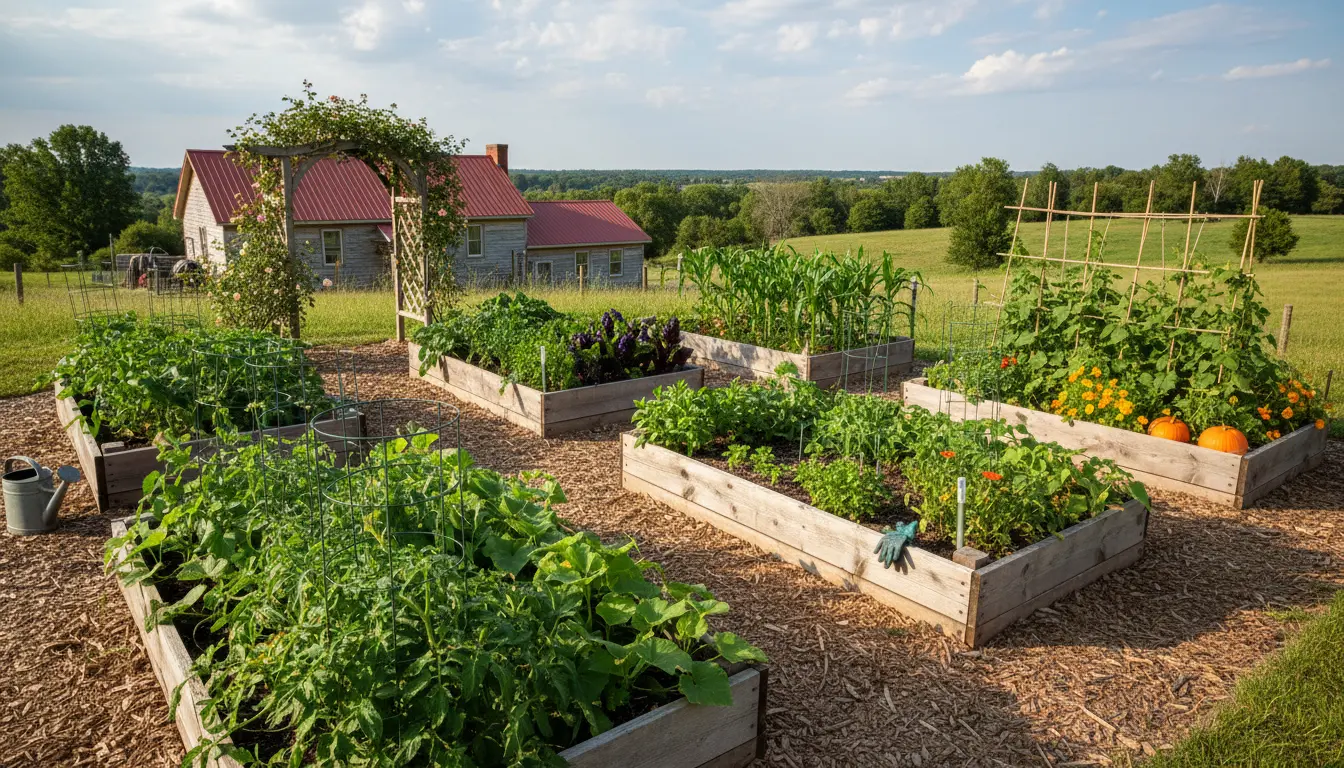
Planning before starting a vegetable garden
Starting a vegetable garden begins with simple planning. A clear plan saves time and reduces mistakes when you first dig into soil.
Decide location, size, and goals before buying seeds or tools. Small, focused beds are easier to manage than a large, unfinished plot.
Choose the right spot for starting a vegetable garden
Look for 6–8 hours of sunlight and reasonably flat ground. Good sun exposure matters most for common vegetables like tomatoes, peppers, and beans.
Consider access to water and proximity to your house for easier daily care. If your yard is shaded, pick vegetables that tolerate partial sun.
Soil and bed types for starting a vegetable garden
Healthy soil is the foundation of productive plants. You can use in-ground beds, raised beds, or containers depending on space and soil quality.
Test soil pH with an inexpensive kit. Most vegetables prefer a pH of 6.0–7.0. Amend sandy or heavy clay soil with compost to improve texture and nutrients.
Preparing soil and amendments
Mix 3–4 inches of compost into the top 6–8 inches of soil for raised beds. For containers, use a quality potting mix blended with compost.
- Add slow-release organic fertilizer based on soil test recommendations.
- Use mulch to conserve moisture and reduce weeds after planting.
- Rotate crops yearly to avoid disease buildup in the soil.
Plant selection and sequencing when starting a vegetable garden
Choose easy, high-success crops for your first season. Fast rewards keep motivation high and help you learn local conditions.
Consider succession planting to extend harvests through the season.
Top plants for starting a vegetable garden
Begin with these beginner-friendly choices:
- Leafy greens: lettuce, spinach, Swiss chard
- Root vegetables: radishes, carrots, beets
- Quick fruiting: bush beans, cherry tomatoes, zucchini
- Herbs: basil, parsley, chives
Planting, watering, and basic care
Follow seed packet or plant tag instructions for spacing and depth. Crowding plants reduces airflow and increases pest and disease risk.
Water deeply and less often rather than light, frequent watering. Aim for moist but not waterlogged soil.
Practical watering tips
- Water in the morning to reduce disease and evaporation.
- Use drip irrigation or soaker hoses for consistent moisture.
- Check soil moisture with a finger; if the top 2 inches are dry, water deeply.
Managing pests and common problems
Expect some insect activity, but most damage is manageable with simple measures. Early detection prevents problems from spreading.
Use cultural controls first: remove diseased leaves, rotate crops, and keep beds weed-free.
Low-chemical pest strategies
- Handpick large pests like caterpillars and beetles.
- Use row covers to protect seedlings from insects and birds.
- Introduce beneficial insects by planting flowers such as marigolds and alyssum.
Harvesting and extending the season
Harvest regularly to encourage more production. Pick beans, tomatoes, and leafy greens at peak ripeness for best flavor and yield.
Extend your season with simple tools: row covers, cold frames, or a small hoop house delay frost and add more harvest weeks.
Preserving your harvest
- Blanch and freeze surplus vegetables for off-season meals.
- Consider pickling cucumbers or fermenting cabbage to reduce waste.
- Share excess produce with neighbors to keep motivation high.
Small real-world case study
Case study: Maria’s 10×4-foot raised bed. Maria, a beginner gardener in a temperate zone, built a 10×4 raised bed and filled it with a 60/40 mix of compost and topsoil.
She planted staggered rows of lettuce, three tomato plants, bush beans, and basil. With weekly watering and mulch, her bed produced continuous salad greens and tomatoes from June through October.
Lessons learned: start small, stagger plantings, and add mulch early to retain moisture. Maria avoided major pest problems by inspecting plants weekly and using row covers for seedlings.
Simple checklist for starting a vegetable garden
- Pick a sunny location and measure available space.
- Test and amend soil, or prepare raised beds/containers.
- Select 4–6 beginner-friendly crops and plan succession plantings.
- Set up a watering plan and basic pest controls.
- Harvest regularly and preserve excess produce.
Starting a vegetable garden is a learn-by-doing process. Keep notes on planting dates, varieties, and issues so you can improve each season.
With modest effort and a compact plan, most beginners can grow fresh, tasty vegetables in their first year.