
Why start a vegetable garden
Growing your own vegetables saves money and gives you fresh food within walking distance. It also helps you learn seasonal cycles and improves your connection to the environment.
This guide explains how to start a vegetable garden with practical steps and examples you can follow in a small yard or on a balcony.
Choose a site to start a vegetable garden
Good site choice is the first practical step when you start a vegetable garden. Look for a spot with at least 6 hours of direct sunlight, level ground, and easy access to water.
Avoid low-lying areas that collect water and places beneath large trees where roots and shade will limit growth.
Sun, water, and space
- Sun: Most vegetables need 6–8 hours of direct sun.
- Water: Choose a site near an outdoor faucet or plan for easy watering.
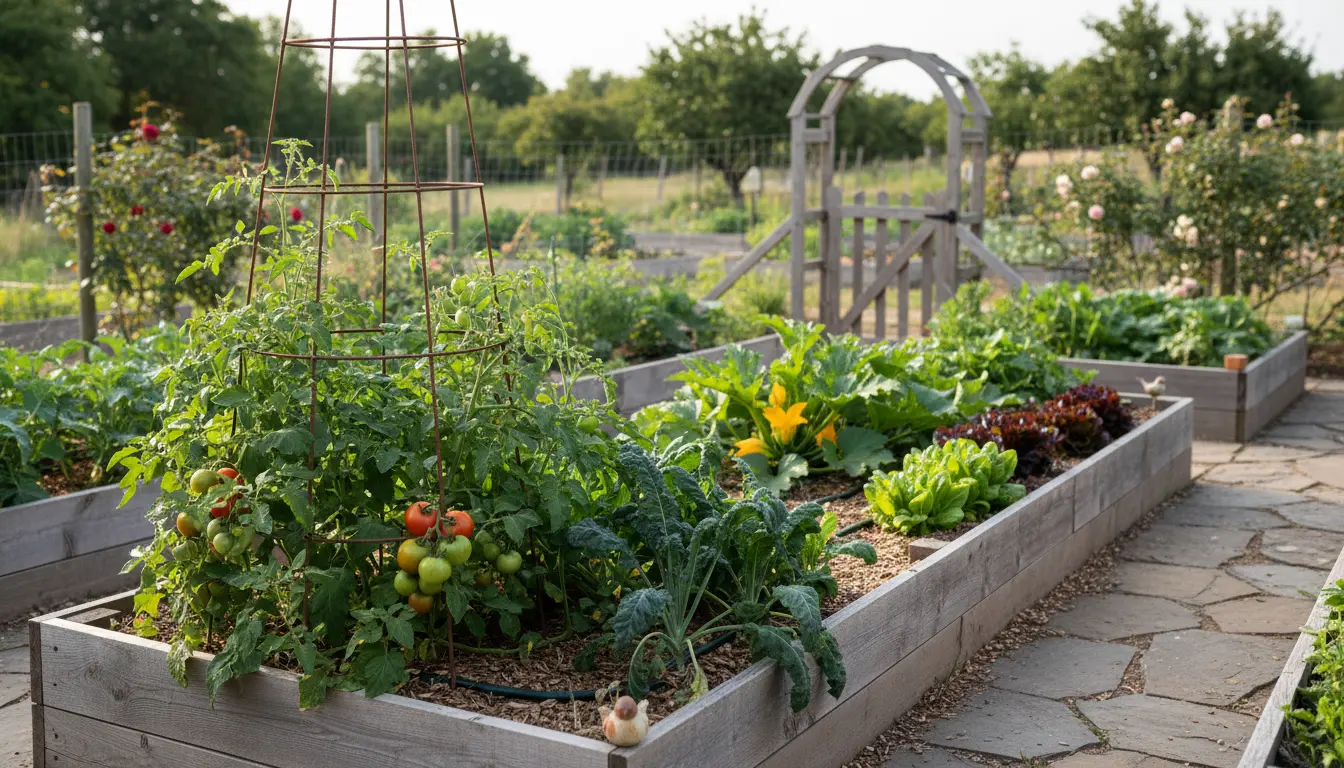
- Space: Start small—one or two 4×8 raised beds or a collection of containers is enough for beginners.
Prepare soil before you start a vegetable garden
Soil quality drives plant health. If you plan raised beds, use a mix of topsoil, compost, and coarse sand or perlite for drainage.
If planting in the ground, test the soil pH and amend with compost and, if needed, lime or sulfur to reach a pH near 6.0–7.0 for most vegetables.
Soil preparation steps
- Clear weeds and debris.
- Double-dig or loosen the top 8–12 inches of soil if planting in-ground.
- Add 2–3 inches of compost and mix well.
- Rake smooth and water lightly to settle the soil.
Decide what to plant when you start a vegetable garden
Choose vegetables that match your climate, soil, and the season. Beginners get fast rewards from lettuce, radishes, bush beans, and cherry tomatoes.
Consider planting herbs like basil and parsley for flavor with minimal space and maintenance.
Companion planting and succession planting
Use companion planting to deter pests and improve yields; for example, plant marigolds near tomatoes. Practice succession planting by sowing quick crops (radishes, lettuce) between slower-growing plants.
Planting and spacing tips
Follow seed packet or plant tag spacing to avoid overcrowding. Crowded plants compete for light and nutrients and are more prone to disease.
Stagger plantings over a few weeks to ensure continuous harvests rather than one large crop all at once.
Watering and fertilizing when you start a vegetable garden
Water deeply and less frequently to encourage strong root systems; aim for 1–1.5 inches of water per week, more in hot weather. Use drip irrigation or soaker hoses to reduce leaf wetness and water waste.
Fertilize with a balanced organic fertilizer at planting and side-dress with compost or fish emulsion every 4–6 weeks depending on crop needs.
Pest and disease basics for a new vegetable garden
Inspect plants regularly and remove affected leaves immediately to reduce spread. Use row covers to protect seedlings from insects and hand-pick larger pests like slugs and beetles.
Rotate crop families yearly to reduce soil-borne disease buildup. Keep garden beds tidy to minimize hiding spots for pests.
Harvesting and storage
Harvest vegetables when they are ripe to encourage more production. Pick early in the morning for best flavor and shelf life.
Store root crops in a cool, dark place and refrigerate delicate produce like herbs and leafy greens to extend freshness.
Simple case study: A small raised bed success
Case study: Sarah had a sunny balcony and built a single 4×4 raised bed. She filled it with a mix of topsoil and compost, then planted cherry tomatoes, basil, lettuce, and bush beans.
In her first season she harvested weekly salads and several pints of tomatoes. Her initial investment was under $150 and she reduced grocery produce purchases by half.
Common mistakes to avoid when you start a vegetable garden
- Starting too large—begin small and expand as you learn.
- Ignoring soil health—good soil reduces most problems.
- Overwatering—this causes root rot and weak plants.
Quick checklist to start a vegetable garden
- Pick a sunny site with water access.
- Prepare or build a small raised bed or containers.
- Buy compost and a balanced organic fertilizer.
- Choose easy crops: lettuce, radish, beans, tomatoes.
- Plant, water deeply, and monitor pests weekly.
Final tips for beginners
Keep a garden journal to track planting dates, varieties, and harvests. Small experiments and notes will speed up your learning.
Start simple, focus on soil and sunlight, and enjoy steady progress. Gardening skills improve every season with attention and small adjustments.