
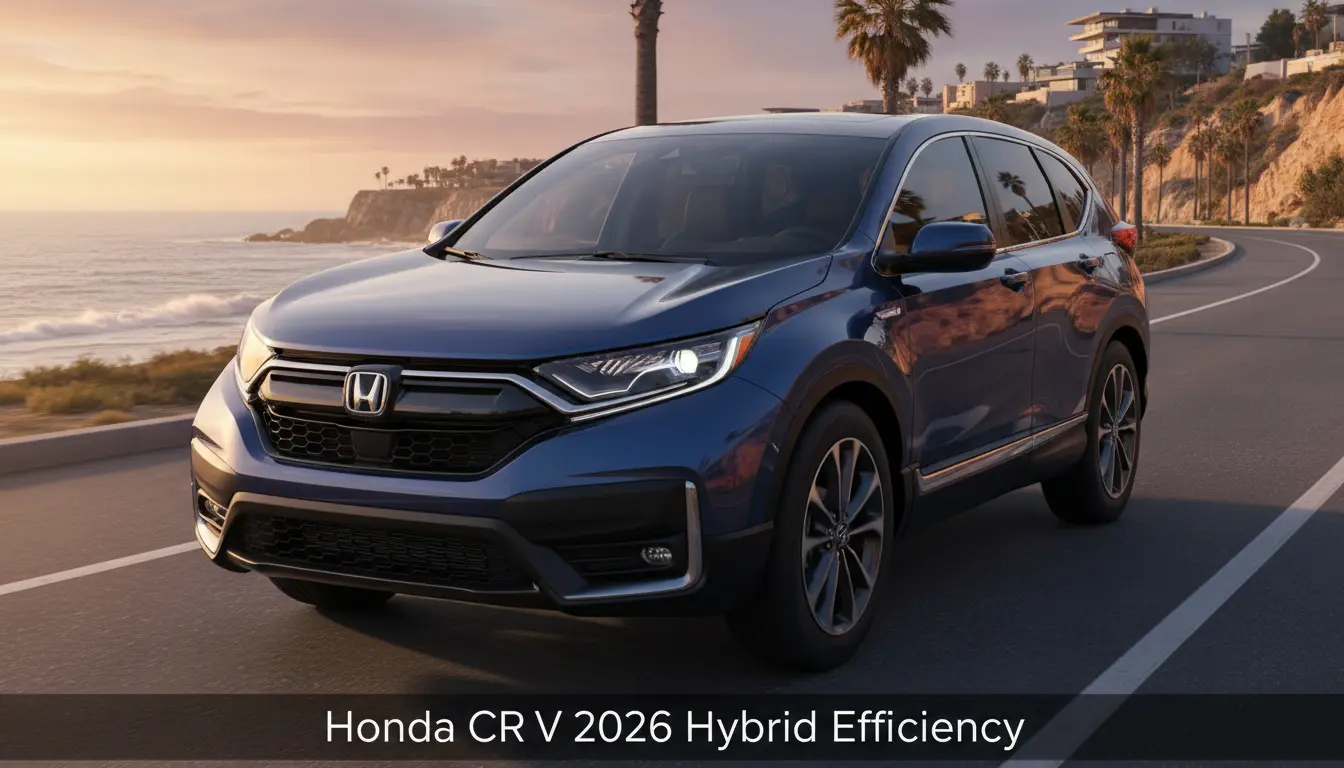
Honda CR-V 2026 Overview
The Honda CR-V 2026 brings a significant update with a refined hybrid powertrain and upgraded driver assistance systems. This article explains the changes, what they mean for daily use, and how the CR-V stacks up on fuel efficiency.
Honda CR-V 2026 Hybrid Powertrain and MPG
Honda redesigned the CR-V 2026 hybrid system to improve low speed torque and highway efficiency. The new setup pairs a more efficient gasoline engine with electric motors and a smarter energy management strategy.
Honda is promoting best in class MPG for the CR-V 2026 in its segment. Real world results depend on driving style, terrain, and climate control use, but the target economy improvements are tangible.
Key hybrid features
- Optimized Atkinson cycle engine for lower fuel consumption.
- Improved regenerative braking to capture more energy in city driving.
- Smoother transition between electric and gasoline modes for comfort.
- Available all wheel drive with an electric rear motor on select trims.
Advanced Safety Features in Honda CR-V 2026
The CR-V 2026 includes upgraded active safety hardware and software improvements. These changes aim to reduce driver workload and improve crash avoidance across more scenarios.
Standard features now include adaptive cruise with lane centering, improved automatic emergency braking, and a wider set of sensors for low light and inclement weather detection.
Notable safety systems
- Adaptive Cruise Control with Lane Centering for smoother highway driving.
- Enhanced Collision Mitigation Braking System with pedestrian and cyclist detection.
- Traffic Sign Recognition and Driver Attention Monitor on all trims.
- Improved Blind Spot Information System with Rear Cross Traffic Alert.
Practical MPG Expectations for Buyers
Manufacturers publish combined MPG estimates, but owners should expect variation. For the CR-V 2026 hybrid, the most realistic numbers come from mixed city and highway use.
Factors that affect MPG include driving speed, cargo weight, tire pressure, and temperature. Using battery assist more often in city traffic improves average fuel economy.
Tips to maximize MPG
- Use Eco mode for gentler throttle response and earlier shifts toward electric assist.
- Maintain steady highway speeds and use adaptive cruise to reduce speed swings.
- Keep tires inflated to the manufacturer recommended pressure to cut rolling resistance.
- Plan routes to avoid heavy congestion when possible to maximize regenerative braking benefits.
Interior, Tech and Cargo in Honda CR-V 2026
Honda improved interior materials and the infotainment interface to match buyer expectations in this class. The layout favors simplicity and ease of use over flashy controls.
Standard connectivity includes wireless smartphone integration and updated driver displays focused on energy flow and efficiency coaching.
Practical cargo and seating notes
- Rear seats fold flat in a two step motion for easier loading of larger items.
- Underfloor storage helps secure smaller items and hides the spare tool kit.
- Front seats are tuned for longer trip comfort, useful for daily commuters or small families.
Cost of Ownership and Resale Considerations
Hybrid powertrains can raise purchase price but typically lower fuel costs and often increase resale value. Maintenance for the CR-V hybrid follows conventional schedules with some hybrid specific checks.
Insurance and local incentives should be checked before purchase. Some regions offer tax credits or rebates that reduce the effective cost of a hybrid SUV.
The 2026 Honda CR-V hybrid increases its regenerative braking efficiency by software tuning, which can recover up to 15 percent more energy in stop and go traffic compared with the prior generation.
Small Real World Example
A commuter in Portland replaced a non hybrid compact SUV with the Honda CR-V 2026 hybrid. On a 40 mile mixed commute the driver reported a 20 percent drop in weekly fuel cost after two months.
The commuter used Eco mode and adaptive cruise for highway portions and noted smoother transitions when accelerating from traffic lights. The result was fewer fuel stops and more consistent trip planning.
Case Study: Family Weekend Road Trip
A family of four drove 600 miles round trip, mixing highway and suburban roads. They averaged fuel economy close to the EPA combined estimate when using cruise control and limiting air conditioning on cooler stretches.
Benefits observed included quieter cabin at steady speeds, predictable energy regeneration in city segments, and ample cargo space for luggage and gear.
Should You Consider the Honda CR-V 2026?
If you value lower fuel costs, modern safety technology, and practical cargo space, the Honda CR-V 2026 hybrid is a strong candidate. The vehicle balances daily driving comfort and long term ownership considerations.
Compare trims for desired safety packages and AWD availability. Test drives on your typical route will show how the hybrid system behaves in your personal driving mix.
Quick checklist before buying
- Test drive in city and highway conditions to judge real MPG.
- Compare trim levels for standard safety features you need.
- Check local incentives and expected insurance changes for hybrids.
- Factor expected fuel savings into total cost of ownership over 5 years.
Honda CR-V 2026 combines hybrid efficiency with modern safety systems to offer a practical, efficient compact SUV choice for buyers prioritizing fuel economy and everyday usability.