
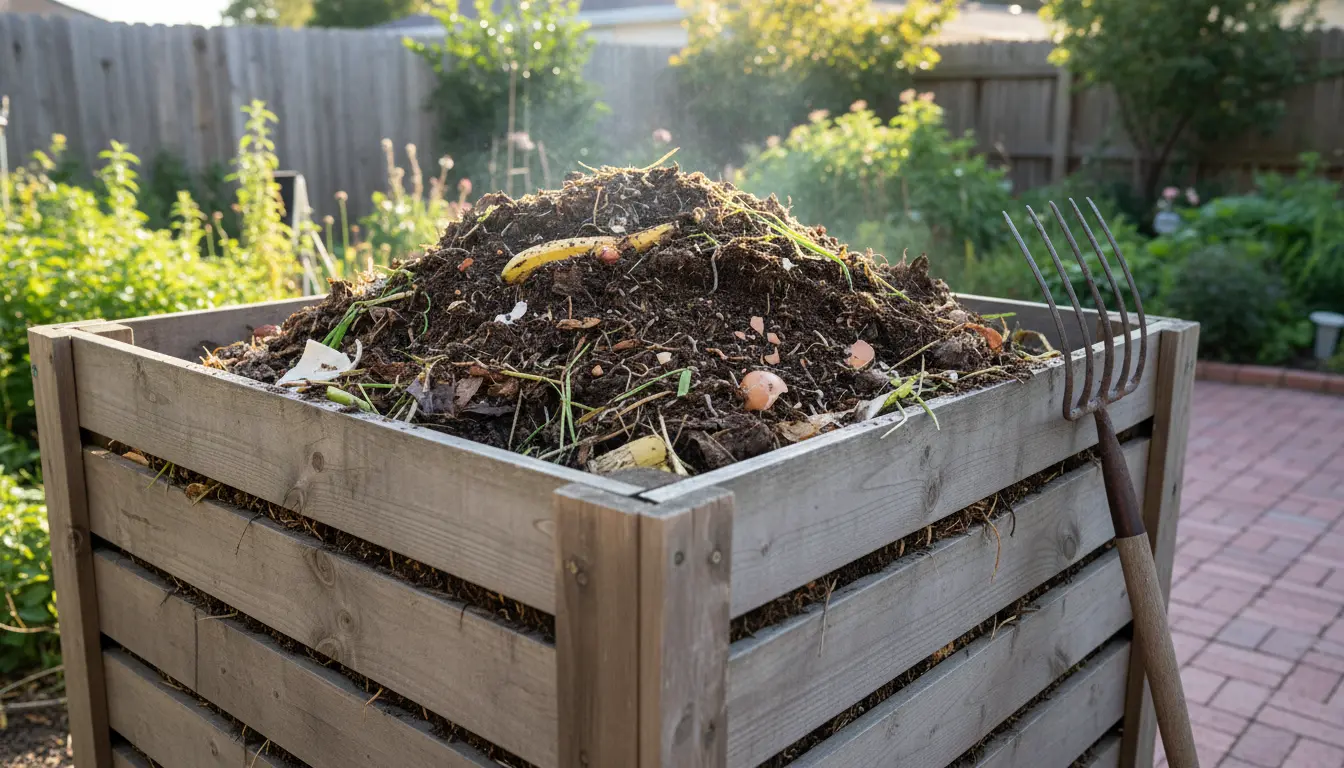
Composting at home turns kitchen scraps and yard waste into useful soil amendment. This guide explains practical steps you can follow to set up and maintain a compost bin.
What is Home Composting?
Home composting is the biological process that converts organic waste into stable humus through microorganisms and decomposition. It reduces landfill waste and provides nutrient-rich material for gardens.
Choose a Composting Method
Decide which method fits your space and time. Common options include simple bins, tumblers, and layered piles.
- Static bin: Low maintenance, good for small yards.
- Tumbler: Faster mixing, less physical turning required.
- Cold pile: Slow, minimal effort, takes longer to finish.
Selecting a Spot for Home Composting
Pick a level spot with good drainage and accessible from your kitchen and garden. Partial shade reduces drying in hot climates and helps maintain moisture.
Avoid places right next to building foundations or under large trees. Good airflow around the bin speeds decomposition.
Equipment and Materials
Start with a secure bin or a DIY container. You need a pitchfork or aerator, a cover to keep pests and rain out, and a basic thermometer if you want to monitor temperature.
- Bin options: plastic, wooden crate, wire mesh, or commercial tumbler.
- Tools: compost thermometer, fork, watering can, and a screen for finished compost.
Materials to Add: Greens and Browns
Balance carbon-rich “browns” and nitrogen-rich “greens” to keep microbes active. A basic ratio is about 25–30 parts carbon to 1 part nitrogen by mass, but practical balancing works well with visible cues.
- Greens (nitrogen): vegetable scraps, coffee grounds, fresh grass clippings.
- Browns (carbon): dry leaves, shredded paper, straw, small branches.
Avoid meat, dairy, oils, diseased plants, and pet waste to prevent odors and pests.
Layering and Building Your Pile
Start with a layer of coarse material to aid airflow. Alternate layers of greens and browns, roughly 2–4 inches each. Keep layers thin enough so decomposition proceeds evenly.
Managing Moisture and Aeration
Moisture should feel like a wrung-out sponge. Too dry and decomposition slows; too wet and the pile becomes anaerobic and smelly.
- If dry: add water and more greens.
- If wet: add browns and turn more often to introduce air.
Turn the pile every 1–3 weeks to speed the process and keep odors down. Tumblers simplify this step.
Temperature and Decomposition
A hot compost pile (between 130–160°F or 55–70°C) breaks down material quickly and kills many weed seeds. If you prefer low-maintenance composting, a cooler pile will still produce usable compost but over a longer time.
Signs Compost Is Ready
- Uniform dark brown color and crumbly texture.
- Earthy smell, not sour or rotten.
- Original materials are mostly unrecognizable.
Did You Know?
Composting can reduce household waste by up to 30 percent and returns nutrients to your soil, improving water retention and plant health.
Using Finished Compost
Use finished compost as a top dressing, soil amendment, or in potting mixes. Mix 1 to 3 inches into garden beds or blend 10–30% with potting soil for containers.
Compost improves soil structure, feeds soil life, and reduces the need for chemical fertilizers.
Troubleshooting Common Problems
Address issues quickly to keep your system healthy and odor-free.
- Bad smell: add dry browns, turn the pile, and check drainage.
- Pests: avoid meat and dairy, secure the bin, and bury fresh food scraps under a layer of brown material.
- Slow breakdown: chop materials smaller, increase moisture, and add greens or a small amount of garden soil as a microbial inoculant.
Small Real-World Case Study: Suburban Home Composting
Emma, a homeowner in Portland, set up a 50-gallon tumbler in her backyard. She added kitchen scraps and shredded leaves at a 1:1 volume ratio, turning the tumbler twice weekly.
After three months, Emma harvested dark, crumbly compost and used it to topdress raised vegetable beds. Her tomatoes produced fuller foliage and yielded more fruit the following season.
Tips for Consistent Success with Home Composting
- Chop large items to speed decomposition.
- Keep a small kitchen bucket for scraps to make collection easy.
- Record additions and turning schedule to learn what works best for your climate.
Home composting is a low-cost, effective way to close the loop on organic waste. With basic materials and regular attention to moisture and balance, you can produce high-quality compost to improve your garden year after year.