
Why Home Composting for Beginners Is Worth Doing
Composting turns kitchen scraps and yard waste into nutrient-rich material for plants. It reduces household waste, saves money on fertilizer, and improves soil health.
For beginners, home composting is a practical step toward sustainability. You do not need special skills to get started.
Choose a Simple Composting Method
Pick a method that fits your space and schedule. The three common approaches are backyard pile, enclosed bin, and worm composting (vermicompost).
- Backyard pile: Best for yards with space and bulk yard waste.
- Enclosed bin: Good for small yards and tidy neighborhoods.
- Worm bin: Ideal for apartments and indoor composting.
Quick Setup Steps for a Bin
Select a plastic or wooden bin with drainage. Place it on soil or a tray to allow microbes to reach the pile.
Layer materials, keep it moist like a wrung-out sponge, and turn every 1–2 weeks to add oxygen.
What to Compost: Greens and Browns
Balance green (nitrogen) and brown (carbon) materials for efficient decomposition. Aim for roughly a 1:3 green-to-brown volume ratio.
- Greens: vegetable scraps, coffee grounds, fresh grass clippings, fruit peels.
- Browns: dry leaves, shredded paper, straw, cardboard.
Chop large items into smaller pieces to speed up breakdown. Mixing materials helps maintain airflow.
What Not to Compost
Keep problematic items out to avoid pests and odors. Avoid meat, dairy, oily foods, diseased plants, and pet waste.
- Do not add cooked meats, bones, or greasy leftovers.
- Skip invasive weeds and chemically treated wood.
- Avoid cat or dog feces from household pets.
Tools and Supplies
You only need a few basic items to start. A secure bin, a pitchfork or compost aerator, and a thermometer (optional) are helpful.
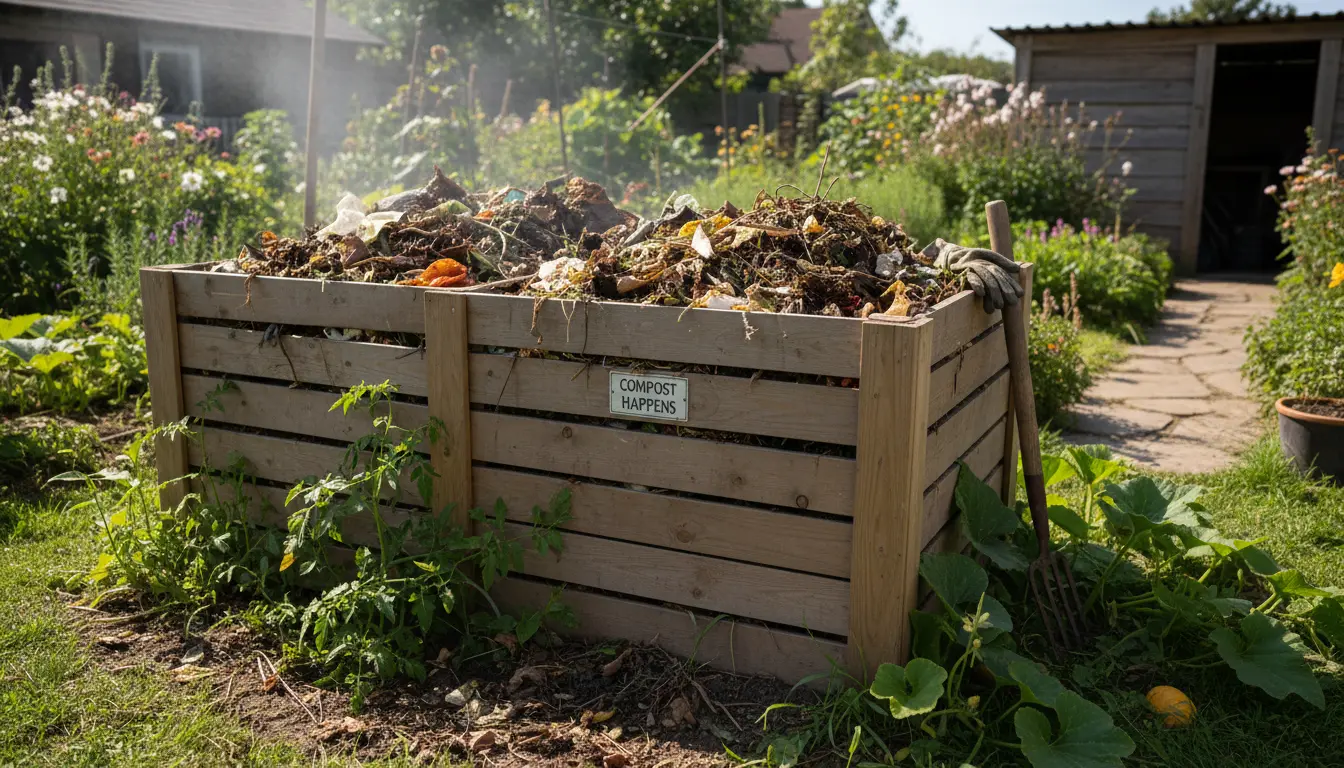
- Compost bin or DIY pallet box
- Garden fork or turning tool
- Kitchen compost pail with a lid
- Optional: compost thermometer and screen for finished compost
Compost can heat up to 140°F (60°C) in active piles. This heat kills many weed seeds and pathogens when the pile reaches high temperatures for several days.
Troubleshooting Common Problems in Home Composting
Most issues are caused by imbalance, moisture, or lack of oxygen. Check these simple fixes before giving up.
- Foul smell: Add more browns and turn the pile to increase airflow.
- Pile too dry: Sprinkle water and mix to distribute moisture.
- Slow decomposition: Chop materials, increase green content, and ensure turning.
- Pests: Use a closed bin, avoid meat and oily foods, and bury fresh scraps under browns.
How to Know When Compost Is Ready
Finished compost is dark, crumbly, and earthy-smelling. Most bins produce usable compost in 2–6 months depending on method and management.
Use finished compost as a top dressing, mix into potting soil, or add to garden beds to improve soil structure and fertility.
Small Real-World Example: Apartment Worm Bin Case Study
Jane, an apartment resident, started vermicomposting in a 10-gallon plastic bin. She used shredded cardboard for bedding and red wiggler worms.
Her routine: add 1–2 cups of kitchen scraps three times a week, keep the bin in a cool corner, and harvest castings every 3 months. Result: less trash and rich worm castings for her balcony plants.
Key takeaways from Jane’s case:
- Worm bins are odor-free when balanced and maintained.
- Small-scale composting can divert 25–50% of household waste.
- Harvested compost boosted plant growth within a month of use.
Simple Weekly Routine for Home Composting for Beginners
Establish a short routine to keep compost active. Consistency matters more than perfect technique.
- Collect food scraps in a covered kitchen pail each day.
- Add scraps to your bin and cover with browns three times a week.
- Turn the pile once every 1–2 weeks to maintain airflow.
- Check moisture weekly and adjust if too wet or too dry.
Examples of Good Brown Layering
Layer a handful of shredded paper or dry leaves between food scraps. This reduces flies and absorbs excess moisture.
Try alternating green and brown layers when you add material; this simple habit improves composting speed.
Final Tips to Keep Composting Simple
Start small and scale up as you gain confidence. Use what you learn to refine your system for speed and convenience.
Join local gardening groups or online forums to ask questions and share successes. Composting can be both a practical tool and a rewarding hobby.
Ready to start? Choose one bin type, gather basic tools, and commit a few minutes each week. Home composting for beginners is achievable and valuable for both your garden and the planet.