
Why Home Composting for Beginners Matters
Composting at home reduces kitchen and yard waste while producing nutrient-rich soil for plants. It is an accessible practice for many households and supports healthier gardens and fewer landfill trips.
This guide gives clear, practical steps to start and maintain a compost system that fits apartments, small yards, or larger properties.
Choose the Right Compost System for You
Not all compost setups are the same. Choose one that matches your space and time commitment.
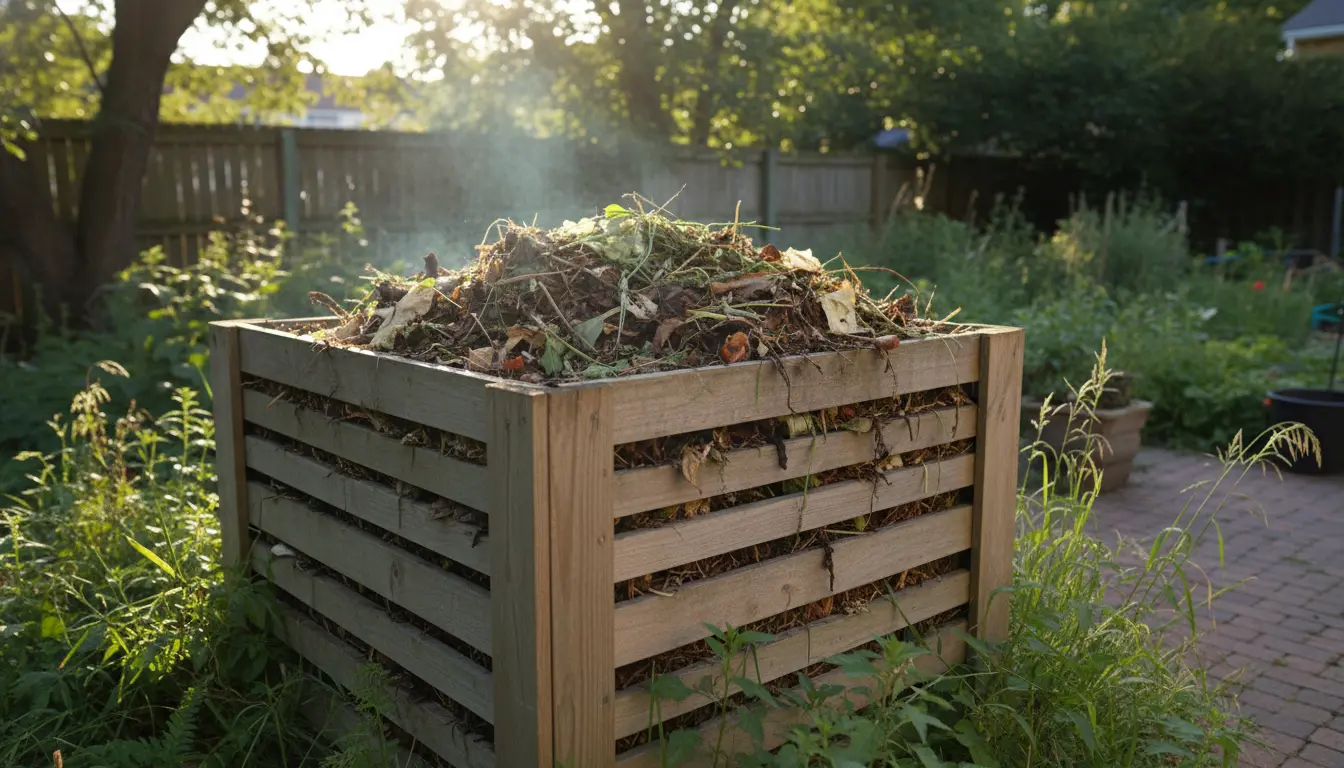
- Compost bin: Enclosed and tidy, good for small yards.
- Tumbler: Easier turning, faster composting but costlier.
- Hot pile: Large and fast; requires space and management.
- Vermicompost (worms): Ideal for apartments and kitchens, produces rich castings.
Home Composting for Beginners: Quick Setup Checklist
- Pick a container or location with drainage and airflow.
- Collect both greens (kitchen scraps, fresh grass) and browns (dry leaves, paper).
- Layer materials and maintain moisture like a wrung-out sponge.
- Turn the pile weekly for aeration, or rotate a tumbler every few days.
What to Compost: Practical Examples
Knowing what to add prevents odors and pests. Balance is the key.
- Greens (wet, nitrogen-rich): Fruit peels, vegetable scraps, coffee grounds, fresh grass clippings.
- Browns (dry, carbon-rich): Shredded paper, dry leaves, sawdust, cardboard (small amounts).
- Avoid: Meat, dairy, oils, diseased plants, and pet waste from carnivores.
Home Composting for Beginners: Layering Method
Start with a layer of coarse browns for airflow, then alternate greens and browns. Aim for roughly a 2:1 ratio of browns to greens by volume.
Cover fresh food scraps with a layer of browns each time to reduce flies and smells.
Maintenance: Keep It Simple
Routine, not perfection, creates good compost. A few minutes a week is enough for many systems.
- Check moisture: It should feel like a damp sponge.
- Turn the pile weekly or rotate the tumbler to add oxygen.
- Chop large pieces to speed decomposition.
- Monitor temperature for hot compost: 120–160°F (49–71°C) speeds breakdown and kills seeds.
Troubleshooting Common Issues
Problems are usually fixable with a simple adjustment.
- Bad smell: Add more browns and aerate the pile.
- Pests: Bury food scraps deeper, use a closed bin, or add fine mesh to openings.
- Too dry: Add water and greens; mix well.
- Slow breakdown: Increase surface area by shredding and add nitrogen if needed.
Composting returns essential nutrients to soil and can reduce household waste by up to 30 percent. Worm composting alone can process most kitchen scraps in small living spaces.
How to Use Finished Compost
Finished compost is dark, crumbly, and smells earthy. It typically takes 2–12 months depending on method and conditions.
- Mix 1–3 inches into garden beds as a soil amendment.
- Use as potting mix ingredient—blend one part compost with two parts potting soil.
- Top-dress lawns with a thin layer to improve soil health.
Home Composting for Beginners: Seasonal Tips
Adjust your routine with changing weather. In winter, compost slows down—insulate the bin or move a tumbler to a sheltered spot.
In summer, monitor moisture more closely to prevent drying out.
Simple Case Study: A Small-Scale Success
Case study: A two-person household in an urban townhouse started a 50-gallon compost bin. They used a mix of kitchen scraps and shredded newsprint, turning the bin every 5–7 days.
Within six months they produced about 30 liters of finished compost. They mixed it into container plants and a small vegetable bed, which resulted in visibly healthier tomato plants and less need for purchased fertilizer.
Tools and Supplies That Help
Getting started doesn’t require expensive gear. A few simple items make the process cleaner and easier.
- Sturdy bin or tumbler
- Pitchfork or compost aerator
- Kitchen pail for scraps with a tight lid
- Thermometer for hot compost enthusiasts
Final Steps: Start Small and Improve
Begin with a manageable system and learn as you go. Keep a small notebook or photo log of your pile to notice changes and solutions that work.
Home composting for beginners is a low-cost, high-impact habit. With consistent simple steps—collecting scraps, balancing greens and browns, and occasional turning—you can create valuable compost and cut household waste.