
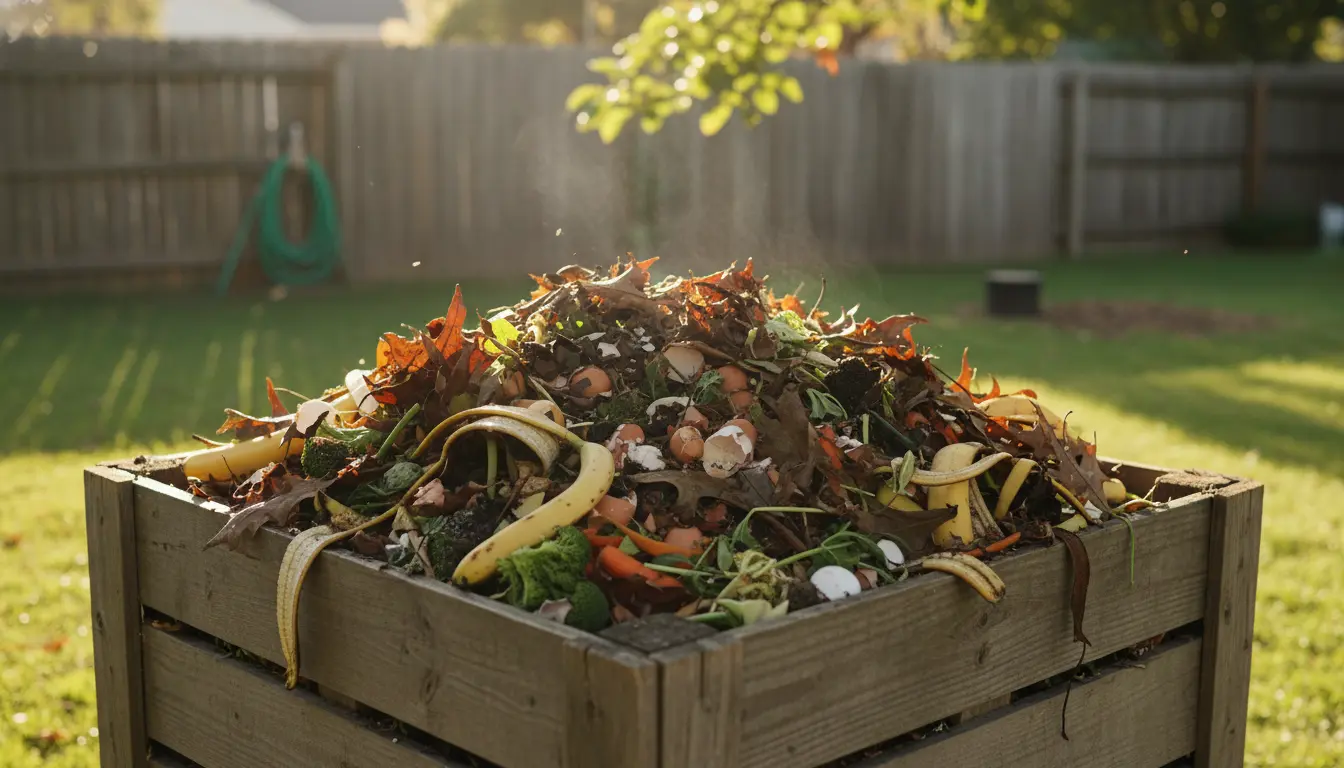
Home composting turns kitchen scraps and yard waste into a useful soil amendment. This guide gives clear, practical steps to start composting at home and maintain a healthy pile.
What Is Home Composting?
Home composting is the controlled breakdown of organic materials into nutrient-rich humus. It uses microbes, oxygen, moisture, and balanced materials to transform waste into compost you can use in gardens and pots.
Composting reduces landfill waste and returns nutrients to soil. It can be done in a bin, tumbler, pile, or worm composter depending on space and needs.
Benefits of Home Composting
Home composting offers environmental and gardening benefits that are simple and measurable. You cut household waste, improve soil structure, and reduce the need for store-bought fertilizers.
- Reduces kitchen and yard waste sent to landfill
- Enriches garden soil and improves water retention
- Saves money on potting mixes and chemical fertilizers
- Supports healthy plant growth and microbial life
How to Start Home Composting
Starting home composting requires basic decisions about where and how to compost. Choose a method that fits your space and the amount of waste you generate.
Choosing a Home Composting Bin
Select a bin or system based on convenience and volume. Options include open piles, stationary bins, tumblers, and worm (vermicompost) systems.
- Backyard bin: Inexpensive and holds larger volumes
- Tumbler: Easier turning, cleaner for small yards
- Worm composter: Best for small indoor or balcony use and kitchen scraps
Materials to Compost
Balance green materials (nitrogen) and brown materials (carbon) for steady decomposition. Aim for a rough 1:2 ratio by volume of greens to browns.
- Greens: vegetable peels, fruit scraps, coffee grounds, fresh grass clippings
- Browns: dry leaves, shredded paper, cardboard, straw
- Do not compost: meat, dairy, oily foods, diseased plants, pet waste
Layering, Moisture, and Turning
Start with a layer of coarse browns to encourage airflow. Alternate layers of greens and browns, keeping the pile as moist as a wrung-out sponge.
Turn the pile every 1–2 weeks to add oxygen and speed up decomposition. Tumblers simplify turning, while stationary bins benefit from a garden fork or compost aerator.
Troubleshooting Home Composting
Common issues are smells, slow breakdown, and pests. Smells usually mean too many greens or poor aeration. Add more browns and turn the pile.
If decomposition is slow, chop materials into smaller pieces and maintain moisture and regular turning. To deter pests, bury food scraps in the center of the pile or use a closed bin.
Adding a handful of finished compost to a new pile introduces helpful microbes and can speed up the decomposition process.
Small Real-World Example
Example: A family of four in a suburban home started a 3-bin compost system. They collected kitchen scraps in a counter caddy and added yard leaves in the fall.
After six months of alternating layers and monthly turning, they filled one bin with dark, crumbly compost. They used this compost in their vegetable beds and saw healthier plants and reduced fertilizer use.
This simple routine cut their household organic waste by nearly half and improved their garden soil over a single season.
How to Use Finished Compost and Ongoing Maintenance
Finished compost is dark, crumbly, and smells earthy. Use it as a top dressing, mix it into potting mixes, or blend with garden beds to improve structure.
- Top dress lawns and flower beds with a thin layer of compost
- Mix 10–30% compost into planting soil for vegetables and annuals
- Use compost tea for a gentle nutrient boost to plants
Maintain your home composting system by staying consistent: keep materials balanced, control moisture, and turn regularly. Monitor for pests and avoid banned items to keep the pile healthy.
Quick Checklist to Start Home Composting
- Choose a bin or system that fits your space
- Collect greens and browns and keep a simple balance
- Maintain moisture and turn the pile every 1–2 weeks
- Monitor temperature, odor, and signs of pests
- Harvest finished compost and use it in the garden
Home composting is a practical way to manage household organic waste while improving garden health. With a simple plan and regular attention, anyone can produce nutrient-rich compost at home.