
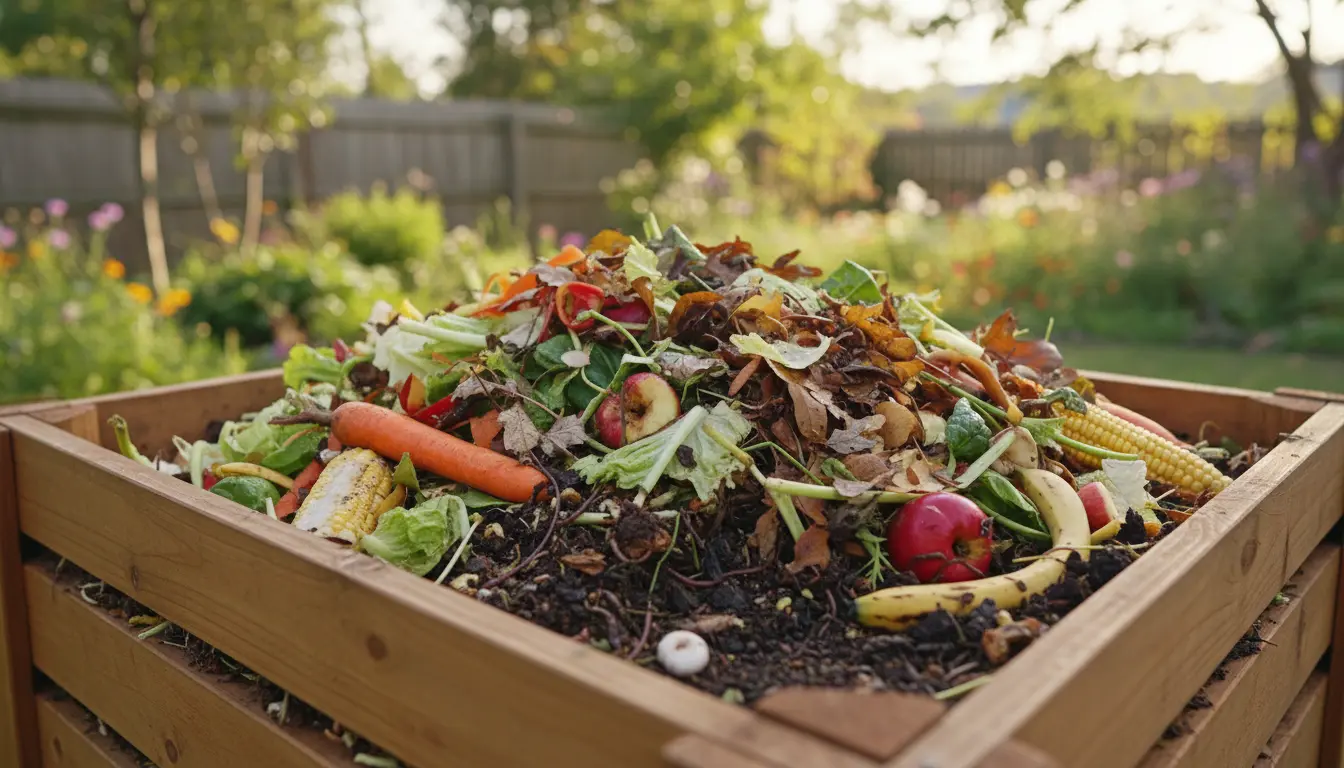
Why Choose Home Composting
Home composting turns kitchen and yard waste into a valuable soil amendment. It reduces waste sent to landfills and improves garden soil structure and fertility.
This guide explains simple, step-by-step actions to start and manage compost at home.
Getting Started with Home Composting
First, pick a composting method that fits your space and lifestyle. Options include a backyard bin, a tumbler, or a small indoor/vermicompost system for apartments.
Consider these quick factors before you begin:
- Available space and access
- Amount and type of organic waste you produce
- Time you can commit to maintenance
Choosing a Compost Bin
Choose a container that suits your needs. A simple plastic bin or wooden pallet bin works well for most yards.
For limited space, consider a worm bin (vermicompost) or a sealed indoor composting unit.
What to Compost in Home Composting
Successful compost needs a mix of carbon-rich and nitrogen-rich materials. Aim for a balanced mix to keep microbes active.
- Brown materials (carbon): dried leaves, straw, shredded paper, cardboard
- Green materials (nitrogen): vegetable scraps, coffee grounds, fresh grass clippings
Examples of Good Materials
- Fruit and vegetable scraps (small pieces)
- Tea bags and coffee grounds
- Eggshells (crushed)
- Yard trimmings and leaves
What Not to Put in a Home Compost
Some items attract pests or slow decomposition. Avoid adding them to an open home compost pile.
- Meat, fish, bones, and dairy products
- Oils and greasy foods
- Diseased plants and invasive weeds with seed heads
- Pet feces and cat litter
Basic Composting Process
Follow these steps to build a healthy compost pile:
- Start with a layer of coarse browns (twigs or straw) to allow air flow.
- Add alternating layers of greens and browns, aiming for roughly 3 parts brown to 1 part green by volume.
- Keep the pile moist like a wrung-out sponge.
- Turn the pile every 1–2 weeks to introduce oxygen and speed decomposition.
How Much Aeration and Moisture
Good airflow and moisture are essential. If the pile smells bad, it is too wet or lacks oxygen.
Turn or poke the pile to release odors and help it dry slightly. Add more brown materials if needed.
Troubleshooting Common Problems in Home Composting
Most issues are simple to fix. Diagnose the problem by smell and appearance.
- Foul odor: add dry browns and increase turning.
- Pile not heating: add greens and ensure proper moisture and size.
- Pests: avoid meat and cover food scraps with brown layers.
When Is Compost Ready?
Finished compost is dark, crumbly, and earthy-smelling. It should be free of recognizable food scraps and plant material.
Depending on method and management, compost can be ready in 2–12 months.
Using Finished Compost
Finish compost can be used as a soil top dressing, potting mix ingredient, or garden amendment. Apply 1–3 inches to garden beds and mix into soil.
Compost improves water retention, drainage, and nutrient availability for plants.
Composting diverts organic waste from landfills where it would produce methane, a potent greenhouse gas. Home composting reduces household waste and returns nutrients to the soil.
Small Real-World Case Study
Case: A three-person household in a suburban home started a 3×3 foot compost bin. They added daily kitchen scraps and yard waste, turning the pile weekly.
Within six months they had about 30 liters of finished compost. Their weekly trash volume dropped by roughly 40 percent. The finished compost improved their vegetable beds, producing larger tomatoes and healthier soil structure.
Tips for Busy People
Make composting manageable with these tips:
- Keep a small countertop caddy with a tight lid to collect scraps.
- Freeze scraps if you can’t empty them daily to prevent odors.
- Use a tumbler to reduce turning effort.
- Shred or chop materials to speed decomposition.
Quick Checklist to Start Home Composting
- Choose a bin or method that fits your space.
- Collect greens and browns separately for easier layering.
- Maintain moisture and aeration—turn regularly.
- Monitor for pests and odors and adjust balance as needed.
- Harvest finished compost and use it in your garden.
Home composting is low-cost and adaptable. Start small, learn what works in your climate and space, and refine your process over time. With a little routine, you can reduce waste and improve your garden soil.