
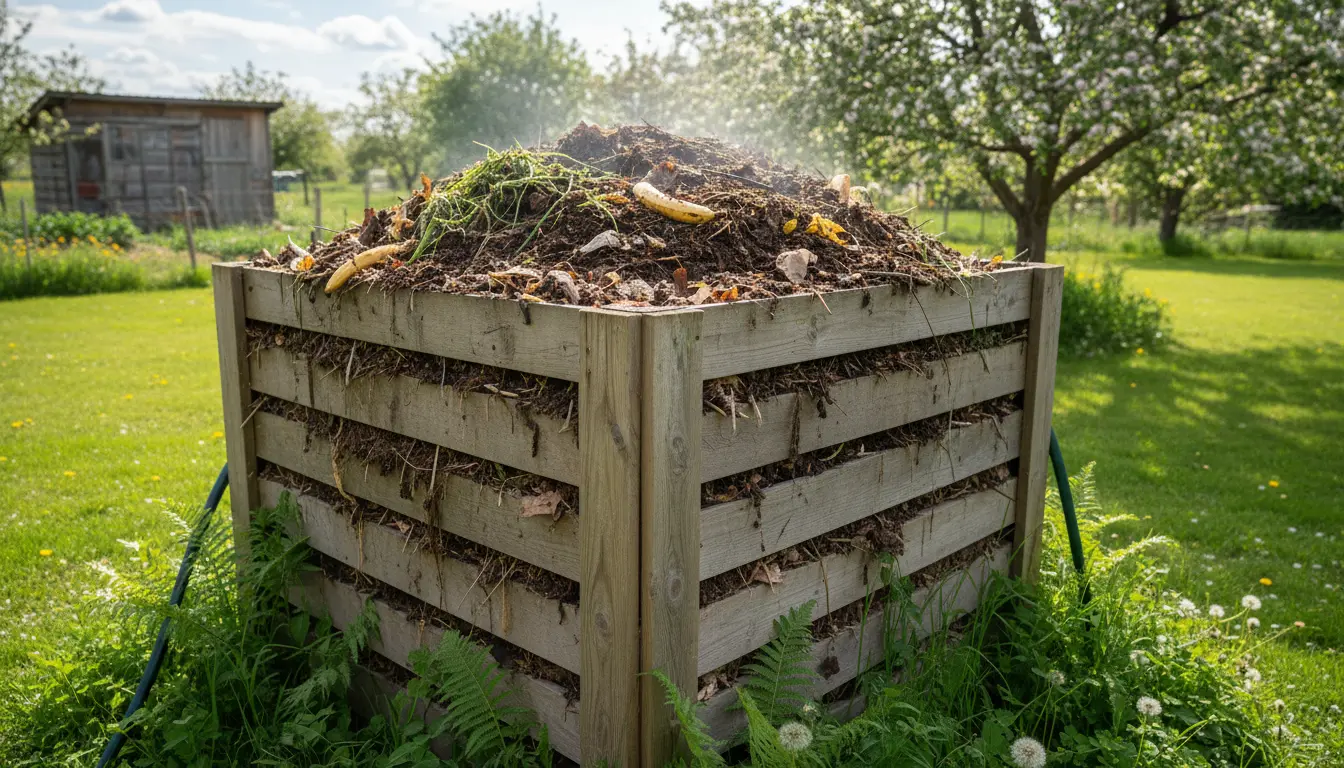
Home Composting Basics
Home composting turns kitchen and yard waste into a useful soil amendment. It reduces household waste and supports healthier soil for plants.
Why Choose Home Composting
Composting reduces landfill waste and lowers methane emissions from organic materials. Finished compost improves soil structure, moisture retention, and plant health.
Setting Up Home Composting
Decide on the system that fits your space: a simple backyard pile, a sealed tumbling bin, or an indoor Bokashi or worm bin. Each system has pros and cons for smell, speed, and space.
Home Composting Materials
Balance carbon rich browns and nitrogen rich greens for efficient decomposition. Browns provide structure; greens supply protein for microbes.
- Browns: dry leaves, shredded paper, cardboard, straw
- Greens: vegetable scraps, coffee grounds, fresh grass clippings
- Avoid: meat, dairy, oily foods, diseased plants, invasive weeds
Tools and Location for Home Composting
Select a level, well-drained spot with partial shade for outdoor bins to keep moisture steady. For indoor setups, choose a ventilated corner or balcony and use a sealed unit to control odors.
- Basic tools: pitchfork or compost turning tool, garden thermometer (optional)
- Bins: plastic tumblers, wooden bins, wire cages, or sealed indoor containers
Home Composting Steps
Follow a simple process to start a compost pile: layer, moisten, aerate, and wait. The key is maintaining the right balance of moisture, air, and particle size.
Step-by-step Home Composting
- Layer a 4–6 inch base of coarse browns to improve airflow.
- Add a mix of greens and chopped browns in alternating layers.
- Moisten each layer so it feels like a wrung-out sponge.
- Turn or tumble every 1–2 weeks to add oxygen and speed decomposition.
- Monitor temperature; active piles reach 130–150°F (54–66°C).
Maintaining Home Composting
Regular attention keeps a compost system healthy and fast. Small adjustments prevent common problems and produce high-quality compost.
Home Composting Timeline and Signs
Compost can be ready in as little as 2 months in a hot, well-managed bin, or 6–12 months in a slower system. Finished compost is dark, crumbly, and earthy smelling.
- Active phase: Weeks 1–8 with frequent turning and high temps.
- Cooling and curing: Months 2–6 for stable, mature compost.
Tips to Keep Home Composting Healthy
Keep the pile moist but not soggy; add browns to soak up excess water. Turn regularly to supply oxygen and prevent anaerobic odors.
- Chop or shred materials to speed breakdown.
- Use a thermometer to check if the pile is heating properly.
- Add finished compost to jump-start new piles and introduce beneficial microbes.
Troubleshooting Home Composting
Common issues include bad odors, pests, or slow decomposition. Each problem has simple fixes that restore balance to the system.
Common Problems and Solutions
- Bad smells: Add more dry browns and turn the pile to introduce air.
- Pests: Avoid meat and oily foods; use a sealed bin or wire mesh barrier.
- Slow breakdown: Increase surface area by chopping materials and add greens to raise nitrogen.
- Excess moisture: Mix in dry browns and improve drainage or move to a raised base.
Home Composting Case Study
Example: A small apartment household used a 10-liter Bokashi bucket and balcony worm bin for 12 months. They diverted 60 percent of their kitchen waste from trash to compost systems.
Result: After 8 months they produced enough finished compost to top-dress three potted herb containers, noticed healthier plant growth, and reduced monthly trash volume. The household reported minimal odor by keeping a tight lid and occasional drying of wet inputs.
Using Finished Compost
Apply finished compost as a soil amendment, mulch, or potting mix component. It improves nutrient retention and encourages beneficial microbes in soil.
Practical Uses for Home Composting Output
- Mix 10–30 percent finished compost into garden beds when preparing soil.
- Top-dress lawns with a thin layer to slowly release nutrients.
- Blend with potting mix for container plants to increase water retention.
Final Notes on Home Composting
Start small and adapt the system to your space and habits. Consistency with layering, moisture control, and occasional turning yields reliable results.
Home composting is a practical way to close the nutrient loop at home, lower waste, and build healthier soil for plants and gardens.