
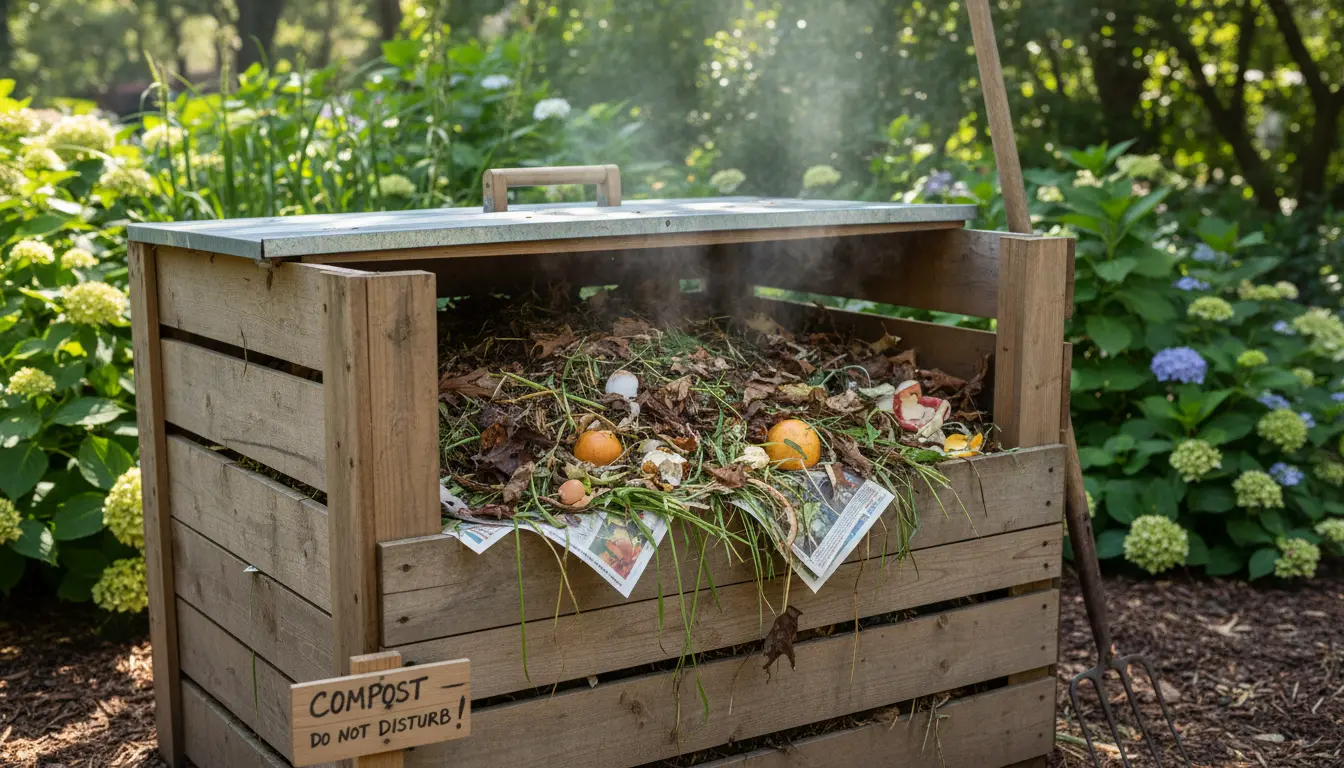
Composting at home turns kitchen and yard waste into valuable soil amendment. This guide covers simple, practical steps for home composting for beginners and helps avoid common mistakes.
Why Home Composting for Beginners Matters
Composting reduces household waste and improves soil structure for gardens and potted plants. It also returns nutrients to the soil and reduces reliance on chemical fertilizers.
Beginners can start with small systems and grow their composting effort as confidence builds. Even an apartment can support composting with the right method.
How to Start Home Composting for Beginners
Choose a composting method that fits your space, schedule, and comfort level. The three common beginner-friendly methods are listed below.
Choosing a Composting Method
- Backyard bin: A simple tumbling or stationary bin works well for yards and small gardens.
- Bokashi: Fermentation in buckets for apartments or people who want to process all kitchen waste including meat.
- Vermicomposting: Worm bins using red wigglers, ideal for indoor or balcony use and producing fast, nutrient-rich castings.
Pick one method and commit to learning it rather than switching between systems. Each method requires different maintenance and produces slightly different outputs.
What to Compost and What to Avoid
Balance ‘greens’ (nitrogen) and ‘browns’ (carbon) for efficient decomposition. Typical greens include vegetable scraps, coffee grounds, and fresh grass clippings.
- Greens: Fruit and vegetable scraps, coffee grounds, fresh plant trimmings.
- Browns: Dry leaves, shredded paper, cardboard, small wood chips.
- Avoid: Meat, dairy, oils, diseased plants, and pet waste in standard backyard bins.
Step-by-Step Setup for Home Composting for Beginners
Start small so you can maintain regular turning and monitoring. Use this simple setup plan to begin composting today.
- Select a bin or container suitable for your space.
- Place the bin in a partially shaded spot with some drainage.
- Begin with a base layer of coarse browns like twigs or straw to improve airflow.
- Add alternating layers of greens and browns, keeping the pile moist but not soggy.
- Turn or aerate the pile every 1–2 weeks to supply oxygen and speed decomposition.
For worm bins, add bedding such as shredded cardboard and a handful of soil to introduce microbes. Keep the bin in steady temperatures and avoid overfeeding to prevent odors.
Maintaining Home Composting for Beginners
Routine checks prevent common problems and keep composting on track. Monitor moisture, temperature, and odor to ensure healthy decomposition.
Troubleshooting Common Problems
Bad smells usually mean the pile is too wet or has too many greens. Fix this by adding dry browns and turning the pile to introduce air.
- Pile not heating: Add more greens and turn to speed up activity.
- Pests: Use sealed bins or bury food scraps and avoid attracting wildlife with meat or dairy.
- Slow breakdown: Shred larger items and maintain a good balance of greens and browns.
Using Finished Compost
Compost is ready when it looks dark, crumbly, and earthy-smelling. Use finished compost as a soil amendment, potting mix ingredient, or mulch top-dressing.
Mix 10–30% finished compost into garden beds or potting soil to boost fertility and water retention. Top-dress vegetable rows in spring to support plant growth.
Small Real-World Example
Case study: A city apartment dweller started a small worm bin on a balcony. After three months, she produced enough worm castings to refresh three potted herbs and reduced her weekly trash by half.
She fed the worms kitchen scraps, shredded cardboard, and occasional coffee grounds. Small, steady inputs and keeping the bin cool in summer avoided problems.
Quick Tips for Success with Home Composting for Beginners
- Chop kitchen scraps into small pieces to speed decomposition.
- Maintain a balance: roughly 2–3 parts browns to 1 part greens by volume for many systems.
- Keep a compost thermometer or simply touch the pile—warmth indicates active decomposition.
- Label containers and keep a small counter jar for scraps if you collect before adding them.
Home composting for beginners is mainly about consistency and learning by doing. Start with a manageable system, adjust as you learn, and use the finished compost to improve your soil and plants.