
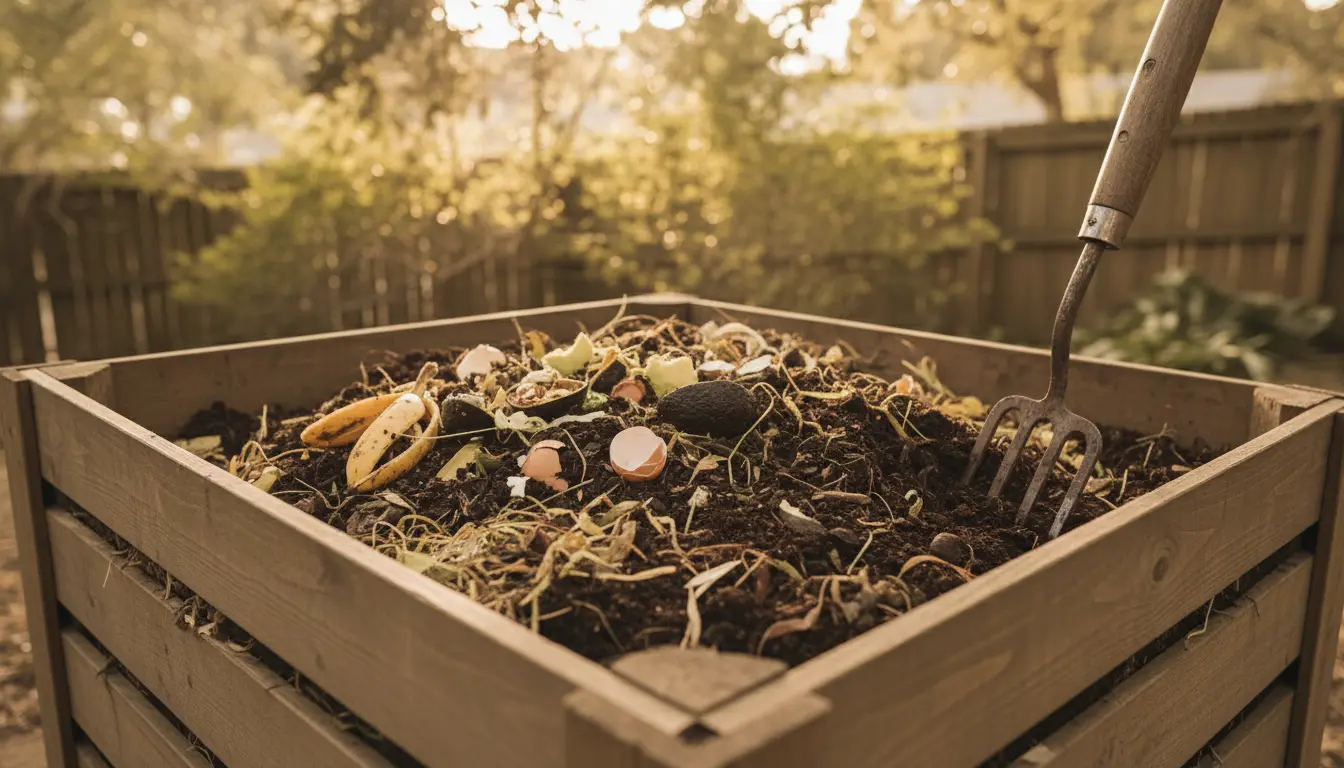
Home Composting for Beginners: Start With the Basics
Home composting is a simple way to turn kitchen scraps and yard waste into nutrient-rich soil. It reduces landfill waste and improves garden health.
This guide gives practical steps for beginners, from choosing a bin to troubleshooting common problems.
Why Home Composting for Beginners Matters
Composting reduces household waste and creates a free soil amendment for potted plants and gardens. It also lowers carbon footprint by diverting organic waste from landfills.
Beginners can start with small systems and scale up as they learn what works in their space.
Choosing a System for Home Composting for Beginners
Pick a compost system that fits your living situation and the amount of waste you produce. Options range from simple bins to tumblers and worm composters.
Common compost systems
- Open bin: Low cost, good for yards; needs turning with a fork.
- Tumbler: Easier to turn and faster; good for small yards or patios.
- Worm composter (vermicompost): Ideal for indoor or balcony use; processes kitchen scraps quickly.
Materials: Greens, Browns, and What to Avoid
Understanding materials is key. Successful home composting for beginners relies on the right balance of nitrogen-rich and carbon-rich inputs.
What to add
- Greens (nitrogen): fruit and vegetable scraps, coffee grounds, fresh grass clippings.
- Browns (carbon): dry leaves, shredded paper, cardboard, straw.
What to avoid
- Meat, dairy, and oily foods (attract pests and smell).
- Diseased plants and weeds with seeds (can survive composting if not hot enough).
- Large branches and thick wood (slow to break down).
How to Build a Compost Pile: Step-by-Step
Follow these simple steps to set up a healthy compost pile that breaks down quickly and stays manageable.
- Choose a shady, level spot for an outdoor bin or set up a tumbler on a stable surface.
- Start with a 2–4 inch layer of coarse browns like twigs or straw to aid airflow.
- Add a mix of greens and browns in roughly a 1:2 by volume ratio (greens to browns).
- Moisten each layer so it feels like a wrung-out sponge; avoid saturation.
- Turn the pile every 1–2 weeks to introduce oxygen and speed decomposition.
Maintaining Home Composting for Beginners
Maintenance focuses on moisture, aeration, and the carbon-to-nitrogen balance. Regular checks prevent odors and slowdowns.
Quick maintenance tips
- Check moisture weekly; add water if dry or add dry browns if too wet.
- Turn or mix the pile every 7–14 days for faster, odor-free compost.
- Chop or shred large items to speed decomposition.
Troubleshooting Common Problems in Home Composting for Beginners
New composters often run into a few predictable issues. Most problems have simple fixes.
Bad smell
Cause: Too many greens or poor aeration. Fix: Add browns, turn the pile, and check moisture.
Slow decomposition
Cause: Too dry, too cold, or large particles. Fix: Moisten, add smaller pieces, and insulate or move to a warmer spot.
Pests
Cause: Meat, dairy, or exposed food scraps. Fix: Remove offending items, bury scraps in the pile, and use a closed bin or tumbler.
Properly managed compost can reach internal temperatures of 120 to 160 F, which helps kill weed seeds and pathogens.
How Long Does Home Composting for Beginners Take?
Time to finished compost varies by method and management. A hot, well-turned pile can be ready in 2–3 months. Cooler, passive piles often take 6–12 months.
Worm composters produce usable castings in 1–3 months depending on feed rate and temperature.
Using Finished Compost
Finished compost is dark, crumbly, and smells earthy. Use it to pot up seedlings, top-dress lawns, or mix into garden beds to improve water retention and soil fertility.
Small Real-World Example: Balcony Composting Case Study
Maria lives in a two-bedroom apartment and started vermicomposting in a stacked bin. She fed the system 1–2 cups of kitchen scraps daily and added shredded cardboard as a brown layer.
After eight weeks, she harvested about 10 liters of worm castings, which she mixed into her tomato pots. Her tomatoes showed improved growth and fewer waterings needed.
Quick Checklist for Home Composting for Beginners
- Choose a bin type that fits your space.
- Balance greens and browns (aim for 1:2 by volume).
- Keep moisture like a wrung-out sponge.
- Turn every 1–2 weeks if possible.
- Watch for odors and pests and adjust materials accordingly.
Final Tips for Home Composting for Beginners
Start small and be consistent. Composting is forgiving; small mistakes are easy to fix. Learn by observing the pile and adjusting inputs and turning frequency.
With a little attention, home composting becomes a low-effort practice that returns valuable soil amendments and helps the environment.