
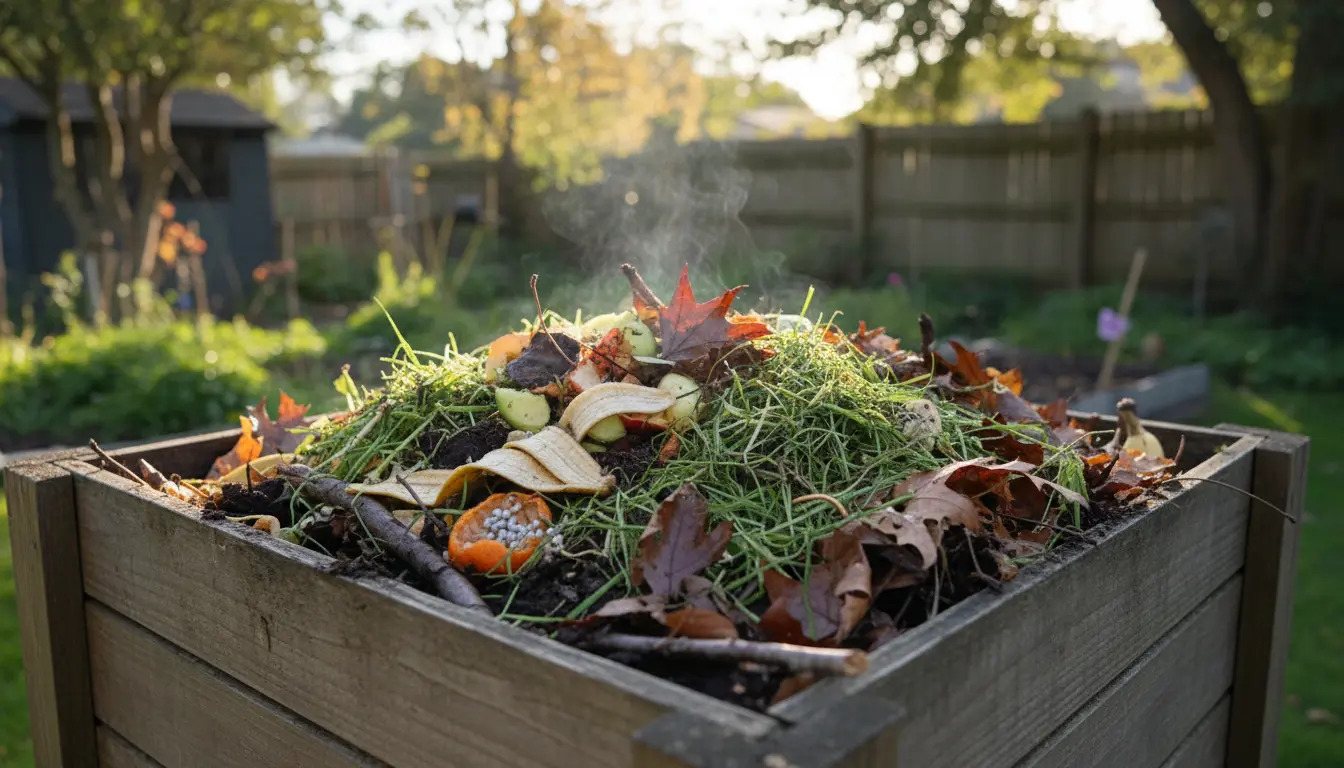
Start Home Composting for Beginners: Why It Matters
Home composting for beginners turns kitchen scraps and yard waste into nutrient-rich soil for gardens. It reduces household waste and lowers methane emissions from landfills.
This guide gives clear steps to set up a bin, choose materials, and troubleshoot common problems. No special equipment is required.
Choose a Method for Home Composting for Beginners
There are several simple methods suitable for beginners. Pick one that fits your space and schedule.
- Cold composting: Layer scraps in a bin and let nature do the work. Low maintenance but slower.
- Hot composting: Build a larger pile, keep it moist and aerated for faster results.
- Vermicompost: Use worms in a small bin for indoor or balcony composting.
- Tumbler composting: Enclosed rotating bin speeds decomposition and reduces pests.
Set Up Your First Bin — Home Composting for Beginners
Location is important. Place the bin on soil in a shaded area with good drainage. If using a container, elevate slightly to allow airflow.
Basic supplies include a container or bin, a pitchfork or aerator, and a moisture source like a watering can. Many beginners repurpose a trash bin with holes.
Materials to Add in Home Composting for Beginners
Balance carbon and nitrogen to speed decomposition. Aim for a rough 3:1 ratio of browns to greens.
- Greens (nitrogen): vegetable scraps, fruit peels, coffee grounds, fresh grass clippings.
- Browns (carbon): dried leaves, shredded paper, cardboard, straw.
- Avoid: meat, dairy, oils, diseased plants, pet waste (can attract pests).
How to Build Layers
Start with a layer of coarse browns to aid drainage. Alternate greens and browns in 2-4 inch layers. Keep the pile moist like a wrung-out sponge.
Turn the pile every 1–2 weeks to add oxygen if you want faster compost. Hot piles can reach 130–150°F with proper turning and balance.
Troubleshooting Common Issues in Home Composting for Beginners
Common problems are easy to fix. Diagnose by smell, texture, and appearance of the pile.
- Bad odor: Too wet or too many greens. Add browns and aerate.
- Slow breakdown: Pile too small or cold. Add water, greens, and turn more often.
- Pests: Avoid meat and dairy. Use a closed bin or bury fresh scraps under browns.
- Fungal growth: Normal if the pile is moist. Mix it in and balance greens and browns.
Harvesting and Using Compost — Home Composting for Beginners
Finished compost looks dark and crumbly with an earthy smell. Sift out large pieces and return them to the bin.
Use compost as a soil amendment, potting mix ingredient, or top dressing for lawns and gardens. Apply a 1–2 inch layer and work it into the topsoil.
Composting just one cubic yard of food and yard waste keeps up to 600 pounds of carbon dioxide equivalent out of the atmosphere annually.
Quick Checklist for Home Composting for Beginners
- Choose a bin type: cold, hot, tumbler, or worm bin.
- Balance greens and browns roughly 1:3.
- Keep the pile moist but not soggy.
- Turn every 1–2 weeks for faster results.
- Harvest when material is dark and crumbly.
Case Study: Small Urban Household Success
A two-person household in a city began home composting for beginners using a 40-gallon tumbler. They set the bin on a back balcony and collected kitchen scraps in a sealed container.
Within three months they reduced weekly trash by one-third and produced enough compost to feed three balcony planters. Turning the tumbler twice a week kept the pile active and odor-free.
The small investment in a tumbler paid off in less waste, healthier plants, and lower grocery costs from home-grown herbs.
Tips and Examples for Ongoing Success
Make composting part of your routine. Keep a small counter caddy for scraps and empty it daily.
- Example: Freeze coffee grounds in a container if you need to prevent fruit flies.
- Example: Shred mail and paper for brown material when leaves are scarce.
- Seasonal tip: Add more browns in fall when leaves are abundant; store shredded paper for winter.
Final Steps for Confident Home Composting for Beginners
Start small and adjust as you learn. Composting is forgiving and improves with practice. Track what you add and how often you turn the pile for best results.
Regular attention pays off with reduced waste, better soil, and a simple way to support local gardens and greenery.