
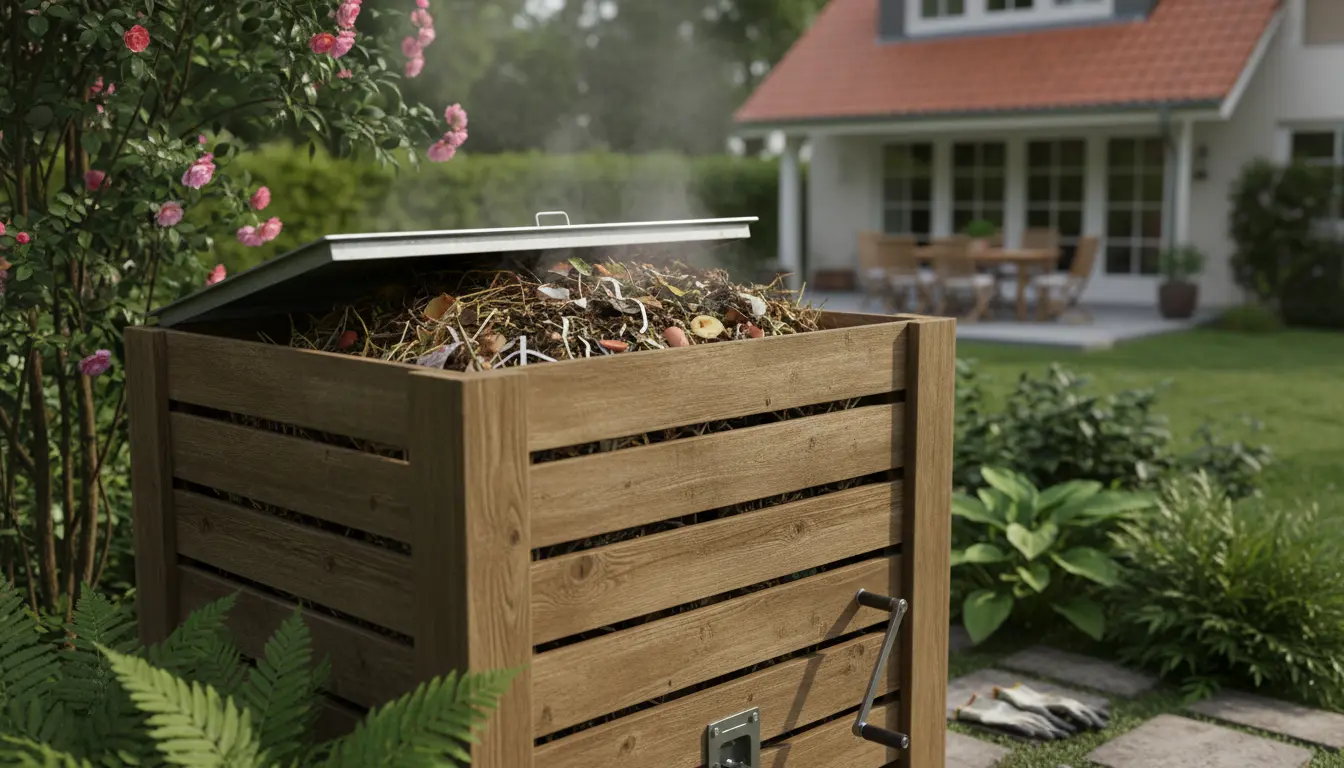
Home Composting Basics
Composting turns kitchen scraps and yard waste into nutrient-rich soil. It reduces landfill waste and improves garden health.
This guide covers simple steps to start and maintain home composting using common tools and materials.
Why Home Composting Matters
Composting lowers household waste and returns organic material back to the soil. It also reduces methane emissions from landfills.
For many gardeners, compost improves soil structure, water retention, and plant growth.
How Home Composting Works
Composting is a controlled decomposition process driven by microbes, moisture, oxygen, and the right balance of materials. The primary balance to manage is carbon to nitrogen.
Carbon-rich “browns” and nitrogen-rich “greens” feed decomposers and determine how quickly the pile breaks down.
What to Compost
- Fruit and vegetable scraps (no meat or oily foods)
- Coffee grounds and tea bags (staples for nitrogen)
- Eggshells, shredded paper, and cardboard
- Dry leaves, straw, and small wood chips
What Not to Compost
- Meat, fish, dairy, and greasy foods (attract pests)
- Diseased plants or invasive weeds with seeds
- Pet waste from cats or dogs
- Large branches or thick wood that decompose slowly
How to Start Home Composting
Choose a method that matches your space and time. Popular options include a simple pile, a tumbling bin, or a sealed compost bin for small yards.
All systems follow the same basic setup: layer materials, keep them moist, and turn occasionally.
Step-by-Step Starter Method
- Pick a dry, shaded spot near a water source.
- Start with a 6-inch layer of coarse material (twigs) to aid drainage.
- Add alternating layers of browns and greens. Aim for a 3:1 ratio of browns to greens by volume.
- Moisten each layer, but avoid making it soggy—compost should feel like a wrung-out sponge.
- Turn the pile every 1–2 weeks to add oxygen and speed decomposition.
Speeding Up Composting
Chop or shred materials to increase surface area. Maintain consistent moisture and temperature, and turn the pile frequently.
Adding finished compost or a small amount of garden soil can introduce helpful microbes.
Microbes in a well-balanced compost pile can raise temperatures above 130°F, helping to kill weed seeds and many plant pathogens.
Troubleshooting Common Home Composting Problems
Problems often stem from imbalance, moisture issues, or poor aeration. Identifying the cause helps you fix it quickly.
Bad Smell
A foul odor usually means too much nitrogen or poor aeration. Add more browns like shredded paper or dry leaves and turn the pile to introduce air.
Pile Too Dry or Too Wet
If the pile is dry and decomposition is slow, add water and more greens. If it is soggy and smells, add dry browns and turn frequently to dry it out.
Slow Breakdown
Slow composting can result from large materials, lack of nitrogen, or cold temperatures. Chop materials smaller and add green matter or finished compost to introduce microbes.
Small Real-World Case Study
Maria, a renter in a small city apartment, started a 40-liter tumbling composter on her balcony. She used mostly vegetable scraps, coffee grounds, and shredded paper.
By turning the tumbler twice a week and balancing browns and greens, she produced usable compost in six months. She used it to feed container tomatoes, which improved plant vigor and fruit yield.
Practical Tips for Success
- Collect scraps in a small countertop container to make composting convenient.
- Keep a supply of dry browns like shredded newspaper or leaves on hand.
- Monitor pile temperature and moisture weekly for best results.
- Use compost after it looks dark and crumbly and has an earthy smell.
Using Finished Compost
Apply finished compost as a top dressing, mix into potting soil, or work into garden beds. A thin 1–2 inch layer improves soil structure and nutrient content.
Final Thoughts on Home Composting
Home composting is a low-cost, practical way to reduce waste and improve plants. It adapts to many living situations, from apartments to large yards.
Start small, keep the process balanced, and adjust as you learn. Composting becomes easier with routine and observation.
For beginners, a simple bin and a basic understanding of greens, browns, moisture, and aeration are enough to get started producing healthy compost in a few months.