
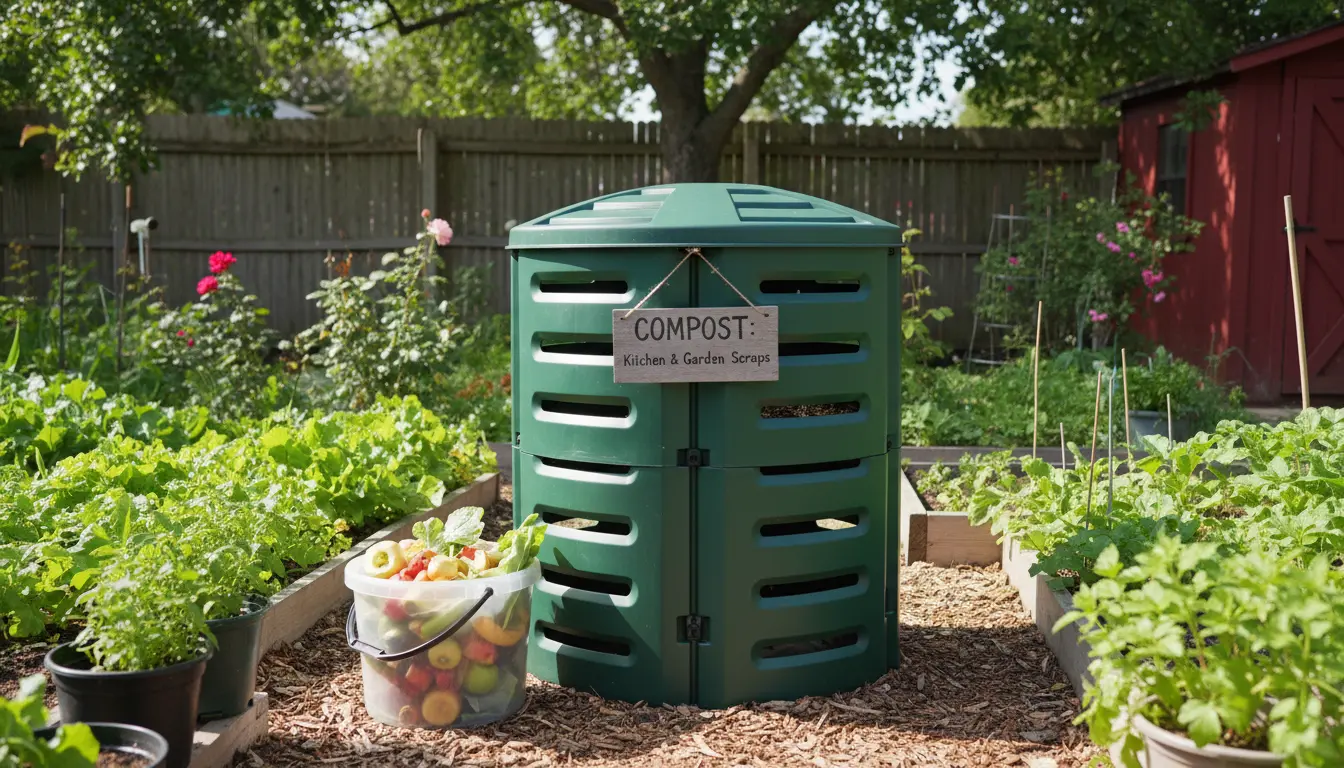
Composting at home turns kitchen scraps and yard waste into rich soil for gardens and potted plants. This guide gives practical, step-by-step instructions to start and maintain a home composting system that works for small yards or balconies.
Home Composting Basics
Home composting uses microbes to break down organic matter into humus. The process needs a balance of carbon materials, nitrogen materials, moisture, and air.
Key materials for home composting
- Greens (nitrogen): vegetable scraps, coffee grounds, fresh grass clippings.
- Browns (carbon): dry leaves, shredded paper, cardboard, straw.
- Water: maintain dampness similar to a wrung-out sponge.
- Oxygen: turn the pile or use an aerated bin to supply air.
How to Start Home Composting
Choose a composting method that matches your space and routine. Options include backyard piles, tumblers, and bokashi systems for apartments.
Step-by-step setup for a basic bin
- Select a container: a plastic bin, wooden crate, or purchased compost bin works well.
- Pick a location: partial shade and good drainage help maintain moisture without overheating.
- Build a base layer: 3–6 inches of coarse browns like twigs or straw to aid airflow.
- Add materials in layers: alternate thin layers of greens and browns.
- Maintain moisture: add water if dry; cover during heavy rain to avoid soggy conditions.
Maintaining Your Home Composting System
Regular attention keeps decomposition moving and prevents odors. Simple monitoring and occasional adjustments are usually enough.
Routine tasks to keep compost healthy
- Turn or mix the pile every 1–2 weeks to add oxygen.
- Check moisture weekly; add water or dry browns to balance.
- Shred large items to speed breakdown.
- Keep meat, dairy, and oily foods out of open piles to avoid pests.
Troubleshooting common issues
- Bad odors: add more browns and turn the pile to add air.
- Slow decomposition: chop materials smaller and increase nitrogen if too many browns.
- Pests: use a closed bin, bury kitchen scraps in the center, or try a bokashi pre-treatment.
- Soggy pile: add dry browns and turn to restore airflow.
Compost can reduce household waste by up to 30 percent. Finished compost improves soil structure, increases water retention, and supplies slow-release nutrients for plants.
Types of Home Composting Systems
Choose a system based on space, speed, and how much effort you want to invest. Each type has pros and cons.
Popular options
- Open pile: low-cost, best for yards, needs space and management to reduce pests.
- Compost tumbler: enclosed and easy to turn; faster results with regular tumbling.
- Bokashi: fermentation system for small spaces that handles cooked food and meat before burying in soil.
- Vermicomposting: worms break down food in small indoor bins, ideal for apartments and small households.
How to Use Finished Compost
Finished compost resembles dark, crumbly soil and smells earthy. Use it to enrich garden beds, potting mixes, or as a mulch around trees and shrubs.
Practical application tips
- Top-dress lawns by spreading a thin layer of compost and raking it in.
- Mix compost into planting holes or potting soil at a ratio of about 1:4 for established plants.
- Use as a seed-starting mix combined with clean potting soil to improve germination and growth.
Small Case Study: A Four-Person Household
Emma and her family started a 50-gallon tumbler in their suburban yard. They collected kitchen scraps in a countertop bucket, added dry cardboard every few days, and tumbled the bin twice weekly.
After three months they had dark, crumbly compost. Their vegetable beds produced larger tomatoes and beans, and their household reduced weekly trash volume by roughly 25 percent.
Checklist to Start Home Composting Today
- Choose a composting method that fits your space.
- Gather a mix of greens and browns.
- Set up the bin in a shaded spot with good drainage.
- Monitor moisture and turn regularly.
- Use finished compost to enrich soil and reduce fertilizer needs.
Home composting is a low-cost, effective way to reduce waste and improve garden soil. With basic materials and a short weekly routine, most households can produce valuable compost within a few months.