
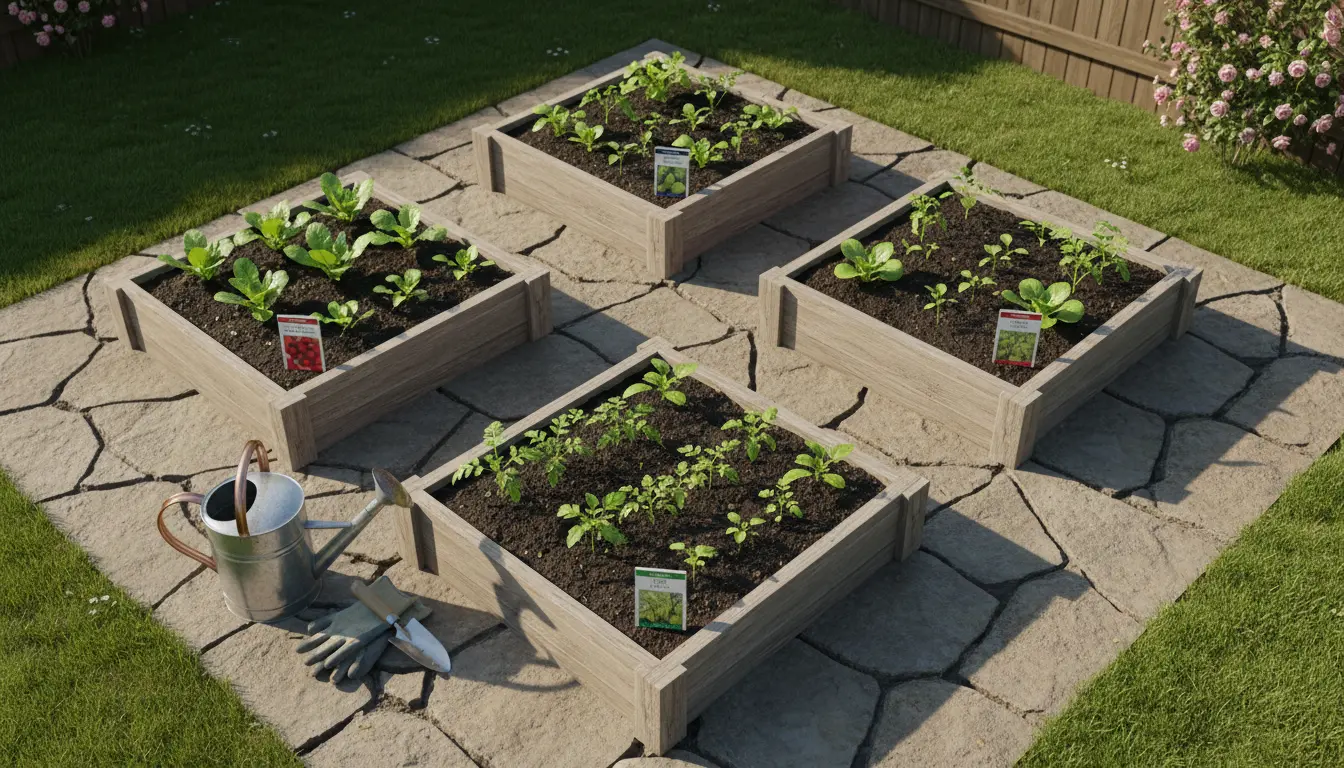
Starting a vegetable garden is a practical way to get fresh food, save money, and enjoy time outdoors. This guide covers the basic steps you need to begin a productive garden at home.
Start a Vegetable Garden: Planning and Site Selection
Good planning saves time and reduces problems later. Choose a site that receives at least 6 hours of direct sunlight per day for most vegetables.
Avoid low spots that collect standing water and locate the garden near a water source to make watering easier.
Decide Garden Type
Select the format that fits your space and energy: in-ground beds, raised beds, or containers. Each has pros and cons.
- In-ground beds: Low cost, best for larger spaces.
- Raised beds: Better drainage and soil control, easier on the back.
- Containers: Ideal for balconies or patios, portable and space-efficient.
Plan Size and Layout
Start small to avoid overwhelm. A 4×8 foot raised bed or a few large containers is enough for a beginner to grow a variety of vegetables.
Sketch the layout and note sun patterns. Group plants with similar water and light needs together.
Start a Vegetable Garden: Soil, Beds, and Tools
Soil quality determines much of your garden’s success. Test or assess soil texture and drainage before planting.
Use good compost and organic matter to improve soil structure for nutrients and water retention.
Soil Preparation Steps
- Remove weeds and debris from the planting area.
- Loosen the soil to 8–12 inches for most vegetables.
- Mix in 2–3 inches of compost or well-rotted manure.
- Level the bed and let it settle for a few days if possible.
Essential Tools
Start with these basic tools to make planting and maintenance efficient.
- Spade or shovel
- Garden fork or trowel
- Hand pruners
- Watering can or hose with nozzle
- Soil thermometer (optional)
Start a Vegetable Garden: Choosing Plants and Timing
Choose vegetables suited to your climate and season. Check your local last frost date and plant accordingly.
Begin with easy crops: tomatoes, peppers, lettuce, radishes, beans, and herbs are forgiving for beginners.
Seed vs. Seedlings
Seeds are cheaper and give more variety, but seedlings (transplants) offer an early start. Use transplants for tomatoes and peppers if your season is short.
Succession Planting
To maximize yield, plant quick crops every few weeks. For example, sow lettuce every 2–3 weeks for a continuous harvest.
Start a Vegetable Garden: Watering and Maintenance
Consistent watering is essential. Deep, less frequent watering encourages strong roots compared with shallow daily watering.
Mulch around plants to conserve moisture, suppress weeds, and moderate soil temperature.
Watering Guidelines
- Water deeply so the top 6 inches of soil are moist.
- Water in the morning to reduce disease risk.
- Adjust frequency for weather and soil type—sandy soil needs more frequent watering than clay.
Common Maintenance Tasks
Keep up with these tasks to maintain plant health.
- Regular weeding to reduce competition for nutrients.
- Inspect for pests and diseases weekly.
- Support tall plants with stakes or cages.
- Fertilize lightly according to plant needs—compost tea or balanced organic fertilizer works well.
Start a Vegetable Garden: Harvesting and Troubleshooting
Harvest vegetables at peak ripeness for best flavor and to encourage continued production. Use clean tools and handle produce gently.
If problems arise, use simple steps: identify the issue, remove affected plant parts, and adjust watering or soil nutrients.
Simple Pest Solutions
- Hand-pick large pests like caterpillars.
- Use row covers to protect seedlings from insects and birds.
- Encourage beneficial insects like ladybugs and predatory wasps.
Case Study: Small Backyard Raised Bed Success
Jane transformed a 10×6 foot corner of her yard into two 4×6 raised beds. She filled them with a mix of topsoil and compost and planted tomatoes, basil, lettuce, and bush beans.
By following a watering schedule and mulching, she harvested salad greens throughout summer and filled two family meals with fresh vegetables each week. Her initial investment in soil and seeds paid off in fresh food and lower grocery bills.
Final Tips for Beginners
- Start small and expand as you gain confidence.
- Keep a simple garden journal to track planting dates and issues.
- Learn from the first season and adjust soil and plant choices next year.
Starting a vegetable garden is a learning process. With planning, basic soil care, and simple maintenance, most people can grow healthy vegetables even in small spaces.