
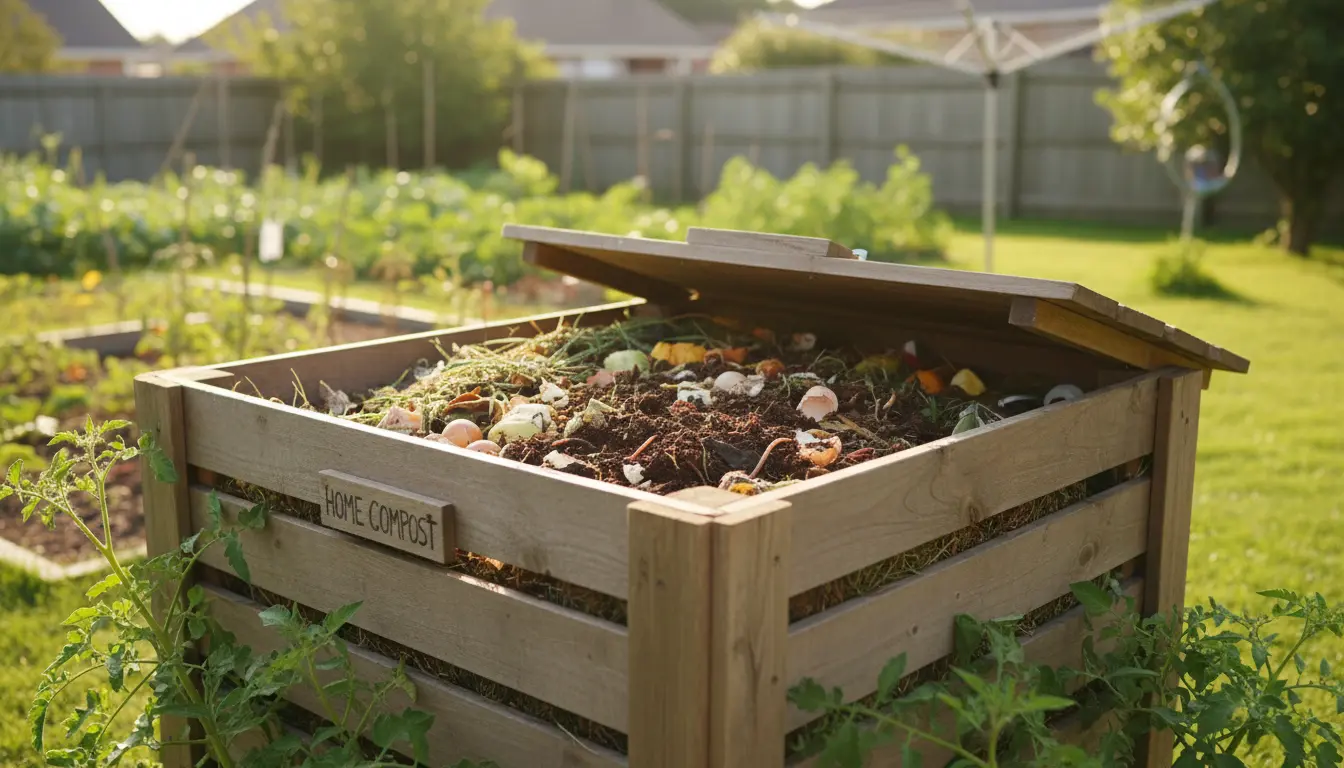
Why start composting at home?
Composting at home turns kitchen and yard waste into rich soil amendment. It reduces landfill waste and improves garden health without chemicals.
Starting is simple and scaled to any living situation. You can compost on a balcony, in a backyard, or even with a small indoor unit.
Basic principles of composting at home
Composting relies on microbes breaking down organic material. The main factors are carbon, nitrogen, oxygen, moisture, and particle size.
Balancing these elements speeds decomposition and prevents odors. Aim for a mix of ‘brown’ (carbon) and ‘green’ (nitrogen) materials.
Core ingredients for composting at home
- Greens (nitrogen): fruit scraps, vegetable peels, coffee grounds, fresh grass clippings.
- Browns (carbon): dry leaves, shredded paper, cardboard, straw.
- Water: should feel like a wrung-out sponge, not soggy.
- Air: turn or aerate the pile regularly to supply oxygen.
Choose a method for composting at home
Choose a method based on space, budget, and patience. Common options include piles, bins, tumblers, and vermicomposting.
Backyard compost pile or bin
A simple bin or open pile works well if you have yard space. It is low-cost and handles larger volumes.
Pros: inexpensive, large capacity. Cons: slower if not managed, can attract pests if uncovered.
Compost tumbler
Tumblers are enclosed drums you rotate to mix contents. They heat up faster and are neater for small yards.
Pros: faster decomposition, less effort turning. Cons: limited capacity, higher upfront cost.
Vermicomposting (worms)
Vermicomposting uses red worms to break down food scraps in a contained bin. It is ideal for apartments and indoor use.
Pros: low odor, produces worm castings. Cons: requires care for worms and limited by types of accepted waste.
Step-by-step: Start composting at home today
- Pick a location: choose a shaded, level spot near water for outdoor bins or a cool, ventilated spot indoors for worm bins.
- Assemble container: buy or build a bin, or set a simple pile on the ground with a wire cage or wooden frame.
- Layer materials: start with coarse browns for drainage, then alternate greens and browns in 4–6 inch layers.
- Maintain moisture and air: add water when dry and turn the pile every 1–2 weeks to aerate.
- Monitor temperature: a hot pile (130–150°F or 54–66°C) decomposes faster. Small or cold piles will still work but take longer.
- Harvest finished compost: when material is dark, crumbly, and earthy-smelling, sift and use in soil and potted plants.
Troubleshooting common issues with composting at home
Bad smells usually mean too much green or too much moisture. Add dry browns and turn the pile to introduce air.
Pests are attracted to exposed food. Bury scraps, avoid meat/dairy, or use enclosed systems to deter animals.
Slow decomposition can result from large pieces or low nitrogen. Chop materials smaller and add more greens or a nitrogen source.
Materials to avoid when composting at home
- Meat, bones, fish, and dairy (attract pests and create odors)
- Diseased plants or invasive weeds (may survive the process)
- Pet waste from carnivores (contains pathogens)
- Greasy food scraps and oils (repel water and slow breakdown)
Did You Know?
Composting can reduce household waste by up to 30 percent. Even small-scale composting on a balcony can divert hundreds of pounds of food waste per year from landfills.
Small case study: Apartment balcony composting success
Sara, a city resident, started a 20-liter worm bin on her balcony. She collected kitchen scraps and shredded cardboard as bedding.
Within six months she produced usable castings for her container herbs and cut her trash volume significantly. She reported no odors or pest issues after learning simple maintenance routines.
Using finished compost from composting at home
Finished compost improves soil structure, nutrient content, and water retention. Use it as a top dressing, potting mix ingredient, or garden amendment.
Application tips:
- Vegetable beds: mix 1–2 inches of compost into the top 6–8 inches of soil.
- Potted plants: blend one part compost with two parts potting mix.
- Lawn: apply a thin layer (1/4–1/2 inch) and rake in to feed turf naturally.
Final tips for successful composting at home
- Start small and scale up as you learn what works for your space.
- Keep a kitchen scrap container with a lid to make daily collection easy.
- Record simple observations: smell, temperature, and moisture to improve results.
- Local composting groups or extension services often offer workshops and troubleshooting help.
Composting at home is a practical way to reduce waste and improve plant health. With the right method and a bit of routine, anyone can produce nutrient-rich compost in weeks to months.