
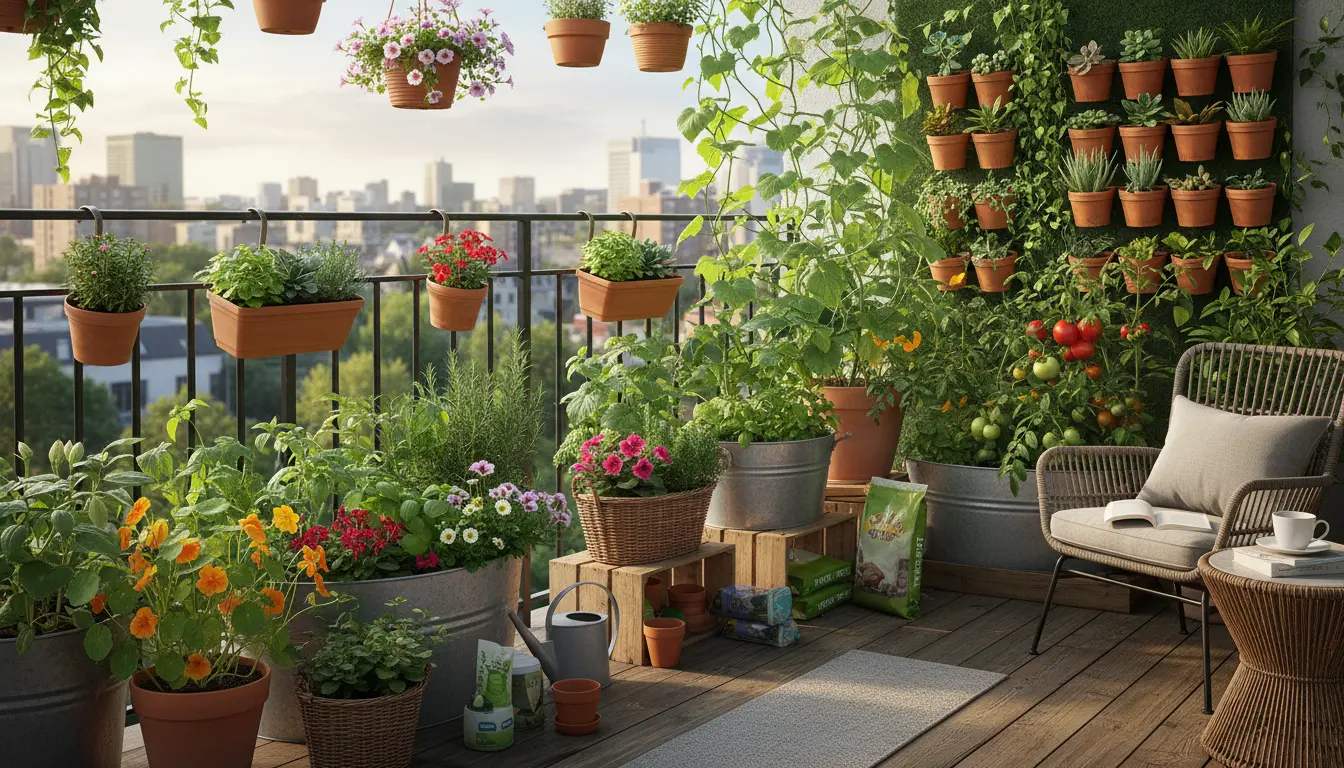
How to Start a Container Vegetable Garden
Container vegetable gardening lets you grow food on balconies, patios, and small yards. This guide gives practical steps to choose containers, soil, and plants so you can get productive results fast.
Plan Your Container Garden
Start by assessing available space, light, and access to water. Most vegetables need at least six hours of direct sun daily, so note bright spots and shade patterns.
Decide goals: fresh herbs, a salad mix, or a few fruiting plants like tomatoes. Your goals determine container size and number.
Choose the Right Containers
Container type affects plant health and watering. Use containers with drainage holes to prevent waterlogging and root rot.
- Small pots (1–3 gallons): herbs, lettuce, baby greens.
- Medium tubs (5–10 gallons): peppers, dwarf tomatoes, bush beans.
- Large containers (15+ gallons): indeterminate tomatoes, potatoes, small fruiting trees.
Materials: plastic retains moisture, clay breathes but dries faster, and fabric grow bags provide good aeration. Choose based on your watering routine and climate.
Select Good Potting Mix and Soil
Use a high-quality potting mix designed for containers, not garden soil. Potting mixes are lighter and drain well while retaining moisture and nutrients.
Look for mixes with peat or coconut coir, perlite or vermiculite, and a slow-release fertilizer. You can add compost for extra nutrients and beneficial microbes.
Pick Vegetables for Containers
Choose varieties bred for containers or with compact habits. These yield better in limited root space and are easier to manage.
- Leafy greens: lettuce, arugula, spinach.
- Herbs: basil, parsley, chives.
- Fruit-bearing: patio tomatoes, patio peppers, determinate varieties.
- Root crops: radishes, baby carrots, small varieties.
Planting and Spacing
Follow seed packet or plant tag spacing but err on the looser side for container airflow. Overcrowding increases disease risk and reduces yield.
Consider succession planting for continuous harvest: plant new seeds every 2–3 weeks for crops like lettuce and radishes.
Watering and Feeding
Containers dry faster than garden beds. Check moisture daily by sticking a finger 1–2 inches into the mix; water when the top layer feels dry.
Use a balanced liquid fertilizer every 2–4 weeks or a slow-release granular at planting. Fruiting plants often need more phosphorus and potassium during bloom and fruit set.
Small containers can dry out in under a day on hot patios. Choosing deeper pots reduces watering frequency and helps roots stay cool.
Pest and Disease Management
Monitor plants regularly for pests like aphids, whiteflies, and slugs. Early detection prevents large outbreaks that are harder to control in tight spaces.
Use these practical controls:
- Handpick large pests and rinse foliage to remove small ones.
- Apply insecticidal soap or neem oil for soft-bodied insects.
- Ensure good airflow and avoid overhead watering to reduce fungal diseases.
Support and Pruning
Tall or vining varieties need stakes, cages, or trellises even in containers. Support keeps fruit off the soil and improves air movement.
Prune suckers on indeterminate tomatoes and remove yellowing leaves to direct energy to fruit and maintain plant health.
Harvesting Tips
Harvest leafy greens as baby leaves or cut-and-come-again to get multiple harvests from the same plants. Pick herbs regularly to encourage bushy growth.
For fruiting plants, harvest when color and firmness indicate ripeness. Frequent harvesting usually promotes more production.
Small Case Study: A Balcony Tomato Success
Maria, an apartment dweller, used two 15-gallon containers and one 5-gallon pot to grow patio tomatoes and basil. She placed containers on her south-facing balcony with full sun from 9 a.m. to 3 p.m.
By using a peat-based potting mix, regular feeding, and staking, she harvested 18 ripe tomatoes over the season and multiple basil cuttings. Her tips: water consistently in hot weather and pinch off early flowers to promote stronger root growth at the start.
Troubleshooting Common Issues
Yellow leaves can mean overwatering or nutrient deficiency. Check drainage and adjust feeding schedules before changing plants.
Poor fruit set in peppers or tomatoes may indicate insufficient pollination or high nighttime temperatures. Gently shake plants or introduce pollinator-friendly flowers nearby.
Seasonal Care and Overwintering
In colder climates, move containers to sheltered areas or bring them indoors to extend growing seasons. For perennials and herbs, trim back and reduce watering as plants enter dormancy.
Empty and clean containers after the season, refresh potting mix, and store in a dry place to prevent pests and disease carryover.
Container vegetable gardening is flexible and rewarding when planned and maintained. Start small, observe, and scale up as you gain confidence and learn which crops work best for your space.