
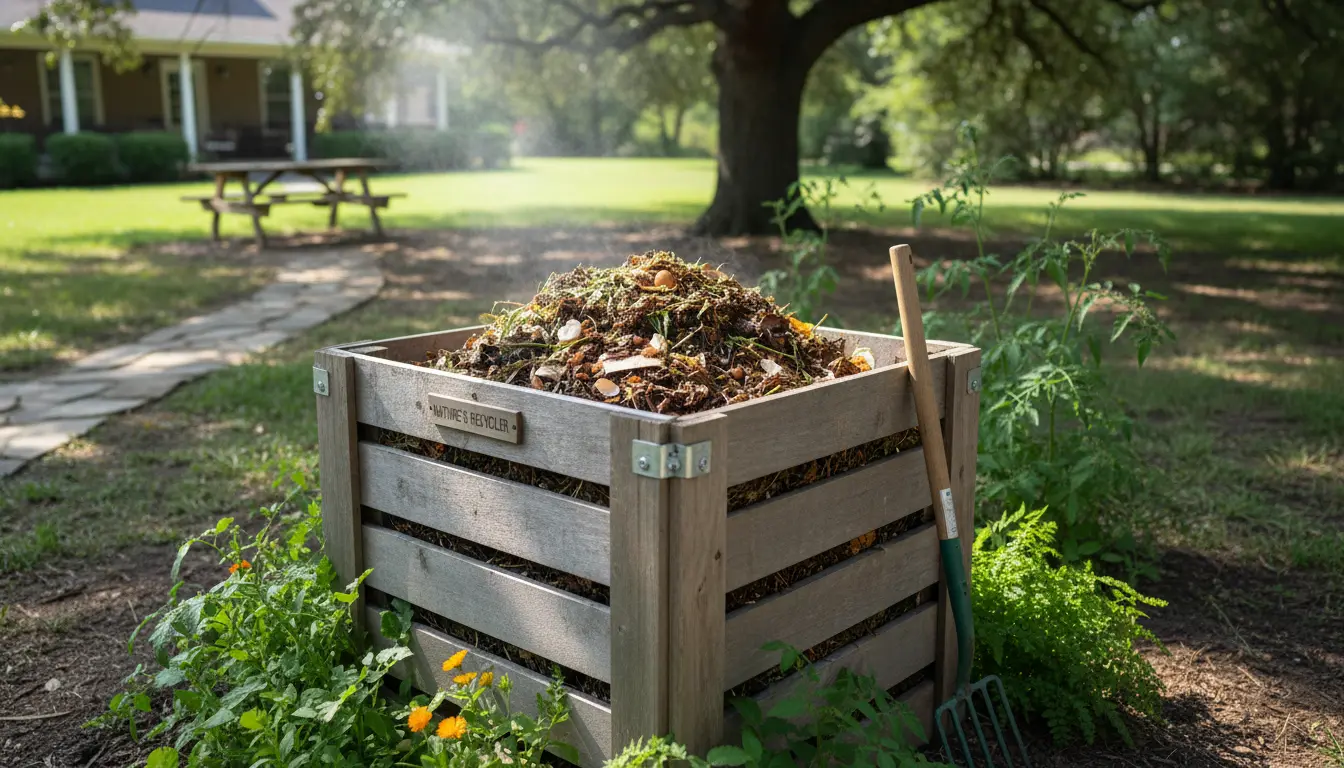
Why Home Composting Matters
Home composting reduces kitchen and yard waste while creating nutrient-rich soil for gardens. It lowers household garbage volumes and supports healthier plants without chemical fertilizers.
For small-space gardeners and families alike, composting is a low-cost way to recycle organic matter. Understanding simple techniques helps avoid common mistakes and speeds up the process.
How to Start Home Composting
Starting home composting requires basic tools, the right mix of materials, and regular care. Use this practical approach to build a reliable system that fits your available space and needs.
Materials for Home Composting
Collect two main categories of materials: greens and browns. Greens are high in nitrogen; browns add carbon and structure.
- Greens: vegetable scraps, coffee grounds, fresh grass clippings, plant trimmings.
- Browns: dried leaves, shredded paper, cardboard, straw, wood chips.
- Avoid: meat, dairy, diseased plants, oily foods, and pet feces to reduce pests and odors.
Compost Ratios and Layers
The recommended balance is roughly three parts browns to one part greens by volume. This mix provides carbon and nitrogen needed for microbes to break down material efficiently.
Layer materials to promote airflow and moisture balance. Start with coarse browns at the bottom, add a green layer, and repeat. Smaller pieces decompose faster.
Step-by-Step Setup for Home Composting
- Choose a bin or pile location with partial shade and good drainage.
- Prepare the base with sticks or straw to encourage airflow.
- Add alternating layers of browns and greens, keeping the ratio close to 3:1.
- Moisten each layer so it feels like a wrung-out sponge; avoid waterlogging.
- Turn the pile every 1–2 weeks to add oxygen and speed decomposition.
Maintaining Home Composting Systems
Regular monitoring is the key to fast, odor-free composting. Check moisture, temperature, and structure at least once a week.
Good airflow and the right moisture level keep microbes active. If the pile is too dry, add water and more greens; if too wet or smelly, add browns and turn the pile more often.
Temperature and Timeframes
Hot composting reaches internal temperatures of 104–160°F (40–71°C), which speeds up breakdown and kills many weed seeds. Cold composting is slower but requires less effort.
With active management, compost can be ready in 2–4 months. Passive piles may take 6–12 months. Use finished compost when it is dark, crumbly, and smells earthy.
Troubleshooting Home Composting
Common issues include bad odors, slow decomposition, and pests. Most problems are fixable with simple adjustments.
- Smelly pile: Add more browns, turn the pile, and reduce wet kitchen scraps.
- Slow breakdown: Chop materials smaller, increase greens for nitrogen, or raise moisture slightly.
- Pests: Keep meat and dairy out, bury food scraps, and use a closed bin or wire mesh.
Real-World Example: A Small Urban Compost Case Study
Emma, a city apartment gardener, started home composting in a 50-liter tumbler on her balcony. She used fruit and vegetable scraps plus shredded office paper.
After two months of turning the tumbler twice weekly and keeping materials moist, Emma produced dark, crumbly compost. She mixed it into potting soil for tomatoes and noticed improved plant vigor the season after.
Best Practices and Tips for Success
Follow these practical tips to make home composting easier and more consistent.
- Chop or shred large pieces to speed decomposition.
- Balance greens and browns rather than adding only one type.
- Use a thermometer for hot composting to monitor progress.
- If space is limited, try worm composting (vermicomposting) for efficient kitchen waste processing.
- Store finished compost in a covered container to keep it ready for use.
Using Finished Compost
Apply finished compost as a top dressing, mix it into garden beds, or blend it with potting mix for container plants. It improves soil structure, fertility, and water retention.
Ash, lime, or other strong amendments should be added sparingly and only after understanding soil needs. Compost is an excellent baseline soil builder for most gardens.
Conclusion: Start Small and Improve Over Time
Home composting is adaptable to many living situations and scales. Start with manageable volumes and refine your routine based on results.
With basic materials and regular attention, anyone can convert kitchen and yard waste into valuable compost that supports healthier plants and a smaller environmental footprint.