
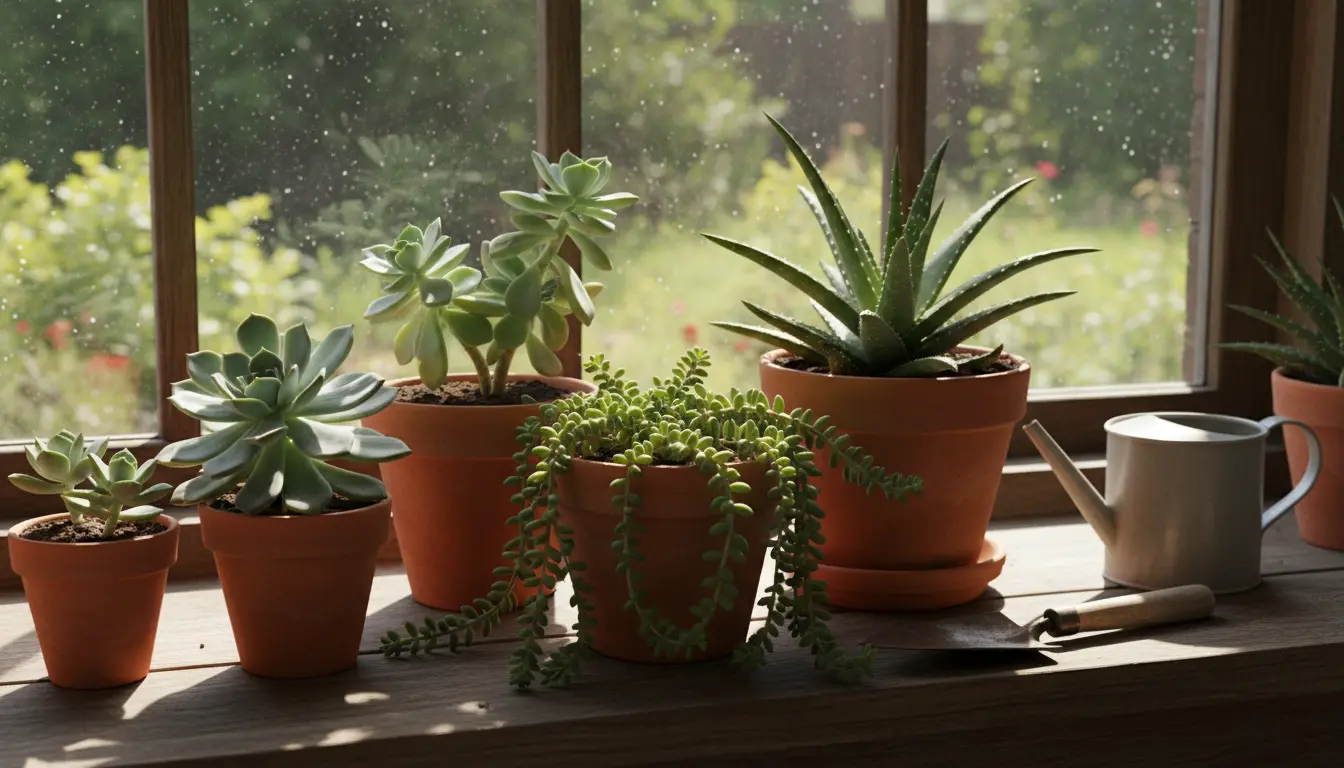
Start Here: What Indoor Succulent Care Means
Indoor succulent care is the set of simple habits that keep drought-tolerant plants healthy indoors. These plants store water in leaves and stems, so their needs differ from typical houseplants.
This guide gives clear, practical instructions for light, water, soil, pots, propagation, and common problems. Follow the steps and adjust to your home’s microclimate.
Indoor Succulent Care: Light and Placement
Light is the most important factor for succulents. Most species prefer bright, indirect light and some direct morning sun.
Place succulents near south- or west-facing windows if available. Rotate pots weekly so all sides get light.
Practical light rules
- Provide at least 6 hours of bright light for sun-loving succulents.
- Use sheer curtains to reduce harsh afternoon sun that can burn leaves.
- In low-light homes, supplement with a full-spectrum LED grow light for 8–12 hours daily.
Indoor Succulent Care: Watering and Soil
Watering is often where beginners make mistakes. Succulents need a “soak and dry” routine: water thoroughly, then allow soil to dry before the next water.
Frequency depends on season, pot size, and humidity. In summer, water more often; in winter, reduce watering to once a month or less.
How to water correctly
- Water until excess runs from drainage holes, then empty the saucer after 10–20 minutes.
- Check soil moisture by inserting your finger 1–2 inches into the mix; water only when dry.
- Avoid overhead misting for long periods; it can cause rot in tight rosettes.
Best soil mixes
Use a fast-draining mix made for cacti and succulents. You can make your own with:
- 2 parts coarse potting mix
- 1 part perlite or pumice
- 1 part coarse sand (optional for extra drainage)
Indoor Succulent Care: Potting, Drainage, and Containers
Pots with drainage holes are essential. Good drainage prevents water sitting at roots which leads to rot.
Choose a pot only slightly larger than the root ball. Oversized pots hold more soil and water, increasing rot risk.
Repotting tips
- Repot every 1–2 years to refresh soil and check roots.
- Allow root-bound succulents to stay slightly snug—many prefer it.
- When repotting, trim dead roots and let the plant dry for a day before planting.
Indoor Succulent Care: Fertilizing and Seasonal Care
Succulents are light feeders. Fertilize sparingly during the growing season (spring and summer).
Use a balanced, diluted fertilizer (quarter strength) once a month when actively growing.
Seasonal adjustments
- Spring–Summer: More light, water when soil dries, occasional fertilizer.
- Fall: Begin to reduce water and stop fertilizer as growth slows.
- Winter: Minimal water, cool temperatures acceptable if above freezing.
Indoor Succulent Care: Propagation and Common Problems
Propagation is an easy way to expand your collection. Many succulents propagate from leaves, offsets, or stem cuttings.
Common problems include overwatering, leggy growth from low light, and pests like mealybugs.
Propagation basics
- Leaves: Let detached leaves dry 1–3 days, then lay on dry soil until roots form.
- Offsets: Gently separate pups and plant immediately in dry mix.
- Stem cuttings: Allow cut ends to callus before planting.
Dealing with pests and rot
- Mealybugs: Remove with a cotton swab dipped in isopropyl alcohol and isolate the plant.
- Root rot: Remove the plant, cut away rotten roots, let the crown dry, and repot in fresh soil.
- Legginess: Increase light or trim and re-root healthy tips.
Example Case Study: How Maria Revived Her Succulent Collection
Maria had eight succulents on a north-facing shelf that were turning leggy and soft. She followed a basic plan to revive them.
Steps she took: moved three sun-loving types to a brighter window, repotted three into a fast-draining mix, and reduced watering to once every 2–3 weeks. Within six weeks, new compact growth appeared and leaf color improved.
Key takeaways from the case
- Light adjustments fixed etiolation (stretching).
- Fresh soil and proper pots stopped recurring soft stems and rot.
- Simple routine changes can rejuvenate multiple plants in weeks.
Quick Checklist for Daily Indoor Succulent Care
- Place succulents in bright indirect light or provide 8–12 hours with a grow light.
- Water using the soak and dry method; check soil before watering.
- Use a fast-draining soil and pots with drainage holes.
- Fertilize lightly during the growing season only.
- Inspect monthly for pests and signs of rot.
Indoor succulents thrive with predictable, simple care: good light, correct watering, proper soil, and attention to small issues. Start with one or two plants, learn their needs, and expand your collection as you gain confidence.