
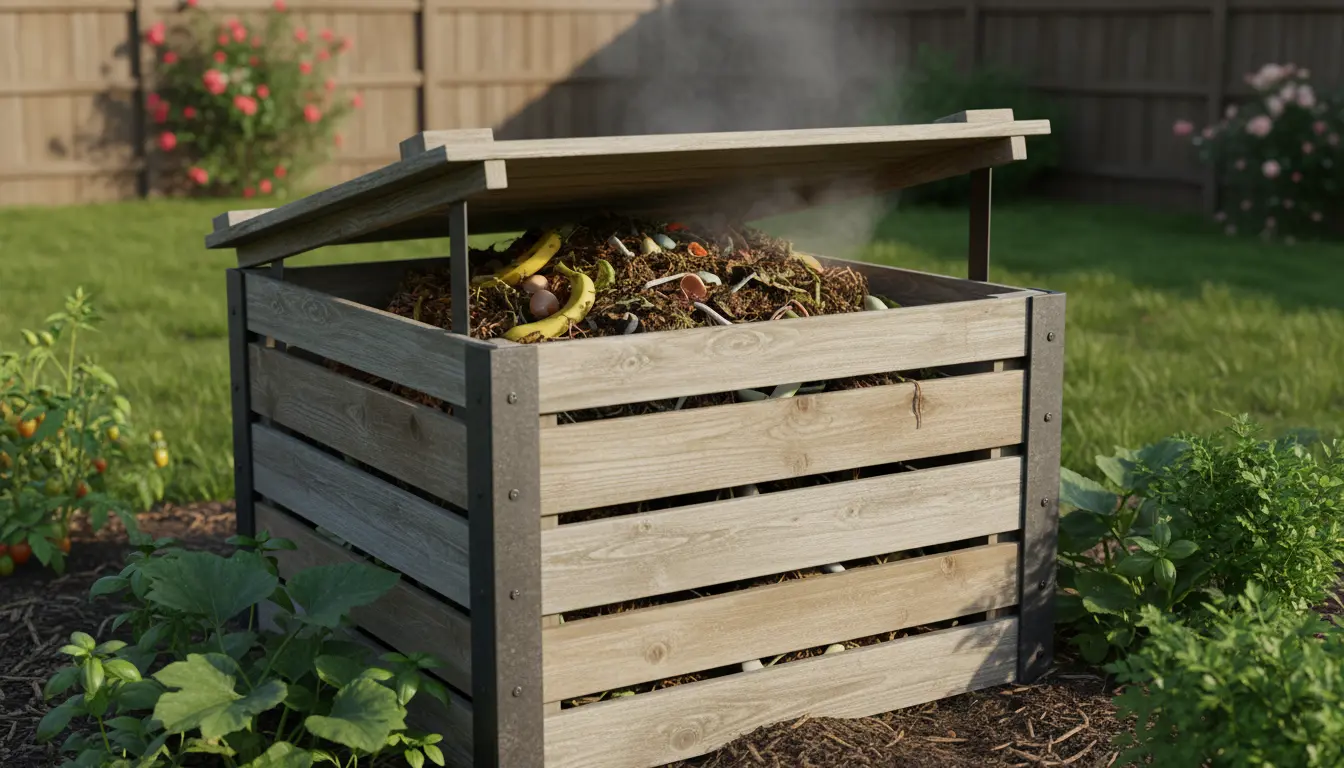
Why Start Composting at Home
Composting at home turns kitchen and yard waste into nutrient-rich soil. It reduces household trash and gives you free fertilizer for plants.
For most households, composting is low cost and low effort once you set up a simple system and follow a few rules.
What You Need for Composting at Home
Start by gathering three basics: a container, a mix of materials, and a location. You do not need fancy equipment.
- Compost bin or a simple pile in a corner of the yard.
- Greens: fruit and vegetable scraps, coffee grounds, fresh grass clippings.
- Browns: dry leaves, shredded paper, straw, cardboard.
- Water source and a garden fork or aerator for turning.
How to Start Composting at Home: Step-by-Step
Follow these practical steps to build a healthy compost pile. Keep each step simple and regular.
1. Choose a spot and a container
Pick a well-drained, shady corner near a water source. If you have limited space, use a compact tumbler or bin.
Open bins are fine for large yards. Closed tumblers work well on patios and reduce odors and pests.
2. Layer greens and browns
Start with a layer of coarse browns for drainage. Add a layer of greens about half as thick. Alternate layers until the bin is full.
Good ratio: aim for roughly 2 to 3 parts browns for every 1 part greens by volume.
3. Keep it moist and aerated
Your compost should feel like a wrung-out sponge — moist but not dripping. Water occasionally during dry periods.
Turn or mix the pile every 1–2 weeks to add oxygen. A garden fork, compost aerator, or tumbler works well.
4. Monitor and adjust
If the pile smells sour, add more browns and turn it to introduce air. If it is dry and slow, add water and more greens.
Small amounts of garden lime or finished compost can stabilize pH if needed, but most household piles don’t require additives.
Common Troubleshooting for Composting at Home
New composters often face a few common issues. Fixes are usually quick and simple.
- Bad odor: Add dry browns and turn the pile to reduce moisture and increase air.
- Pests: Avoid adding meat, dairy, or large quantities of oily foods. Use a closed bin if pests persist.
- Slow decomposition: Chop or shred materials to increase surface area and keep the pile moist.
- Too wet: Mix in coarse browns like straw or dried leaves and turn to dry slightly.
How to Use Finished Compost from Home
Finished compost looks dark, crumbly, and earthy-smelling. It typically takes 2–12 months depending on the method and conditions.
Use it to top-dress lawns, mix with potting soil for containers, or enrich garden beds. A thin layer of 1–3 inches improves soil structure and water retention.
Small-Scale Options for Composting at Home
If you live in an apartment or have limited outdoor space, there are alternative methods that work well.
- Vermicomposting: Use worms in a bin indoors to break down food scraps quickly.
- Bokashi: Ferment food waste in a sealed bucket with bran for later burial in soil or composting.
- Community composting: Drop off kitchen scraps at a local garden or community compost hub.
Real-World Example: A Simple Backyard Case Study
Jane, a homeowner with a small backyard, started composting at home using a 60-gallon tumbler. She used kitchen scraps and yard trimmings in a 3:1 browns-to-greens ratio.
She turned the tumbler every week and kept the contents moist. After four months, she had dark, crumbly compost that she mixed into her vegetable beds. Her tomato plants produced larger fruit and she reduced weekly trash by nearly 30 percent.
Practical Tips to Keep Composting at Home Easy
- Chop or shred large scraps before adding them to speed up breakdown.
- Keep a small counter caddy with a lid to collect food scraps and transfer them to the bin regularly.
- Balance greens and browns for faster, cleaner results.
- Label bins or layers to avoid adding prohibited items like meat or pet waste.
Final Checklist to Start Composting at Home
- Choose a bin and location that fits your space.
- Gather a supply of browns and greens.
- Maintain moisture and turn the pile regularly.
- Use finished compost in your garden and monitor progress.
Composting at home is a practical way to cut waste and improve soil health. Start small, learn by doing, and adjust as you go.