
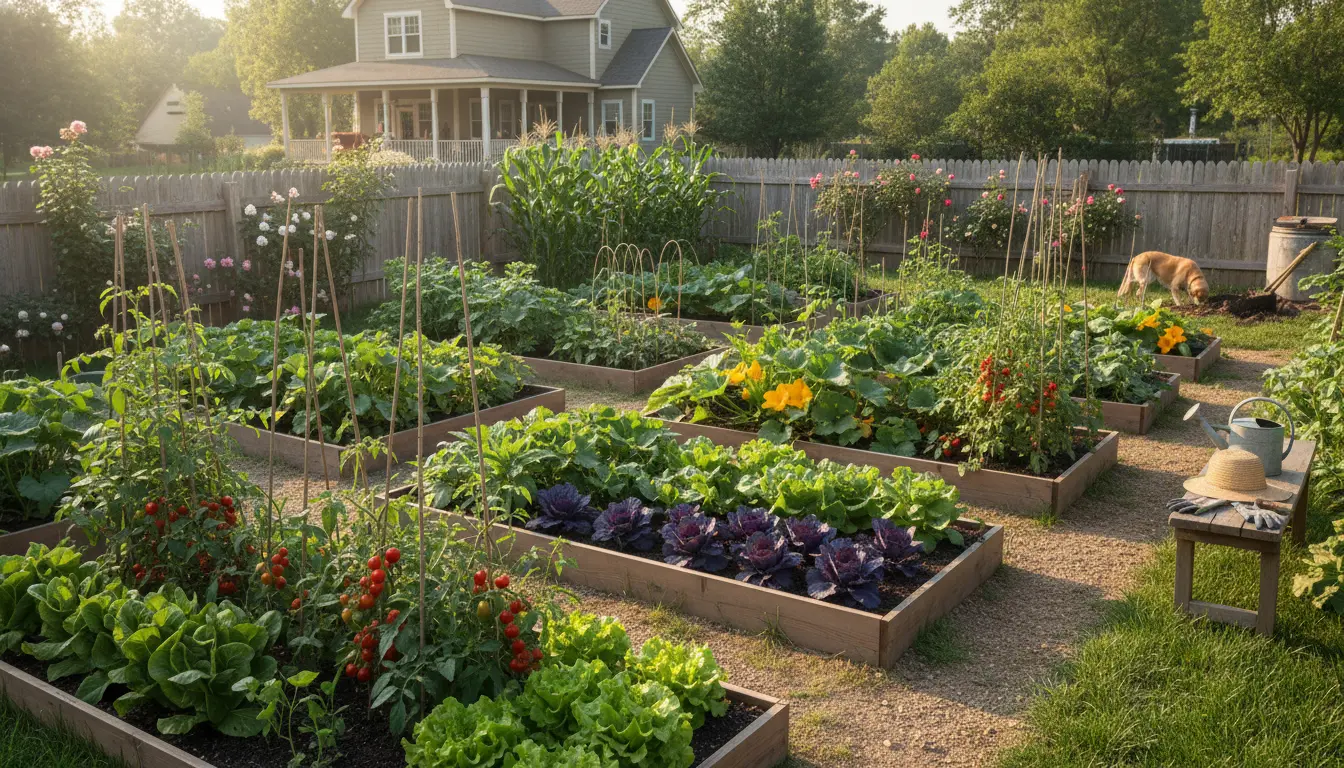
Why Start a Home Vegetable Garden
Growing vegetables at home saves money and gives you fresher produce. A small garden also reduces food miles and connects you to seasonal eating.
This guide covers practical steps to plan, plant, and maintain a successful home vegetable garden. Follow the sequence to avoid common beginner mistakes.
Choose the Right Location for Your Home Vegetable Garden
Sunlight is the most important factor for vegetable growth. Aim for a spot that gets at least six hours of direct sun daily.
Also consider water access, soil drainage, and proximity to your home. A garden close to the kitchen increases the chance you will use it frequently.
Site Selection Tips
- Observe sunlight pattern for a week at different times.
- Avoid low spots that collect water; good drainage prevents root rot.
- Place beds near a water source to simplify irrigation.
- Think about wind protection and shade from trees or buildings.
Prepare Soil for a Home Vegetable Garden
Healthy soil is the foundation of a productive vegetable garden. Test the soil pH and texture before planting.
Add organic matter to improve fertility and structure. Compost and well-rotted manure are excellent choices.
Soil Preparation Steps
- Remove weeds and debris from the planting area.
- Loosen soil to a depth of 8–12 inches for most vegetables.
- Incorporate 2–4 inches of compost and a balanced organic fertilizer if needed.
- Rake the surface smooth and allow beds to settle for a few days before planting.
Raised bed gardens warm faster in spring and can increase yields by improving drainage and soil structure.
Pick Easy Vegetables for Your First Garden
Choose reliable, low-maintenance crops to build confidence. Fast-growing plants offer quicker rewards for beginners.
Start with a mix of leafy greens, roots, and a few vining or fruiting crops.
Beginner-Friendly Vegetables
- Lettuce and spinach — harvest many leaves without replanting.
- Radishes — mature in 3–4 weeks and reveal quick success.
- Tomatoes (determinate types) — compact and productive.
- Zucchini — high yields from a single plant in warm seasons.
- Green beans — easy to grow and require little upkeep.
Planting and Spacing in a Home Vegetable Garden
Follow seed packet or plant tag spacing to avoid overcrowding. Proper spacing improves air circulation and reduces disease pressure.
Consider succession planting: stagger sowing to extend harvests and avoid gluts.
Simple Planting Plan
- Use rows or square-foot gardening grids for easy spacing.
- Group plants with similar water and light needs together.
- Support vining plants with trellises to maximize space.
Watering, Mulching, and Nutrients
Consistent moisture is crucial. Water deeply once or twice a week rather than shallow daily watering.
Mulch conserves moisture, suppresses weeds, and moderates soil temperature. Apply 2–3 inches of organic mulch around plants.
Fertilizing Guidance
- Start with a soil test; follow recommended nutrient adjustments.
- Use low-dose organic fertilizers during the growing season.
- Side-dress heavy feeders like corn and tomatoes with compost or balanced organic fertilizer.
Pest and Disease Basics for a Home Vegetable Garden
Monitor plants regularly to catch problems early. Many pests are manageable with physical controls and good garden hygiene.
Practice crop rotation and remove diseased plant material to reduce future outbreaks.
Nonchemical Pest Controls
- Hand-pick large pests like slugs and caterpillars.
- Use row covers to protect young plants from insects.
- Encourage beneficial insects by planting flowers and herbs nearby.
Harvesting and Storing Vegetables
Harvest at peak ripeness for best flavor and nutrition. Regular harvesting often stimulates more production.
Store produce properly: leafy greens in cool, humid conditions, and root crops in a cool, dark place.
Small Real-World Example: A Beginner’s Raised Bed
Case study: A first-time gardener started a 4×8 foot raised bed in spring. They filled it with a commercial soil blend and compost.
They planted lettuce, radishes, three tomato plants, and bush beans. By mid-summer they harvested weekly, rotating lettuce with basil and marigolds to deter pests.
The gardener reported lower grocery bills and increased satisfaction, learning to adjust watering after the first month.
Maintenance Checklist for a Healthy Home Vegetable Garden
- Water consistently and deeply, early in the day.
- Weed weekly to reduce competition for nutrients.
- Mulch annually and refresh as needed.
- Rotate crops each season to reduce disease buildup.
- Keep a simple garden journal to track plant varieties and harvest dates.
Conclusion: Start Small and Iterate
Begin with a manageable space and a few easy crops. Learn from each season and expand as you gain confidence.
Home vegetable gardening rewards regular care and observation. With basic planning and simple maintenance, most beginners see success in their first year.