
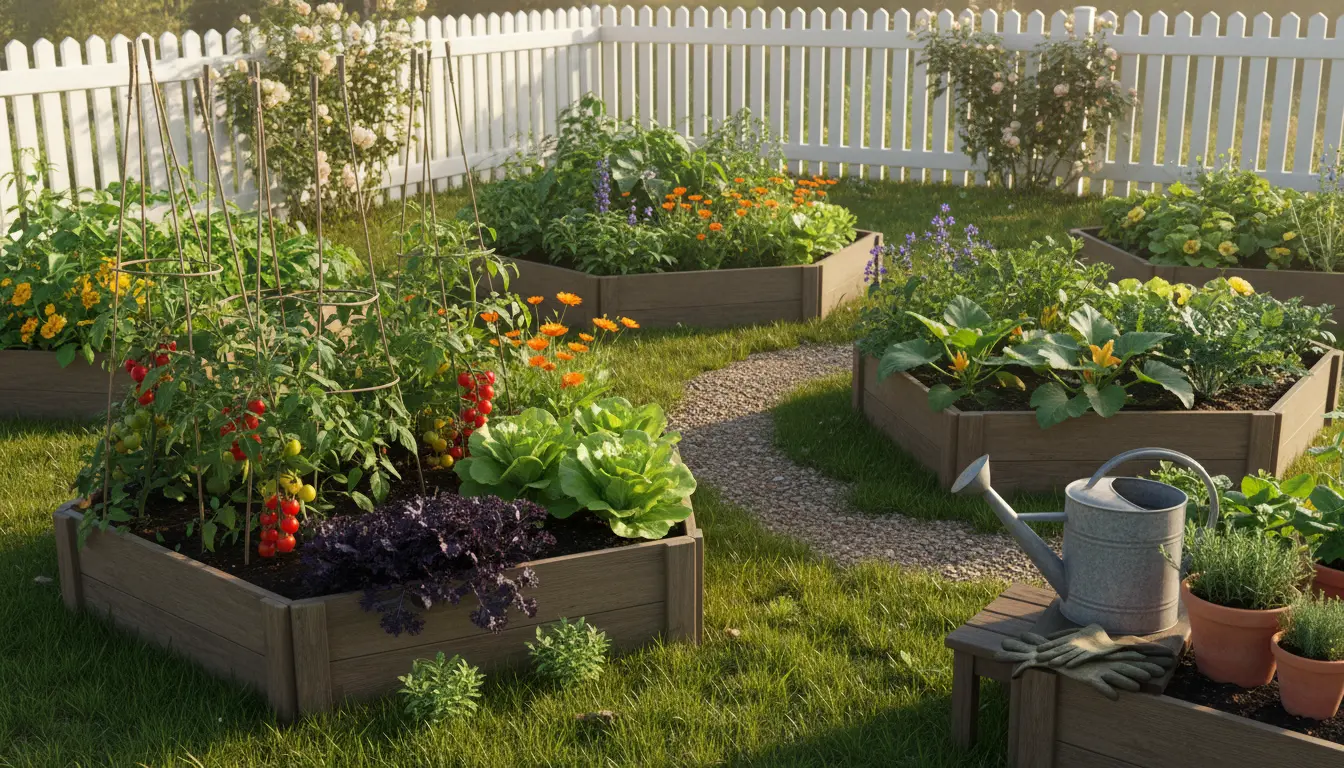
How to Start a Small Vegetable Garden
Starting a small vegetable garden is a practical way to grow fresh food without a large yard. This guide covers site selection, soil preparation, planting, watering, and maintenance in simple steps.
Choose a Location for Your Small Vegetable Garden
Pick a spot that gets at least 4 to 6 hours of direct sun daily for most vegetables. Consider accessibility for watering and harvesting so maintenance stays easy.
Look for a flat area with good drainage and close to a water source. If you have limited space, use containers, window boxes, or a small raised bed.
Select Vegetables for a Small Vegetable Garden
Choose crops that fit your space and skill level. Start with quick, reliable vegetables to build confidence and harvest value fast.
- Leafy greens: lettuce, spinach, arugula
- Root crops: radishes, baby carrots
- Fruit-bearing: cherry tomatoes, peppers, bush beans
- Herbs: basil, parsley, chives
Mix fast growers with longer-season plants to keep harvests steady.
Prepare Soil and Containers for a Small Vegetable Garden
Good soil is the most important factor. For in-ground beds, loosen soil to 8–12 inches and work in compost to improve structure and nutrients.
For containers, use a quality potting mix with compost and perlite for drainage. Choose pots at least 12 inches deep for most vegetables.
Simple soil mix for containers:
- 40% quality potting mix
- 30% compost
- 30% coarse sand or perlite
Layout and Spacing for a Small Vegetable Garden
Plan rows and spacing to match each species. Crowding reduces airflow and increases disease risk.
Use these quick spacing tips:
- Lettuce: 6–8 inches between plants
- Radishes: 2–3 inches between seeds
- Tomatoes (bush): 18–24 inches apart
- Peppers: 12–18 inches apart
Planting and Scheduling for a Small Vegetable Garden
Follow seed packet or plant tag instructions for sowing depth and spacing. Start cool-season crops early and heat-loving crops after the last frost date.
Use succession planting to maximize yields from limited space. Sow small batches of lettuce or radishes every two weeks to extend harvests.
Watering and Feeding a Small Vegetable Garden
Consistent moisture is key. Water deeply once or twice a week, depending on temperature and soil type, rather than shallow daily watering.
Apply a balanced fertilizer or organic amendments every 4–6 weeks during the growing season. Mulch with straw or shredded leaves to retain moisture and suppress weeds.
Pest Control and Maintenance for a Small Vegetable Garden
Inspect plants regularly for pests and disease. Early detection makes control simpler and avoids major losses.
Low-cost pest strategies:
- Handpick large pests like caterpillars and beetles
- Use row covers to protect seedlings from insects
- Encourage beneficial insects with flowers like marigolds and alyssum
- Rotate crop families seasonally to reduce soil-borne diseases
Tools and Equipment for a Small Vegetable Garden
You only need a few basic tools to maintain a small garden effectively. Keep gear simple to save money and storage space.
- Hand trowel and garden fork
- Pruning shears
- Watering can or a hose with a gentle nozzle
- Soil thermometer (optional)
Small Vegetable Garden Case Study
Real-World Example: An apartment balcony gardener used four 12-inch containers and one 2×2 foot raised bed. They planted cherry tomatoes in two containers, basil and parsley in one, and lettuce and radishes in the raised bed.
Outcome: Within three months they had a continuous supply of salad greens and herbs, and a steady harvest of tomatoes later in the season. The container system required watering every other day in hot weather and monthly feeding with compost tea.
This setup delivered fresh produce without a yard and used less than 20 square feet of space.
Common Mistakes to Avoid in a Small Vegetable Garden
Watch for these frequent errors that harm yields. Fixing a simple issue early saves time and plants.
- Planting in too little sun — move containers or choose shade-tolerant crops
- Overwatering — leads to root rot; check soil moisture before watering
- Using poor soil — refresh containers each season with compost and potting mix
- Ignoring pests until damage is severe — inspect weekly
Next Steps for Your Small Vegetable Garden
Start small with two to four crops and scale up as you learn what works in your space. Keep a simple journal of planting dates, varieties, and harvests to improve each season.
With basic care and smart plant choices, a small vegetable garden can supply fresh produce and make gardening manageable and enjoyable.