
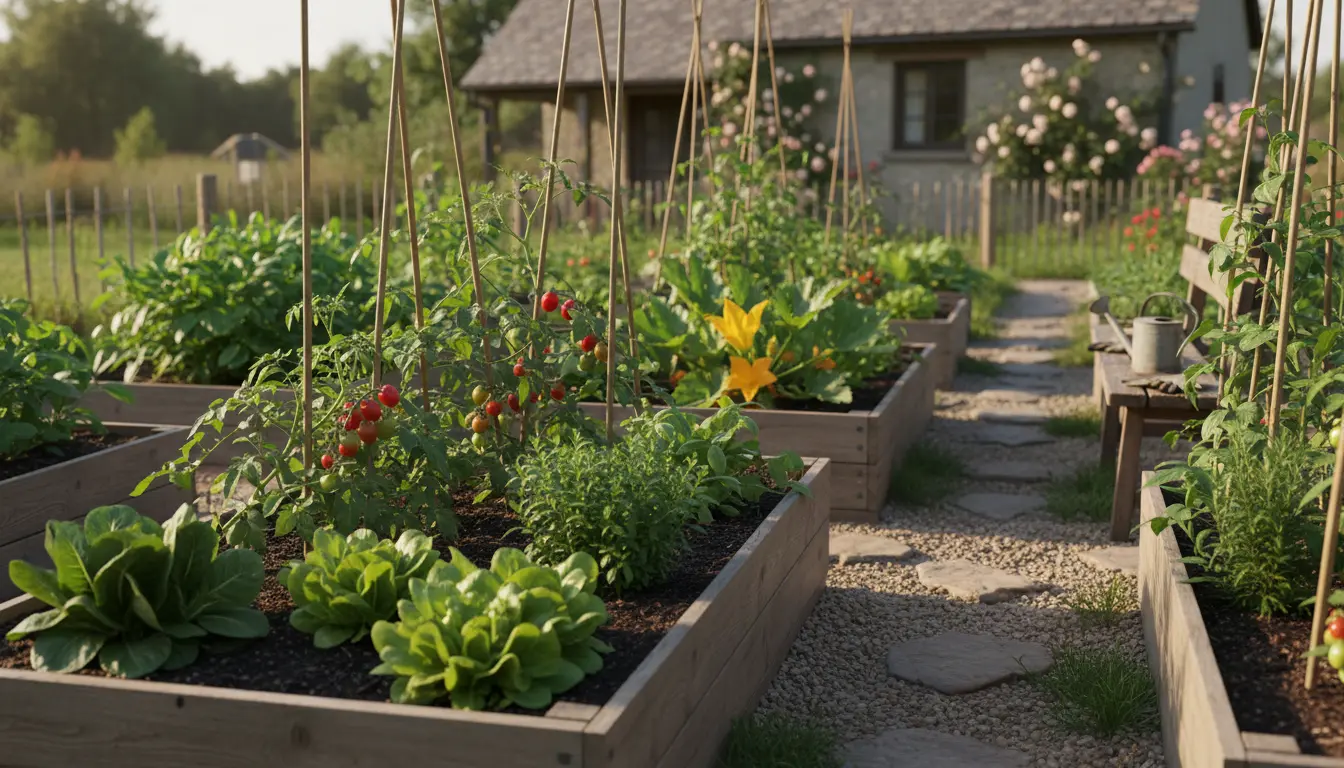
Start a Small Vegetable Garden: Quick Overview
Starting a small vegetable garden at home is a practical way to grow fresh produce, save money, and enjoy a simple hobby. This guide gives clear steps you can follow whether you have a balcony, patio, or small yard.
Choose a Location to Start a Small Vegetable Garden
Sunlight is the first factor to check. Most vegetables need 6 to 8 hours of direct sun daily, so pick the sunniest spot you have available.
Also consider access to water and how easy it will be to tend the plants. If you plan containers, any flat surface near a faucet can work well.
Start a Small Vegetable Garden: Space and Layout
Decide between in-ground beds, raised beds, or containers. Each option has pros and cons depending on soil, space, and budget.
- In-ground beds: Best if you have good native soil and space.
- Raised beds: Easier to control soil quality and drainage.
- Containers: Ideal for balconies and patios; use pots at least 12 inches deep for most vegetables.
Soil and Containers for a Small Vegetable Garden
Good soil is the foundation for a productive garden. If using in-ground or raised beds, enrich existing soil with compost and a balanced organic fertilizer.
For containers, use a high-quality potting mix formulated for vegetables. Avoid using garden soil directly in pots because it can compact and drain poorly.
Start a Small Vegetable Garden: Soil Preparation Steps
- Clear the area of weeds and debris.
- Loosen the top 8–12 inches of soil for beds.
- Mix in 2–4 inches of compost per square foot.
- Test soil pH if possible; most vegetables prefer pH 6.0–7.0.
Select Vegetables for Your Small Vegetable Garden
Choose plants that match your climate, space, and skill level. Start with easy, fast-yielding vegetables to build confidence.
Good beginner choices include:
- Lettuce and salad greens
- Radishes and carrots (short varieties)
- Tomatoes and peppers in containers or cages
- Herbs like basil, parsley, and chives
Companion Planting Tips
Plant complementary crops near each other to save space and reduce pests. For example, basil near tomatoes can improve flavor and may help deter some insects.
Planting and Watering in a Small Vegetable Garden
Follow seed packet or plant tag directions for spacing and depth. Crowding plants reduces airflow and increases disease risk.
Water consistently, aiming to keep soil evenly moist. Deep, infrequent watering encourages stronger roots compared with shallow, frequent watering.
Water Schedule Example
- Containers: Check daily; water when the top inch of soil feels dry.
- Raised beds: Water deeply 2–3 times per week in warm weather.
- Mulch around plants to retain moisture and reduce weeds.
Maintenance and Pest Management for a Small Vegetable Garden
Regular maintenance keeps small gardens productive without much effort. Spend 10–20 minutes a few times a week checking plants and removing weeds.
Use these simple strategies for pests and diseases:
- Hand-pick slugs and caterpillars in the evening.
- Use row covers early in the season to protect seedlings.
- Encourage beneficial insects by planting flowers like marigolds or nasturtiums.
Fertilizing Routine
Feed vegetables with a balanced organic fertilizer every 4–6 weeks, or follow slow-release product instructions. Over-fertilizing can reduce fruiting and increase leaf growth at the expense of yield.
Container tomatoes can produce a full season of fruit in a 5-gallon pot if fed regularly and watered consistently. Container gardening can match the yields of in-ground beds with proper care.
Harvesting and Saving Seeds from a Small Vegetable Garden
Harvest vegetables at peak ripeness for best flavor. Frequent harvesting often encourages more production, especially for crops like beans and zucchini.
If you want seeds, save from open-pollinated or heirloom varieties. Dry seeds thoroughly and store in a cool, dark place in labeled envelopes.
Simple Harvesting Tips
- Pick early-morning for the freshest flavor.
- Use clean tools to avoid spreading disease.
- Rotate crops annually to reduce soil-borne pests.
Case Study: Small Balcony Garden That Fed a Family
In a one-bedroom apartment, a couple used five 12-inch containers and two window boxes to grow tomatoes, basil, lettuce, and peppers. They placed containers on a south-facing balcony receiving 6+ hours of sun.
By following a weekly feeding and watering schedule, they harvested salad greens for three months and three harvests of tomatoes. The project reduced grocery salad purchases and provided fresh herbs year-round.
Final Checklist to Start a Small Vegetable Garden
- Pick a sunny, accessible location.
- Choose containers or beds and prepare soil with compost.
- Select easy crops suited to your space and climate.
- Water deeply and mulch to conserve moisture.
- Monitor for pests and feed plants on a regular schedule.
Starting a small vegetable garden is a manageable project with real rewards. With proper location, soil, and simple routines, you can enjoy fresh vegetables even in limited space.