
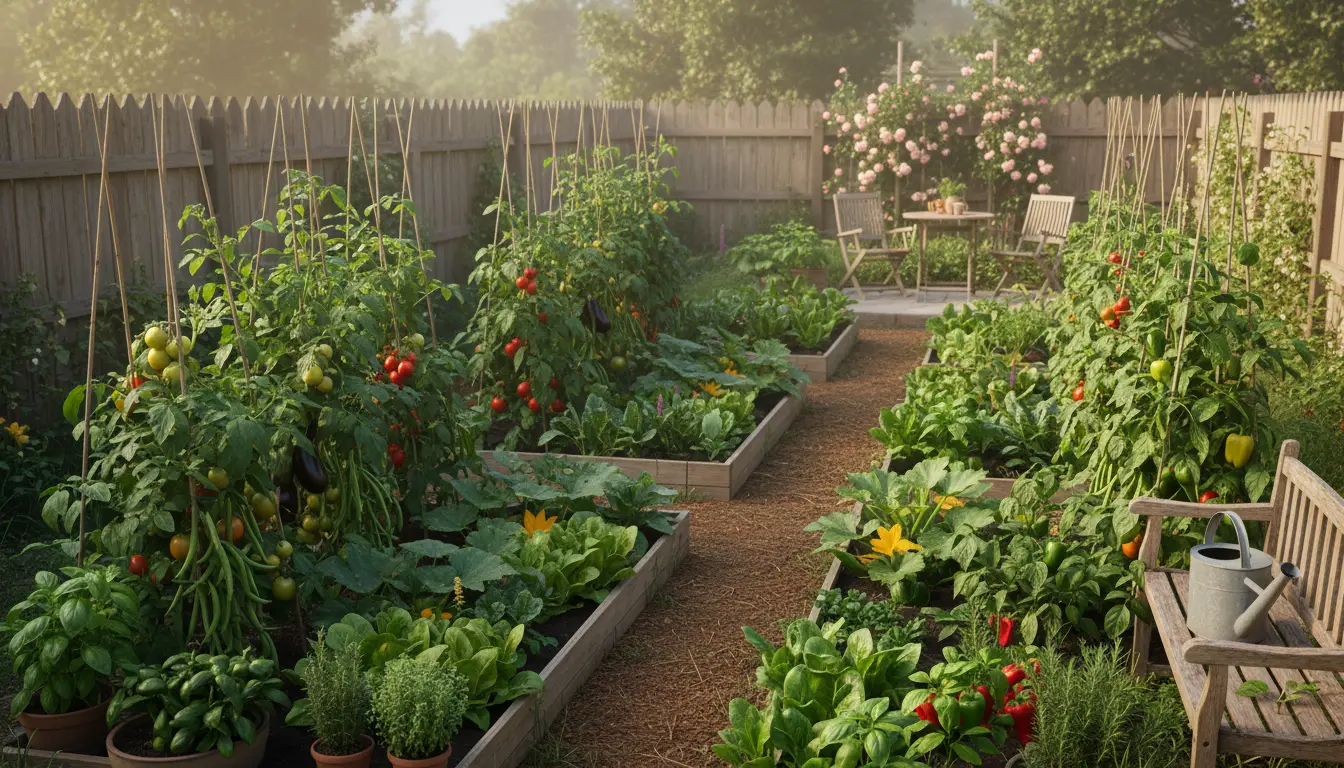
How to Start a Vegetable Garden: Plan and Choose Location
Decide what you want to grow and why. Common choices for beginners include tomatoes, lettuce, beans, and herbs because they are forgiving and fast to harvest.
Pick a location with at least six hours of direct sunlight. Good sunlight and easy access to water are the two most important factors for success.
- Sunny, level spot close to the house for easy watering.
- Good drainage to avoid water pooling after rain.
- Protected from strong winds if possible.
Start a Vegetable Garden: Choose Bed Type and Size
Select a bed type that fits your space and budget. Options include in-ground rows, raised beds, and containers.
Begin with a small, manageable area. A 4 by 8 foot raised bed is a common beginner size that reduces bending and concentrates effort.
- Raised beds warm faster and drain well.
- Containers work on patios and balconies.
- In-ground beds are cheaper but may need more soil improvement.
Soil Preparation When You Start a Vegetable Garden
Healthy soil equals healthy plants. Test the pH with a simple kit or send a sample to a local extension office.
Amend soil based on test results. Most vegetables prefer slightly acidic to neutral soil, pH 6.0 to 7.0.
- Remove grass and weeds from the bed area.
- Work in 2 to 4 inches of compost to improve structure and nutrients.
- Loosen soil to at least 8 inches for root development.
Start a Vegetable Garden: Choose Plants and Timing
Match plant choices to your climate and season. Cool-season crops include lettuce and peas. Warm-season crops include tomatoes and peppers.
Use seed packets or plant labels to check days to maturity and frost tolerance.
- Sow cool-season crops in early spring or fall.
- Transplant warm-season crops after the last frost date.
- Mix quick crops like radishes with slower crops to maximize use of space.
Spacing and Companion Planting
Follow spacing recommendations on seed packets. Crowding reduces airflow and increases disease risk.
Consider companion planting to deter pests and improve yield, for example planting basil near tomatoes.
Watering, Feeding, and Care
Water deeply and infrequently to encourage strong root systems. Aim for consistent moisture rather than shallow daily watering.
Mulch with straw or shredded leaves to retain moisture and suppress weeds.
- Water in the morning to reduce fungal disease risk.
- Use a layer of 2 to 3 inches of mulch around plants.
- Fertilize lightly with a balanced organic fertilizer at planting and mid-season if needed.
Pest and Disease Management
Inspect plants weekly. Early detection makes control easier and reduces crop loss.
Use physical barriers, hand-picking, and beneficial insects before reaching for chemical controls.
- Floating row cover can protect seedlings from insect damage.
- Rotate crops yearly to reduce soil-borne disease buildup.
- Remove affected leaves promptly to limit spread.
Harvesting and Storage
Harvest vegetables at peak maturity for best flavor and to encourage more production. Regular picking often increases total yield.
Store produce according to type: leafy greens refrigerate, root crops store cool and dark, tomatoes ripen on the counter.
Many common garden vegetables provide a harvest within 30 to 60 days. Radishes can be ready in as little as 25 days, helping new gardeners see quick results.
Common Mistakes When You Start a Vegetable Garden
Avoid these frequent errors: planting too much, poor soil, and irregular watering. Starting small reduces overwhelm and waste.
- Planting too many varieties at once makes care and harvest harder.
- Ignoring soil health leads to poor growth despite watering and fertilizer.
- Neglecting staking and support causes sprawling plants to get damaged.
Maintenance Checklist
Follow a weekly routine to keep the garden productive. Tasks take a few minutes each visit.
- Check soil moisture and water deeply if needed.
- Scan for pests and remove them early.
- Harvest ripe vegetables and prune when necessary.
Real-World Example
Case study: A new gardener used a single 4 by 8 foot raised bed in year one. They planted tomatoes, lettuce, bush beans, and basil. By following basic soil prep and watering routines, the bed produced enough salad greens for a family of three most weeks and six medium tomatoes per week at peak.
They invested about 3 hours per week in maintenance and recouped costs through reduced grocery purchases and fresh flavor. This shows small, consistent effort delivers measurable results.
Start Small and Learn
Begin with a few reliable crops and expand gradually. Keep notes about planting dates, varieties, and results to improve next season.
Gardening is practical and iterative. With basic planning, soil care, and weekly attention you can start a vegetable garden that provides fresh food and enjoyment.