
Why start a vegetable garden
Starting a vegetable garden delivers fresh produce, saves money, and connects you to seasonal food. You do not need large land or special skills—just planning and regular care.
Choose the right site to start a vegetable garden
Sunlight is the most important factor. Most vegetables need 6 to 8 hours of direct sun each day. Observe your yard at different times to find the sunniest spot.
Consider access to water, flat ground for easy beds, and proximity to pests (like trees or animal paths). If space is limited, use raised beds or containers.
Checklist for site selection
- 6–8 hours of direct sunlight
- Easy access to a water source
- Good drainage and flat or slightly sloped ground
- Protection from strong winds and large tree roots
Prepare soil before planting
Healthy soil is the foundation for productive plants. Test soil texture and pH if possible; most vegetables prefer a pH of 6.0 to 7.0.
Improve soil with organic matter. Compost and well-rotted manure increase fertility and structure. Mix 2–4 inches of compost into the top 6–8 inches of soil.
Simple soil improvement steps
- Clear weeds and debris from the bed.
- Loosen compacted soil to 6–8 inches deep with a fork or tiller.
- Spread 2–4 inches of compost and mix thoroughly.
- Mulch newly planted areas to retain moisture and suppress weeds.
Plan what to plant in your vegetable garden
Select vegetables that match your climate, season, and taste. Beginner-friendly crops include lettuce, radishes, bush beans, cherry tomatoes, and herbs like basil.
Stagger planting dates to extend harvests. Use succession planting by sowing small amounts every 2–3 weeks for crops like lettuce and radish.
Planting layout tips
- Group plants by water needs: thirsty crops together, drought-tolerant separately.
- Use vertical space for vining plants like cucumbers and pole beans.
- Avoid crowding; give each plant its recommended spacing on seed packets or plant tags.
Planting methods and timing
Decide between seeds and transplants. Seeds are cheaper and offer greater variety. Transplants give a head start for long-season crops like tomatoes and peppers.
Follow local frost dates to time planting. Cool-season crops (peas, spinach) can go in early spring, while warm-season crops (tomatoes, peppers) wait until after the last frost.
Watering and fertilizer basics
Water deeply and less frequently to encourage strong roots. Most vegetable beds need about 1 to 1.5 inches of water per week, including rainfall.
Use a balanced, slow-release fertilizer or organic options like compost tea. Avoid overfeeding; excess nitrogen can produce lots of foliage but little fruit.
Practical watering tips
- Water at soil level to reduce disease on leaves.
- Morning watering reduces evaporation and disease risk.
- Use drip irrigation or soaker hoses for efficiency.
Pest and disease management
Start with prevention: clean soil, crop rotation, and healthy spacing reduce problems. Inspect plants weekly so you catch issues early.
Use physical controls like row covers for insects and hand-pick large pests. For persistent problems, choose targeted organic treatments such as insecticidal soap or neem oil.
Harvesting and succession planting
Harvest vegetables at peak ripeness for best flavor and productivity. Frequent harvesting of leafy greens and beans encourages more growth.
Plan succession planting: after a spring crop finishes, replant the space with warm-season vegetables or a quick fall crop.
Small real-world example
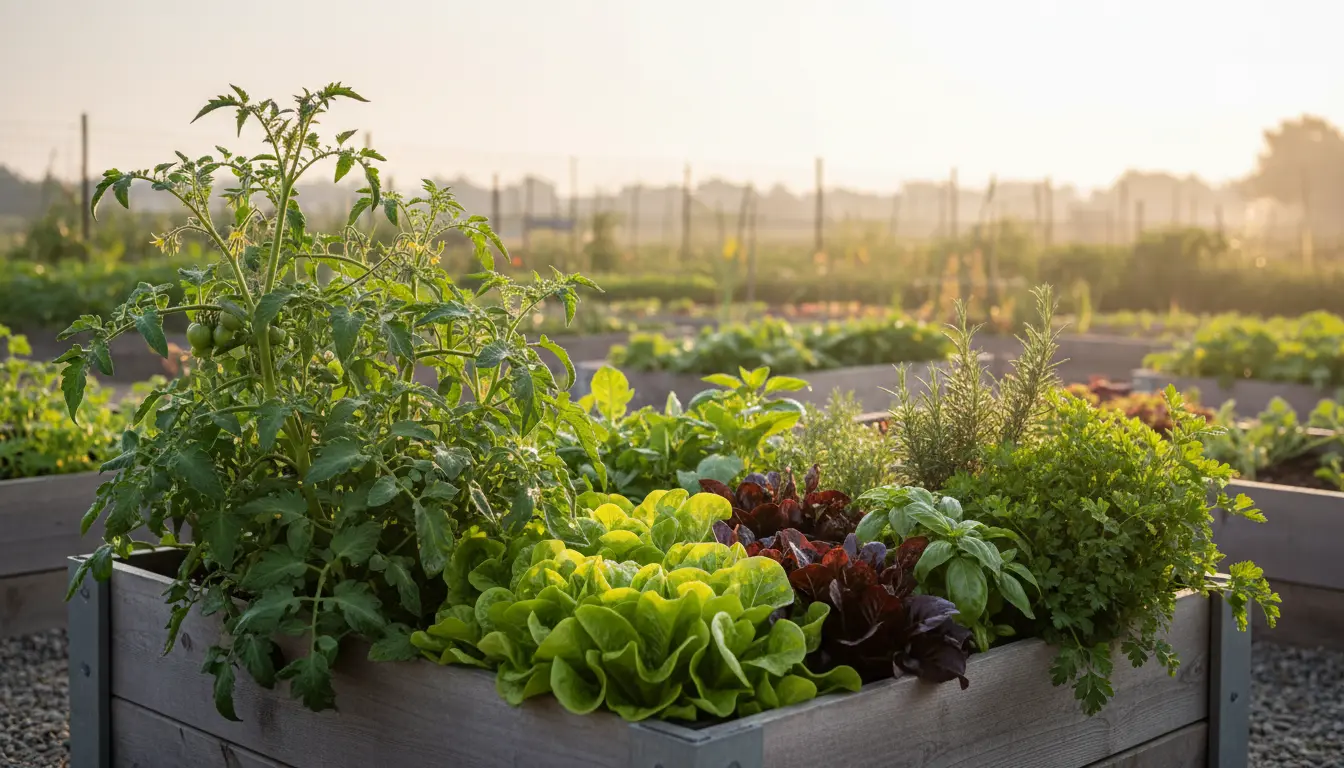
Case study: A two-person household used a 10 x 4 ft raised bed to grow tomatoes, lettuce, bush beans, and herbs. They improved poor clay soil with compost and grew two tomato plants, three lettuce rows, and several bean plants. With drip irrigation and weekly checks, they harvested fresh salad greens for five months and saved roughly $300 on store-bought produce that season.
Common beginner mistakes and how to avoid them
- Overwatering: Water deeply but less often. Check soil moisture with a finger test.
- Planting too densely: Follow spacing recommendations to avoid disease and poor yields.
- Ignoring soil health: Invest in compost and annual soil amendments.
Companion planting can reduce pests and improve yields. For example, planting marigolds near tomatoes may help deter nematodes and some insect pests.
Seasonal checklist to start a vegetable garden
- Spring: Test soil, start seeds indoors, prepare beds, sow cool-season crops.
- Summer: Mulch, water deeply, stake tomatoes, watch for pests.
- Fall: Harvest mature crops, plant cover crops, add compost to beds.
- Winter: Plan next year, repair tools, order seeds.
Final tips to successfully start a vegetable garden
Start small and expand as you learn. Keep a simple journal with planting dates, varieties, and harvest notes to improve each season.
Focus on reliable crops that you enjoy eating and that grow well in your climate. With steady care and simple planning, your vegetable garden will become more productive every year.