
Why Start a Vegetable Garden at Home
Growing your own vegetables saves money, improves taste, and gives you control over what goes into your food. A home vegetable garden can fit any space, from a balcony to a backyard.
This guide offers practical, step-by-step instructions to start a productive vegetable garden with minimal fuss.
Choosing a Site for Your Vegetable Garden
Location determines how well plants grow. Look for a spot with at least six hours of direct sunlight per day for most vegetables.
Consider access to water and how close the area is to your kitchen. Shorter distance increases the likelihood you’ll harvest regularly.
Soil and Drainage for a Vegetable Garden
Good soil drains well, holds moisture, and contains organic matter. If water pools after rain, add raised beds or improve drainage.
Test soil texture: a crumbly mixture indicates good structure. If soil is heavy clay or very sandy, amend it with compost and aged manure.
Planning What to Plant in Your Vegetable Garden
Start with easy, high-value crops. Tomatoes, lettuce, radishes, beans, and herbs are forgiving for beginners.
- Choose vegetables you and your family like to eat.
- Check seed packet or plant tag days-to-harvest to stagger plantings.
- Consider companion planting to reduce pests and improve yields.
Spacing and Crop Rotation for a Vegetable Garden
Follow spacing recommendations to avoid overcrowding, which causes disease and reduces yield. Use vertical supports for vining plants to save space.
Rotate plant families yearly where possible. Avoid planting tomatoes or peppers in the same spot year after year to reduce soil-borne disease.
Preparing Soil and Beds for a Vegetable Garden
Loosen soil to a depth of 8 to 12 inches for most vegetables. Remove weeds and large stones before planting.
Add 2 to 4 inches of compost and work it into the topsoil. Compost improves structure, fertility, and moisture retention.
Raised Beds vs. In-Ground Planting
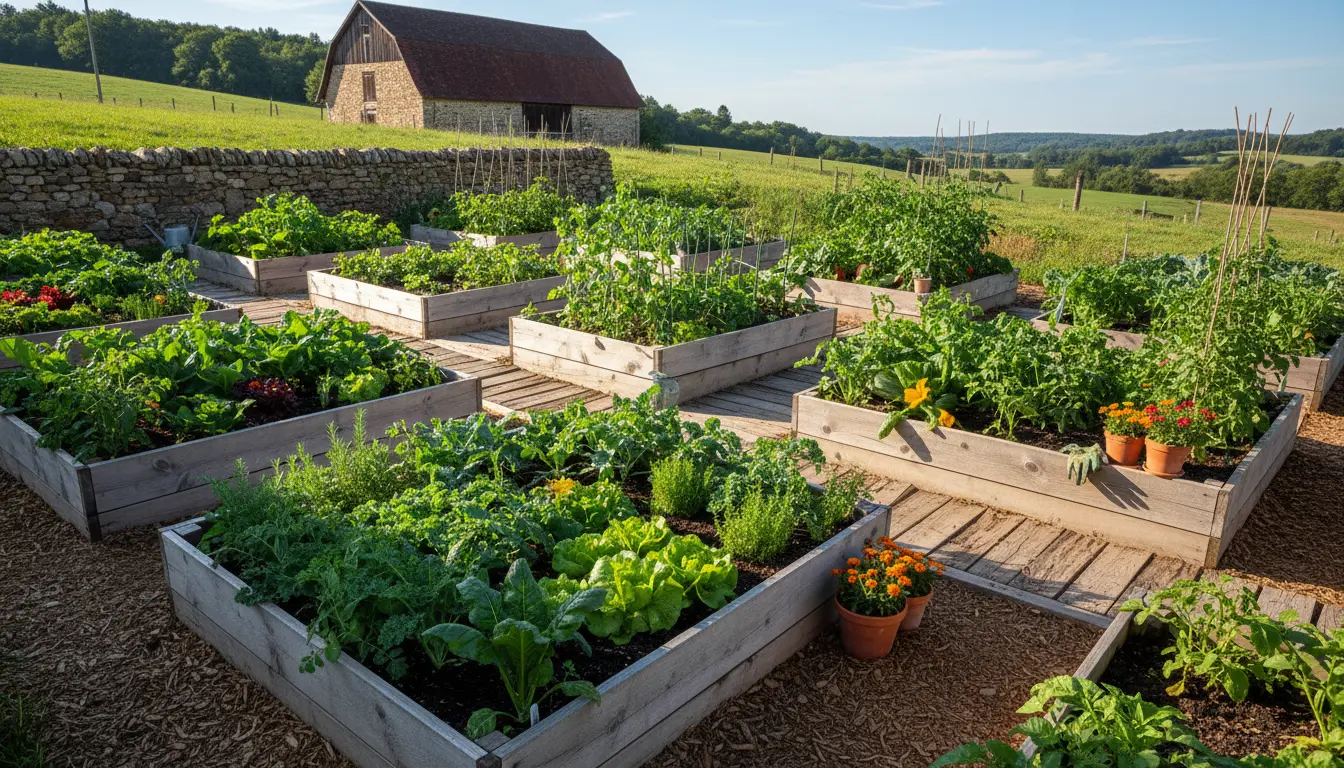
Raised beds warm faster in spring, drain better, and allow easier control of soil quality. They are ideal for small yards and urban spaces.
In-ground beds are cheaper and can be larger. Choose based on budget, soil condition, and personal preference.
Planting, Watering, and Feeding Your Vegetable Garden
Plant at the right time for your climate by using planting calendars. Direct-seed root crops like carrots and radishes; transplant tomatoes and peppers after frost risk passes.
Water deeply and less often to encourage deep roots. Aim for 1 to 1.5 inches of water per week, adjusting for rainfall and temperature.
- Morning watering reduces evaporation and disease risk.
- Mulch with straw or wood chips to conserve moisture and suppress weeds.
- Use balanced fertilizer or compost tea if plants show nutrient deficiency signs.
Pest and Disease Management in a Vegetable Garden
Start with prevention: clean tools, healthy soil, and proper spacing reduce problems. Inspect plants weekly and remove affected leaves promptly.
Use physical controls like row covers, handpicking pests, and encouraging beneficial insects. Apply organic sprays only when necessary and follow label instructions.
Harvesting and Extending the Season in Your Vegetable Garden
Harvest frequently to encourage more production. Pick tomatoes when they are fully colored and slightly soft to the touch.
Use succession planting: sow small amounts of seeds every two to three weeks for a steady supply. Use cold frames or row covers to extend the growing season into cooler months.
Storage and Preservation from Your Vegetable Garden
Store cool-season crops like carrots and beets in a cool, dark place. Preserve surplus harvest by freezing, canning, or pickling.
Simple techniques like blanching vegetables before freezing keep texture and flavor longer.
Small Real-World Example: A 4×8 Raised Bed Vegetable Garden
Case study: A first-time gardener built a 4×8 raised bed and filled it with equal parts topsoil and compost. They planted determinate tomatoes along the north edge, a row of bush beans, and successive rows of lettuce and radishes.
In the first season they harvested weekly lettuce, three rounds of radishes, and eight pints of cherry tomatoes. Minimal watering (twice weekly) and a 2-inch mulch layer kept weeds and water use low.
Common Mistakes to Avoid in Your Vegetable Garden
- Planting too closely and expecting plants to thrive in crowded conditions.
- Overwatering, which causes root rot and nutrient leaching.
- Ignoring soil health; fresh compost and cover crops improve long-term productivity.
Next Steps to Start Your Vegetable Garden
Begin with a small, manageable bed or a few containers. Track what you plant and harvest to learn what works in your microclimate.
Join a local gardening group or consult a regional planting calendar for timing. With a few simple practices, you can build a reliable source of fresh vegetables at home.