
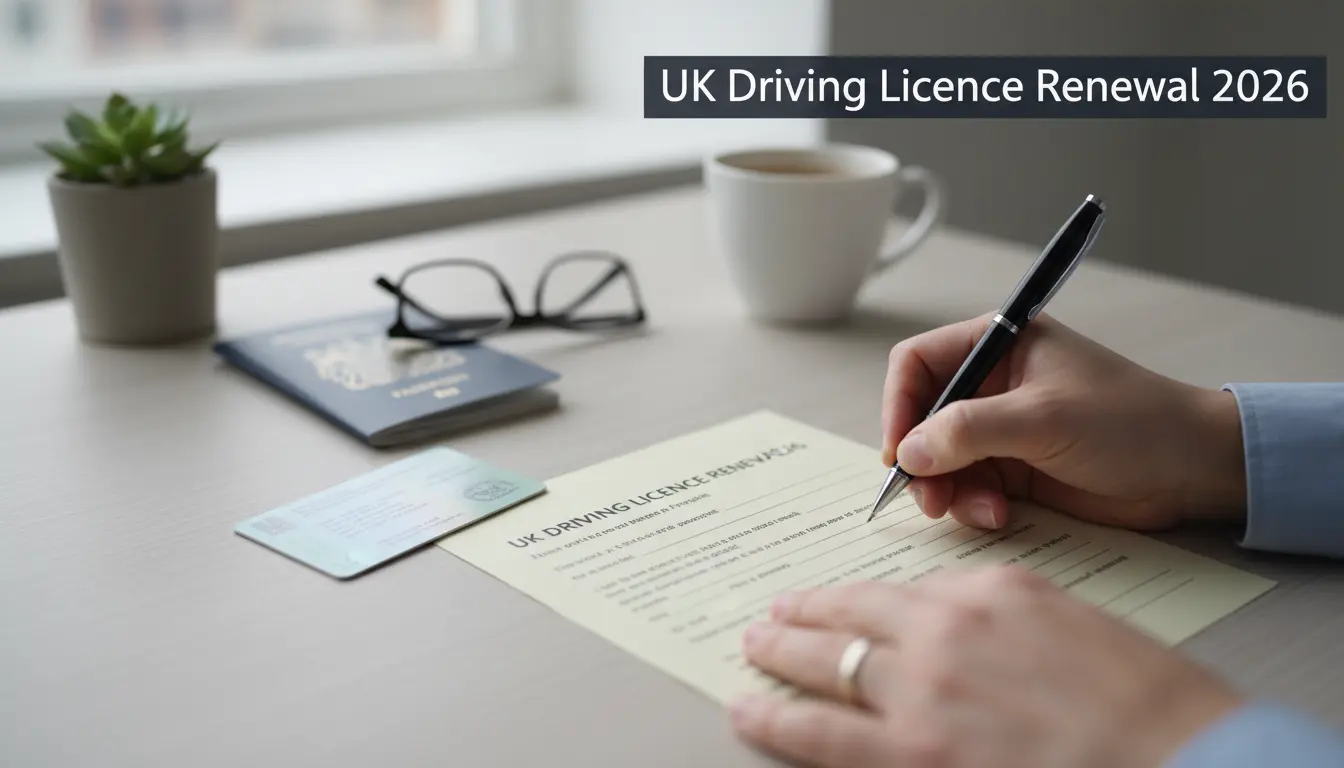
Overview of the 2026 driving licence renewal rules
The UK Government has announced changes to driving licence renewal rules coming into force in 2026. These adjustments are designed to improve record accuracy and road safety while tightening renewal procedures for certain groups.
This article explains what the 2026 driving licence renewal rules mean, who is affected, and the practical steps you should take now to avoid delays or losing driving entitlement.
What the 2026 driving licence renewal rules mean for you
The new rules require more frequent checks for some drivers and stricter verification of identity and medical information. Expect changes to online renewal processes and new documentation requirements for specific licence categories.
If you plan ahead, you can renew smoothly. Late action may lead to administrative delays or temporary suspension until paperwork is complete.
Key changes under the 2026 renewal rules
- Increased verification: More drivers will need to confirm identity with updated documents during renewal.
- Medical checks: Drivers with certain medical conditions or age thresholds may face earlier medical reviews.
- Shorter renewal windows: Some categories move to more frequent renewal cycles to keep records current.
- Digital updates: The DVLA expands digital options but retains paper-backed checks for high-risk renewals.
Who needs to renew under the 2026 rules
Not every licence holder sees a change. The 2026 rules mainly affect drivers who:
- Hold professional licences (PCV, HGV) or vocational endorsements.
- Have declared medical conditions that affect driving.
- Are at age thresholds requiring medical review or more frequent renewals.
- Have not updated identity documents in the last 10 years.
Ordinary car (category B) licence holders without medical flags often follow the standard renewal cycle, but should still check the new guidance to be safe.
How to act before the 2026 deadline
Acting early avoids last-minute issues. Follow these steps to be ready for the 2026 changes.
Step-by-step checklist for renewing under the 2026 rules
- Check your licence type and renewal date on gov.uk or your paper licence.
- Gather identity documents: passport, updated driving licence, or other accepted photo ID.
- If you have a medical condition, request a GP or specialist assessment early and get any required forms completed.
- Use the DVLA online renewal service where available, but be prepared to send paper evidence if requested.
- Allow extra time for professional licence renewals and DVLA medical reviews—start at least 12 weeks before expiry.
Documents likely required under the new rules
Prepare these documents to avoid rejection or delays when you apply for renewal under the 2026 rules.
- Current driving licence (photocard and paper counterpart if you have one).
- Valid passport or alternative approved photo ID.
- Proof of address (bank statement or utility bill less than 3 months old).
- Medical reports or DS forms if you have a relevant condition.
- Employer confirmation for vocational licence holders where relevant.
Fees and timing for the 2026 driving licence renewal rules
Renewal fees generally remain in line with existing DVLA charges, but professional or medical reviews may generate additional costs such as doctor fees. Processing times will vary depending on evidence required.
Start renewal early: professional and medical cases should start three months before expiry to avoid disruption.
Under the new rules, some drivers will need to confirm identity by uploading an official document photo through a secure DVLA portal. This step is intended to reduce fraud and keep licence records accurate.
Practical examples and a short case study
Here is a real-world example to show how the 2026 rules might affect individual drivers.
Case study: Jane, HGV driver
Jane is a 52-year-old HGV driver whose licence is due to expire in January 2026. Under the new rules, she must submit a medical report and proof of identity when renewing her vocational licence.
She started the renewal process three months early. Her GP completed the necessary medical form and she uploaded a scanned passport image through the DVLA portal. The DVLA processed her renewal in six weeks and issued an updated licence confirming her entitlement to drive HGV vehicles.
Lesson: For professional drivers, early action prevented downtime and lost income while the DVLA completed medical checks.
Common pitfalls and how to avoid them
- Waiting until expiry: Begin renewal early, especially if you need medical evidence.
- Missing documents: Double-check the DVLA list and send certified copies where requested.
- Using outdated ID: Ensure passports or ID cards are valid through your renewal date.
- Ignoring notifications: DVLA may request extra information—respond quickly to avoid delays.
Where to find official information and how to contact DVLA
Always use official sources. The gov.uk website has the latest guidance on driving licence renewals and lists accepted documents and forms.
Contact DVLA by the phone numbers on gov.uk for urgent queries, and keep reference numbers from any online application emails for tracking purposes.
Final checklist before you apply
- Confirm your renewal date and licence category.
- Gather photo ID, proof of address, and medical reports if needed.
- Start the process at least 8–12 weeks before expiry for ordinary licences, and 12+ weeks for professional or medical renewals.
- Keep digital copies of all submissions and note any DVLA case numbers.
Following these steps will help you comply with the 2026 driving licence renewal rules and reduce the chance of disruptions. If you are unsure whether the new rules apply to you, check gov.uk or contact the DVLA well before your current licence expires.