
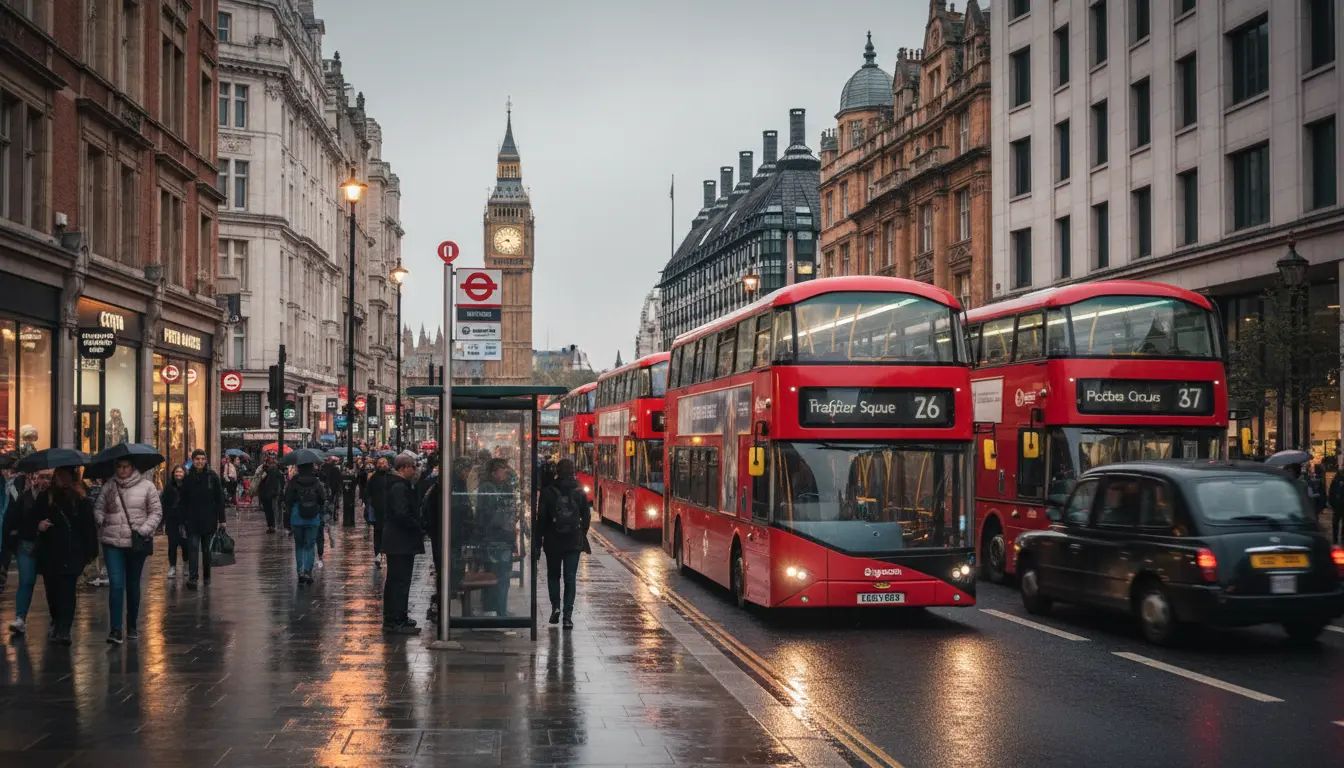
The UK government has confirmed changes to national bus pass rules that take effect on 16 March 2026. This guide explains what is changing, who is affected, and practical steps to prepare.
UK Bus Pass Rules Change from 16 March 2026: What You Need to Know
The main changes affect eligibility verification, permitted travel times, and the national reciprocity rules that let concessionary pass holders travel outside their home area.
Local authorities and bus operators will apply the new rules from the effective date. Read on for a clear breakdown of each change and how to act.
Who is affected by the UK bus pass rules change from 16 March 2026?
Most concessionary pass holders are affected. This includes:
- Older people (state pension age pass holders)
- People with eligible disabilities
- Some carers and other groups who have local concessions
Students and general fare-paying passengers are not part of this national change, though local schemes may adjust separately.
Key rule changes explained
The changes focus on four areas: eligibility checks, travel start times, travel area limits, and pass format.
- Eligibility checks: Local authorities may require updated proof of eligibility before reissuing or renewing a pass. Expect clear guidance from your council.
- Travel start times: Free travel hours may shift in some areas. In many places the earlier morning restriction (for example, no travel before 09:30) may be relaxed or standardized.
- Travel area limits: National reciprocity rules are being clarified. The rules will state when you can use your home-area pass outside your council area and when you cannot.
- Pass format: More councils will adopt secure digital or smartcard formats to reduce fraud and simplify cross-boundary use.
Eligibility verification and renewals
From 16 March 2026, councils may ask for up-to-date evidence when renewing concessionary passes. This is most relevant for disability-related passes where circumstances can change.
Typical documents councils may request include benefit letters, medical evidence, or proof of state pension age. Councils must publish exact requirements on their websites.
Travel times and daily limits
The national framework now encourages harmonised permitted travel times to reduce confusion.
Key points to expect:
- Standard free travel windows set by many councils (for example, all-day or after a certain morning hour).
- Some councils may keep local restrictions for capacity management on specific routes.
- Check your local authority page for the final travel times that apply to your pass.
Using your pass outside your home area
Reciprocity rules are being made clearer so travellers know where a pass will be accepted. In general:
- Passes remain valid on most local bus services across England on the set national scheme, subject to local time restrictions.
- Some rural services, long-distance coaches, or commercial routes may exclude concessionary travel.
- If you travel frequently outside your home council area, contact both local authorities to confirm acceptance on specific routes.
Digital passes and security
More councils will issue smartcards or digital passes that can be used on phones or dedicated cards. These aim to:
- Reduce misuse and fraud
- Simplify renewals and eligibility checks
- Work across different bus operators
If you prefer a paper pass, your council should state whether a paper option remains available and any steps to request it.
Many councils will let you apply for or renew a digital pass online from early 2026. This can speed up processing and reduce the need to visit council offices.
How to prepare for the change
Take these practical steps to avoid disruption:
- Check your local council website for the exact changes that apply to your area.
- Gather any documents you may need for renewal or verification (proof of age, benefit letters, medical evidence).
- Register for a digital pass if offered, or request a replacement card before travel.
- Plan journeys in advance and confirm whether a pass covers the route you need, especially for cross-boundary trips.
Case study: Real-world example
Mrs Patel, aged 68 and living in a suburban council area, usually travels into a neighbouring town twice a week for shopping. When the changes were announced, she checked her council website and found a short online renewal form and the option for a smartcard.
She uploaded a scanned proof of age and selected the smartcard option. Her new card arrived within 10 days and worked on both local and neighbouring town buses. Mrs Patel avoided a potential delay by renewing two weeks before 16 March 2026.
Common questions and answers
Will anyone lose their pass because of these changes?
No national removal of passes is planned. However, some disability-related passes may require updated evidence at renewal. Councils must give notice and reasonable time to supply evidence.
Can I still travel on trains with my bus pass?
Bus passes generally do not cover rail travel. Some local schemes include limited tram or light rail, but check your local rules for exceptions.
Where to get official information
Always rely on your local council’s website or the Department for Transport for official guidance. Councils will publish local rules, application forms, and contact details for questions.
Preparing early and checking your local authority information will help ensure a smooth transition when the UK bus pass rules change from 16 March 2026.