
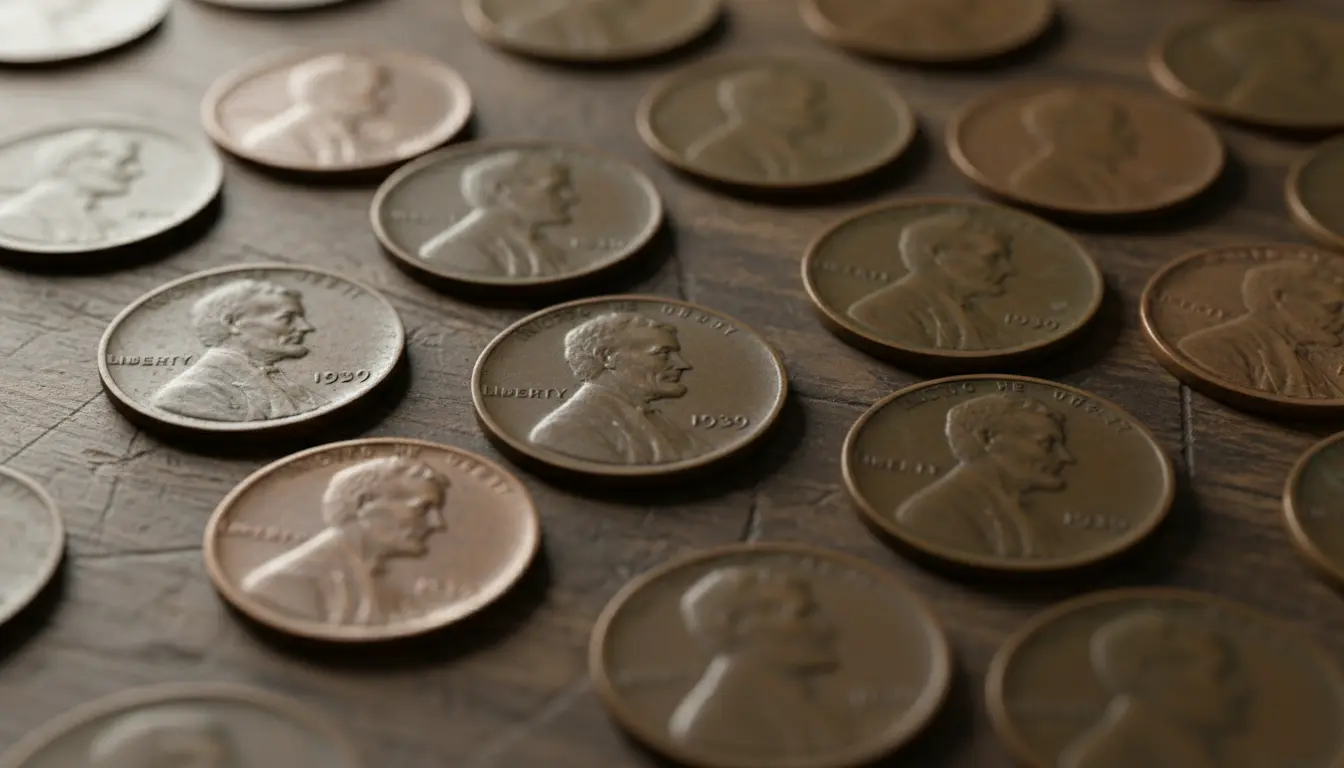
Wheat Penny Value Basics
Wheat pennies (Lincoln wheat cents) were struck from 1909 to 1958. Collectors prize them for age, key dates, mintmarks, and errors. Values in 2026 vary widely depending on those factors.
Most wheat cents in circulation are only worth face value or slightly more. Knowing the dates and what to examine will help you spot coins that carry serious premiums.
What Determines Wheat Penny Value in 2026
Four main factors drive value: date and mintmark, condition (grade), rarity (mintage and survival), and variety or error. Market demand and auction results also affect prices.
- Date and mintmark: Some years and mints produced far fewer coins.
- Condition: Uncirculated or lightly worn coins fetch higher prices.
- Varieties and errors: Doubled dies, repunched mintmarks, and incorrect metals are usually more valuable.
- Provenance and certification: Coins graded by PCGS, NGC, or ANACS often sell for more.
Key Dates That Affect Wheat Penny Value
Not every date is important, but several are widely recognized as key or semi-key dates for collectors. If you find one, research it carefully or get it graded.
High-value and notable dates
- 1909-S VDB and 1909-S — First year issues with low mintages and collector interest.
- 1914-D — Low mintage Denver coins are sought after, especially in higher grades.
- 1922 Plain (no D) — A rare variety from a low-strike year; watch for mintmark anomalies.
- 1931-S — Scarcer in high grade than many people expect.
- 1955 Doubled Die Obverse — Famous doubled die that commands higher prices for sharp examples.
- 1943 Copper Cents — Error strikes on bronze planchets are rare and can be extremely valuable.
How to Check Condition and Grade
Grading impacts value most after date and rarity. Learn basic grade descriptors and look for surface quality, luster, and wear patterns.
- Good (G) to Fine (F): Major details worn; common market value.
- Extremely Fine (EF/XF): Light wear on high points; more desirable.
- About Uncirculated (AU) to Mint State (MS): Little to no wear; MS coins can jump value dramatically.
Certified grades from PCGS or NGC provide buyer confidence. If you think a coin is rare, consider third-party grading before selling.
Mintmarks and What They Mean for Value
Mintmarks are small letters near the date that indicate where the coin was struck. Common marks are P (Philadelphia, often no mark on older coins), D (Denver), and S (San Francisco).
Some mints produced far fewer coins certain years, making those mintmarks more valuable for specific dates. Always check both date and mintmark together.
Common Price Ranges (2026 Guidance)
Values shift with the market, but the ranges below give a practical starting point for estimating potential worth.
- Common circulated dates: usually face value up to about $1–$2.
- Uncirculated common dates: $1–$50 depending on grade and eye appeal.
- Higher-grade or semi-key dates: hundreds to low thousands for solid AU/MS examples.
- Key dates and rare errors: can range from several thousand to six or seven figures in exceptional cases.
These are general ranges. Always confirm with current price guides, auction results, and dealer listings before making decisions.
What to Look For When Inspecting a Wheat Penny
Use a loupe, good light, and a steady hand. Focus on a few inspection points to identify value fast.
- Sharpness of the date and lettering — heavy wear reduces value.
- Strike quality and luster — good strike and original mint luster are desirable.
- Mintmark presence and placement — confirm small letters near the date.
- Obvious varieties or doubling — check the date and Lincoln’s profile for doubling.
- Unusual color or metal — green copper corrosion is bad, but bronze tone or even uncommon metal (1943 copper) can be valuable.
Buying, Selling, and Getting Coins Graded
If you plan to buy or sell, document every coin. High-resolution photos and notes on condition help. For higher-value pieces, obtain professional grading.
Avoid quick sales without research. Dealers and auction houses vary in fees and final sale prices. Compare offers and consider consignment for rare items.
The Lincoln wheat reverse design was replaced in 1959 by the Lincoln Memorial reverse. That 50th anniversary change is why wheat pennies end at 1958, creating a clear collecting era.
Practical Tips for New Collectors in 2026
- Check pocket change often — low-cost way to search for mistakes and key dates.
- Use up-to-date price guides and completed auction listings to confirm values.
- Store coins properly (acid-free holders, stable humidity) to preserve condition.
- Join a local club or online community for trading and knowledge sharing.
Case Study: A Real-World Example
A casual collector found a 1943 penny that looked unusually dark and brought it to a dealer. The coin was tested and identified as a 1943 bronze error — a strike on a pre-1943 planchet. The owner had the coin authenticated and consigned it to an auction.
The final sale brought a strong premium compared with typical circulated wheat cents, illustrating how a single error or rarity can transform an ordinary coin into a high-value lot. This underscores why careful inspection and authentication matter.
Final Checklist Before Selling or Grading
- Confirm date and mintmark under magnification.
- Compare the coin to known variety photographs.
- Check recent auction results for similar grade examples.
- Consider third-party grading for high-value items.
With basic knowledge and attention to condition, you can quickly separate common wheat pennies from ones worth further research. Use this 2026 guide to prioritize coins for grading or sale.